Space Shuttle
A winged, partly reusable orbiter that flew 135 missions, built much of the Space Station and serviced Hubble.
- Type
- Crew spacecraft
- Status
- Retired
- First flight
- April 12, 1981
- Size
- 37.2 m (122 ft)
- Built by
- Boeing, Lockheed Martin, Northrop Grumman, NASA
- 135
- missions, 1981–2011
- 5
- orbiters flew in space
- 14
- astronauts lost, Challenger and Columbia
Promised as routine transport, the Shuttle flew 135 times in 30 years
Drawn from 15 sources: NASA (7), Presidential Commission (Rogers Commission) (4), NASA History Office (3) and NASA Kennedy Space Center. About 9 minutes. Checked October 1, 2026.
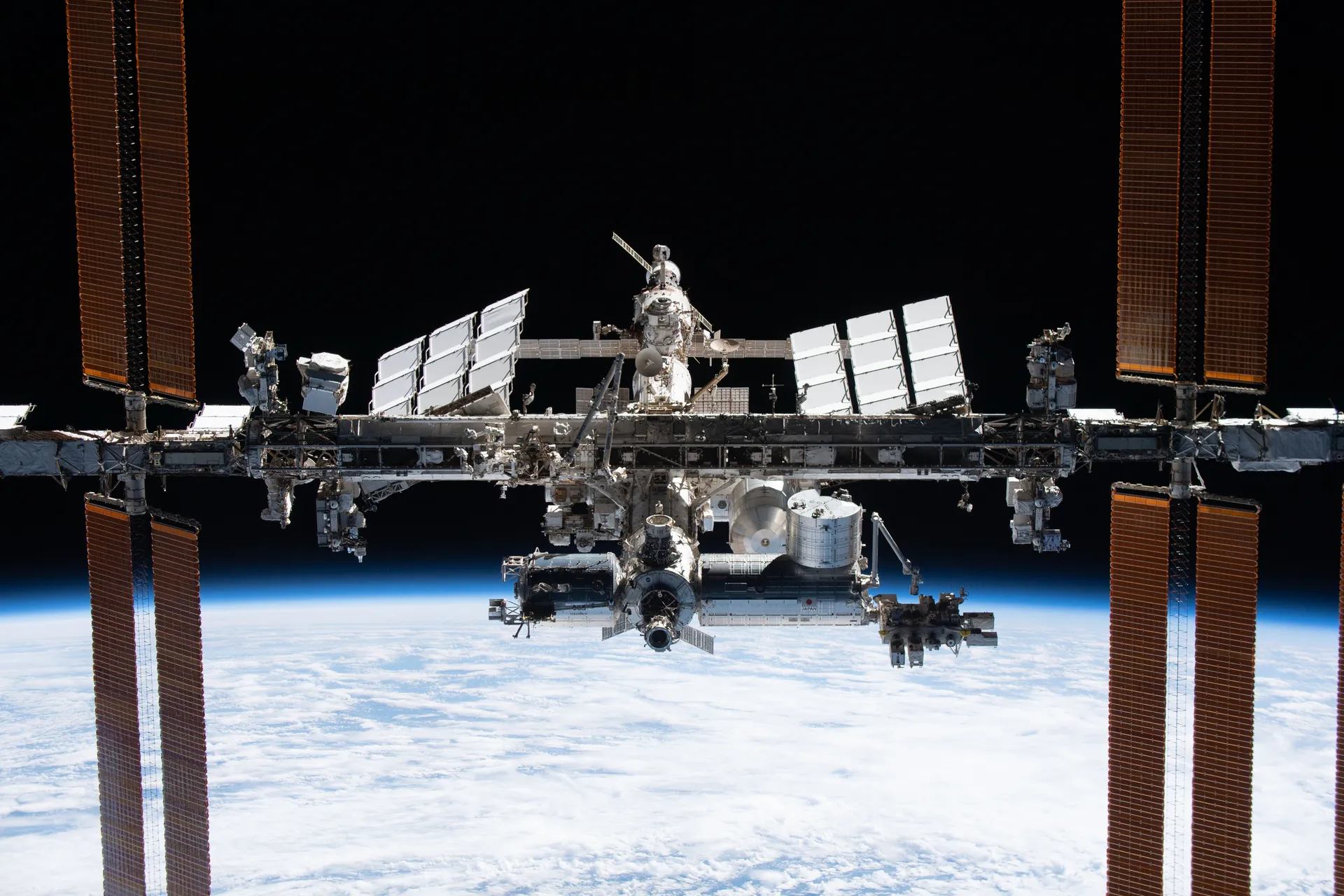
From the first launch on April 12, 1981, to the final landing on July 21, 2011, NASA’s Space Shuttle fleet flew 135 missions. Columbia, Challenger, Discovery, Atlantis and Endeavour carried people into orbit repeatedly; launched, recovered and repaired satellites; carried laboratories; and built the largest structure ever put in space, the International Space Station.5 Through its reusability the Shuttle was also meant to provide low-cost, frequent access to space. It never flew often enough to bring launch costs down significantly.3
A fully reusable spaceplane, cut in half to win approval
The Shuttle began as Apollo was ending. President Nixon appointed a Space Task Group in 1969 to recommend the next ten years of space exploration, and within it NASA Administrator Thomas Paine won acceptance for the Shuttle. In its original conception it was a rocket-boosted, airplane-like vehicle that would take off from a runway, fly to orbit, deploy and repair satellites, and come back; launcher and orbiter would both be reusable for up to 100 flights, halving the cost per pound in orbit.1
Paine’s successor, James C. Fletcher, took office in April 1971 and quickly concluded that the Shuttle as envisioned—with development costs estimated at $10.5 billion—was too costly to win approval. A restudy cut the cost in half, mainly by dropping the fully reusable booster and substituting two recoverable solid rocket boosters and an expendable external fuel tank. NASA’s original projected costs had been halved to gain approval, and the cut was achieved only through severe compromises in the design; as the budget stayed lean year after year, it was not the last.1
On January 5, 1972, Fletcher and his deputy George Low flew to the Western White House in San Clemente, California. The program had by then become a $5.5 billion development. Nixon asked whether the Shuttle was a good investment and agreed that it was, because it promised a tenfold reduction in the cost of spaceflight. White House staff had picked the name Space Clipper; Nixon decided to call it simply the Space Shuttle.2
This system will center on a space vehicle that can shuttle repeatedly from earth to orbit and back. It will revolutionize transportation into near space, by routinizing it. It will take the astronomical costs out of astronautics.
The promise of low cost and routine operation did not rest on economic studies, which the budget office rejected. It rested on technical developments: automated onboard checkout, reusable thermal protection and rocket engines with long lives. No White House report ever denied that promise; only experience would, years later.2
Rockwell, Rocketdyne, Martin Marietta and Thiokol
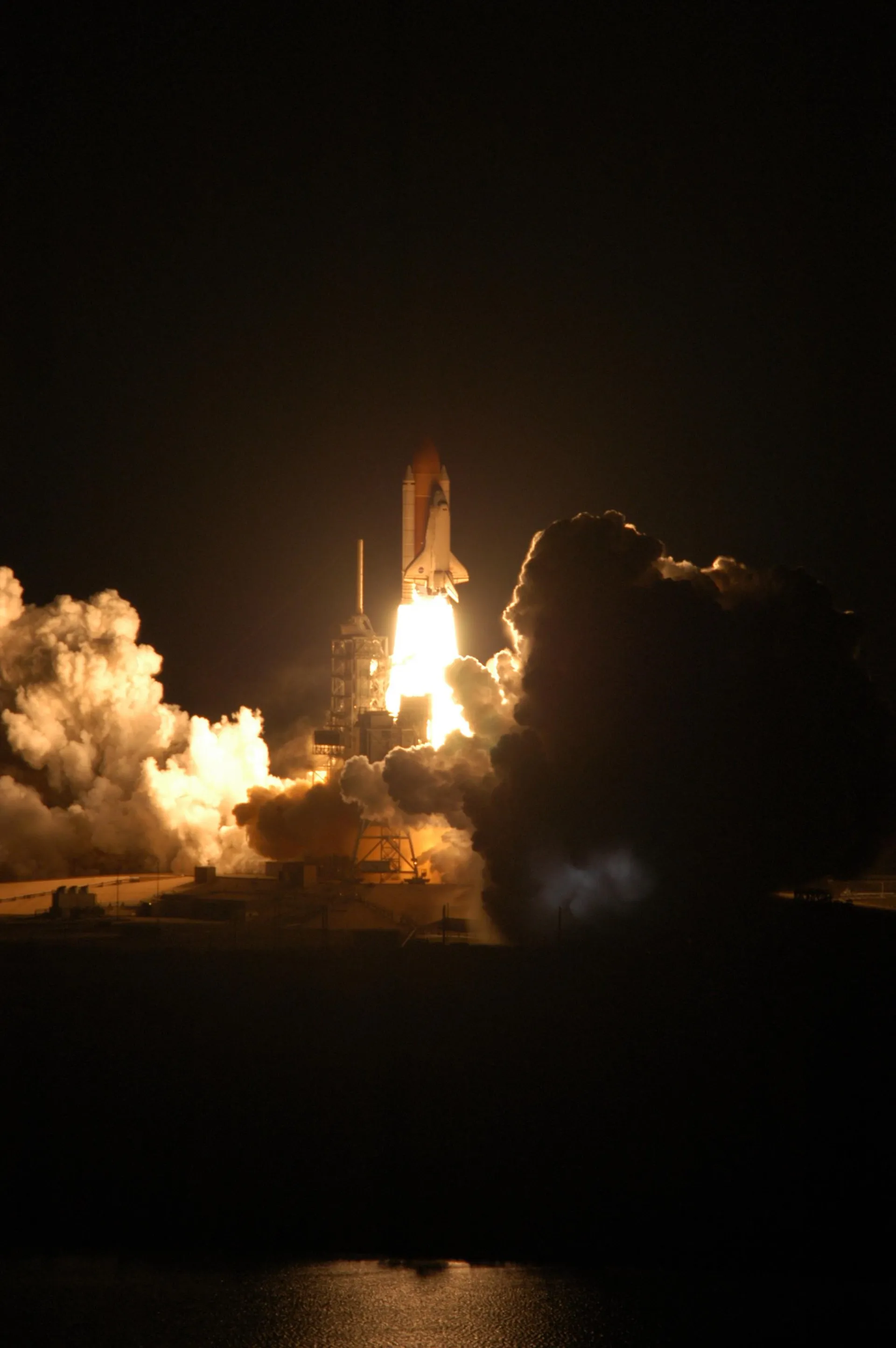
Discovery launches at night on STS-116, December 9, 2006: orbiter, external tank and two solid rocket boosters.
The system had three major components: the orbiter, which carried the crew, the payload and three main engines; a large external tank that held propellant for those engines; and two solid rocket boosters that provided most of the lift during the first two minutes of flight. Everything was reused except the external tank, which burned up in the atmosphere.4
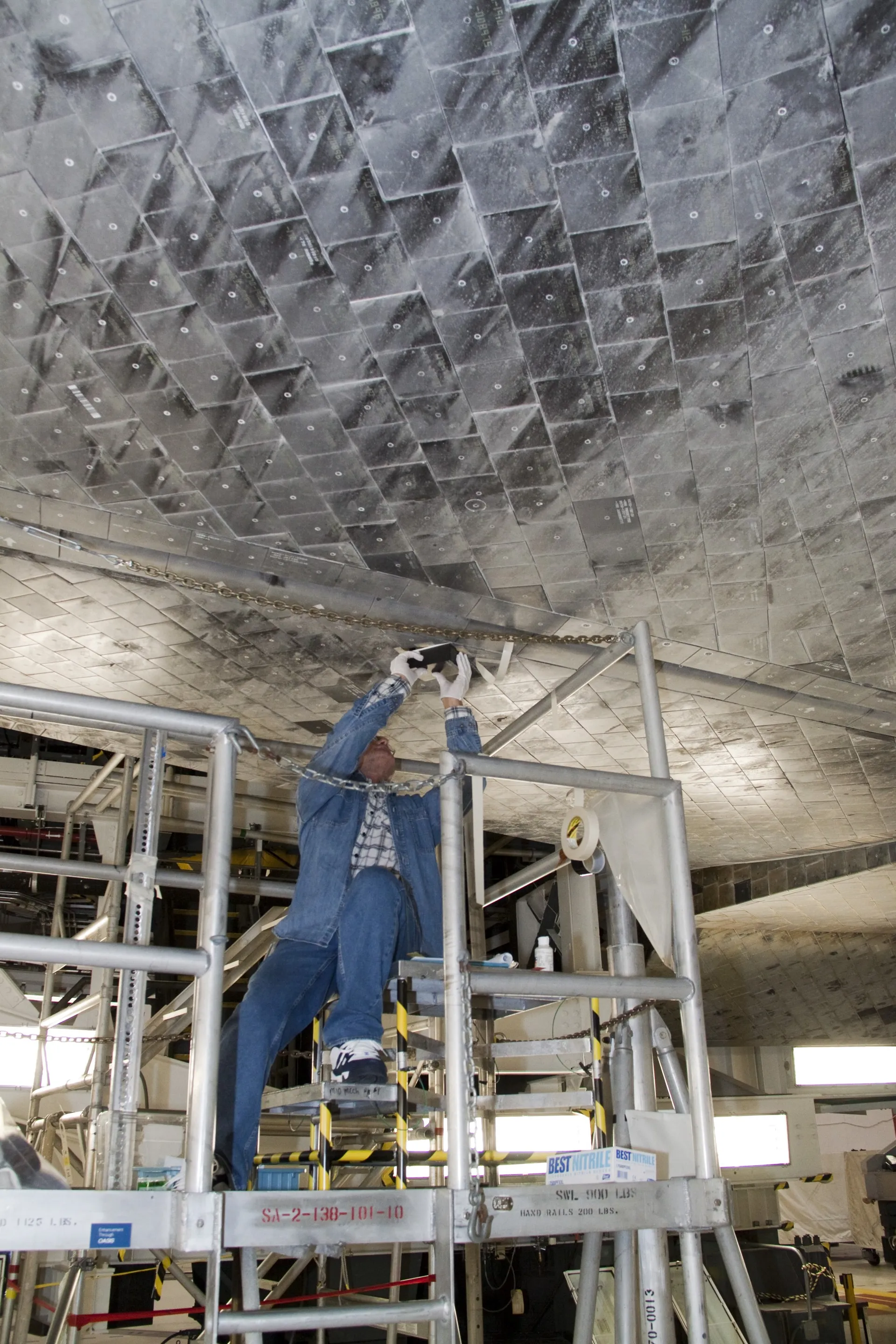
Rocketdyne, a division of North American Rockwell, won the contract for the Space Shuttle Main Engine in 1971 over a protest from Pratt & Whitney, and the award of the orbiter itself to the same company’s Space Division in 1972 gave North American responsibility for the entire orbiter, engines included—more than it had carried during Apollo. In March 1973 Rockwell gave Grumman the orbiter’s delta wing and McDonnell Douglas its on-orbit maneuvering rockets. In further competitions that year NASA chose Martin Marietta to build the external tank and Thiokol for the solid rocket boosters.2 Thiokol received the booster contract on November 20, 1973. Its motor was the largest solid rocket ever produced in the United States, and costs, particularly early in the program, were the primary concern of NASA’s selection board.8
Western Europe agreed to build Spacelab, a pressurized laboratory that fit in the cargo bay, at an estimated cost of $370 million; in 1975 Canada agreed to pay the $30 million development cost of the robotic arm used to deploy and retrieve satellites. Projected flight programs from 1980 to 1991 identified almost 1,000 payloads for the Shuttle to carry.1
From Enterprise to the first operational flights
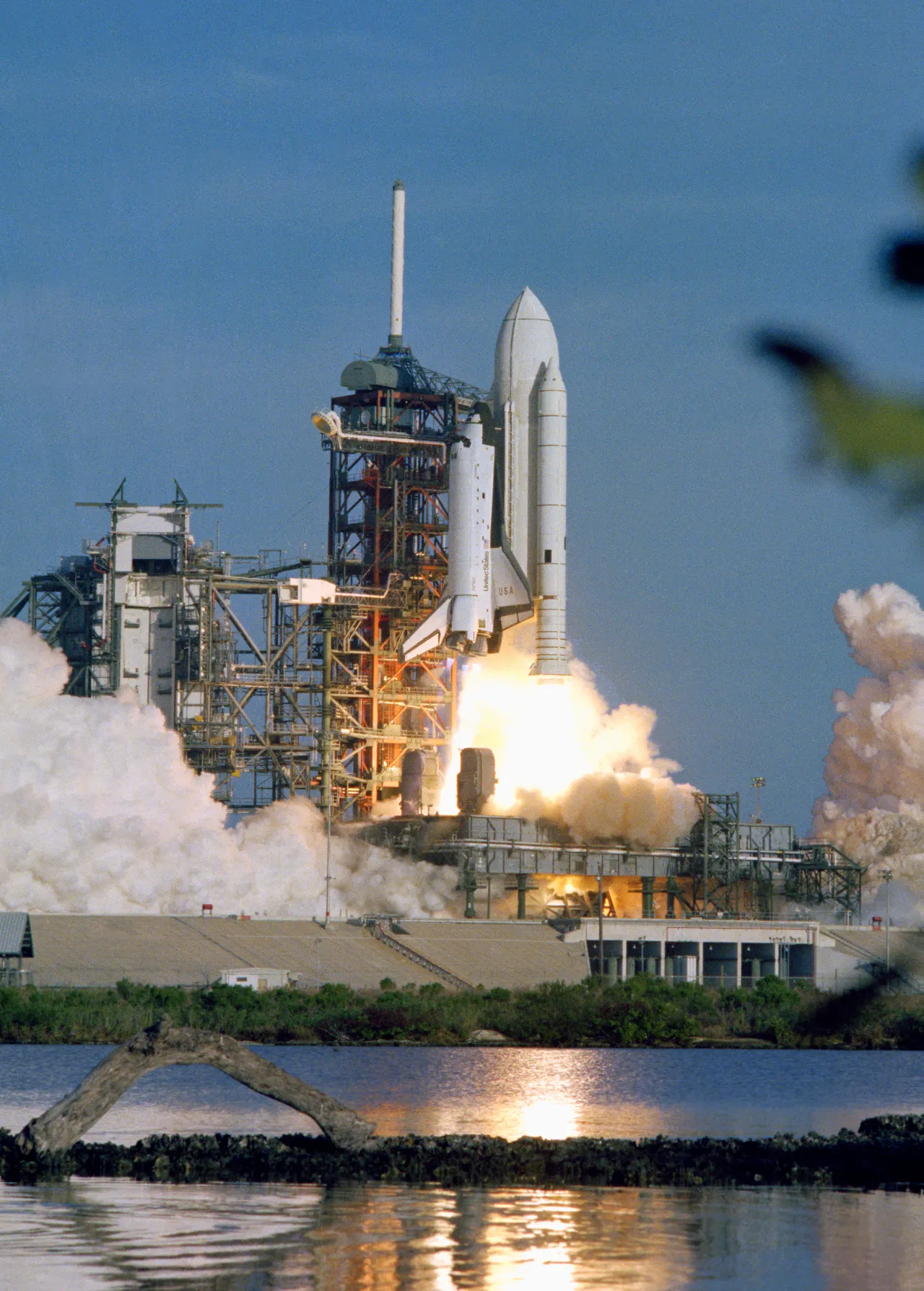
An early orbiter, Enterprise, never flew in space; it was used for approach and landing tests at the Dryden Flight Research Center and for launch pad studies in the late 1970s. Columbia was the first orbiter delivered to Kennedy Space Center, in March 1979.4 On April 12, 1981, John Young and Robert Crippen flew it on STS-1, demonstrating that the Shuttle could take off vertically and glide to an unpowered, airplane-like landing.13
The firsts came quickly. Challenger’s maiden flight, STS-6 in April 1983, deployed the first Tracking and Data Relay Satellite, and Story Musgrave and Donald Peterson made the first Shuttle spacewalk. Sally Ride became the first American woman in space on STS-7 in June 1983, and Guion Bluford the first African American on STS-8. STS-9 carried the first Spacelab and the first astronaut representing the European Space Agency. On STS-41B in 1984, Bruce McCandless and Robert Stewart made the first untethered spacewalks with the Manned Maneuvering Unit.5,13
The first years, 1977–1985
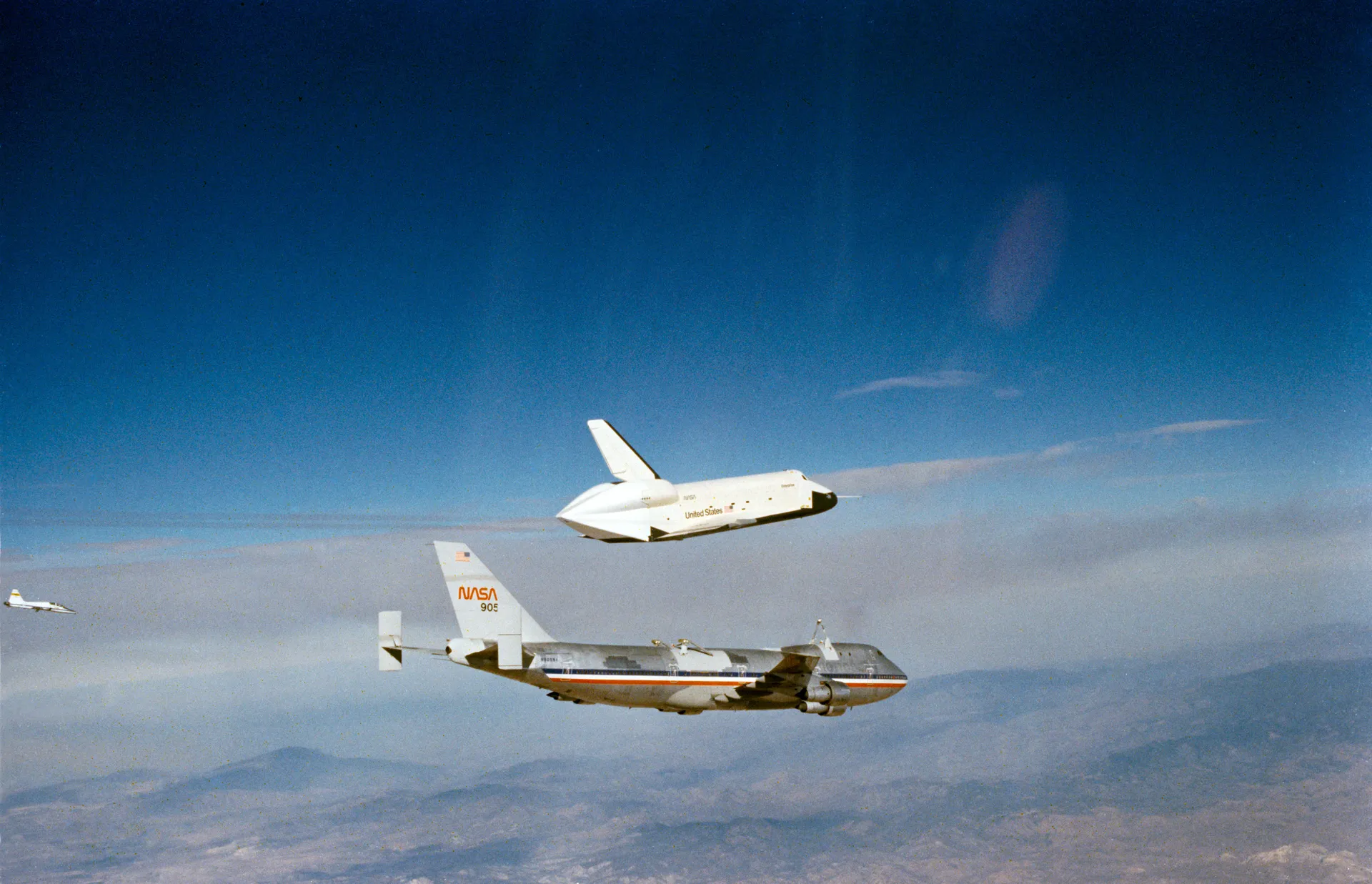
Enterprise separates from its 747 carrier for a free flight during the approach and landing tests, September 1977. NASA
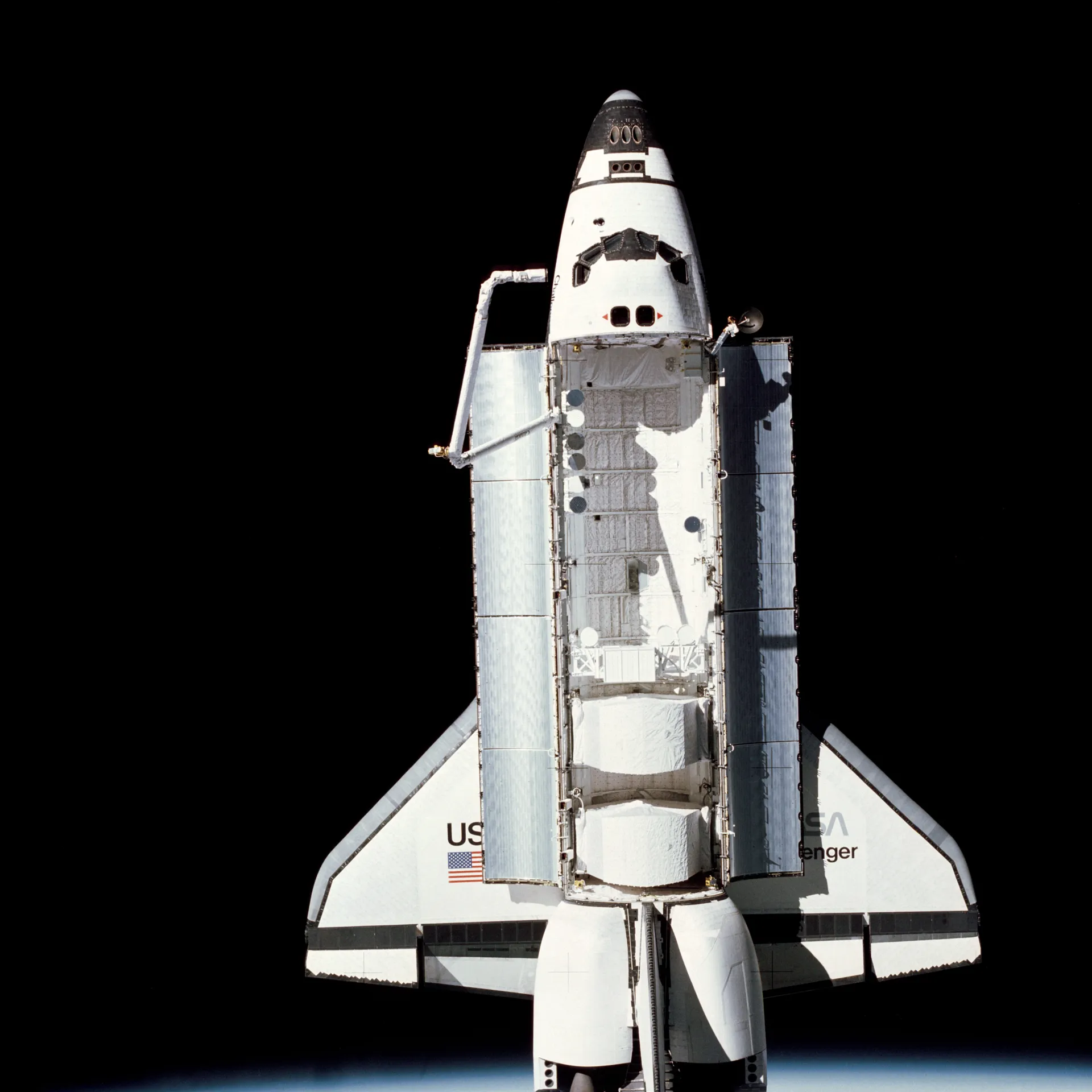
Challenger photographed from a free-flying German satellite, SPAS-01, on STS-7 in June 1983. NASA/N/A
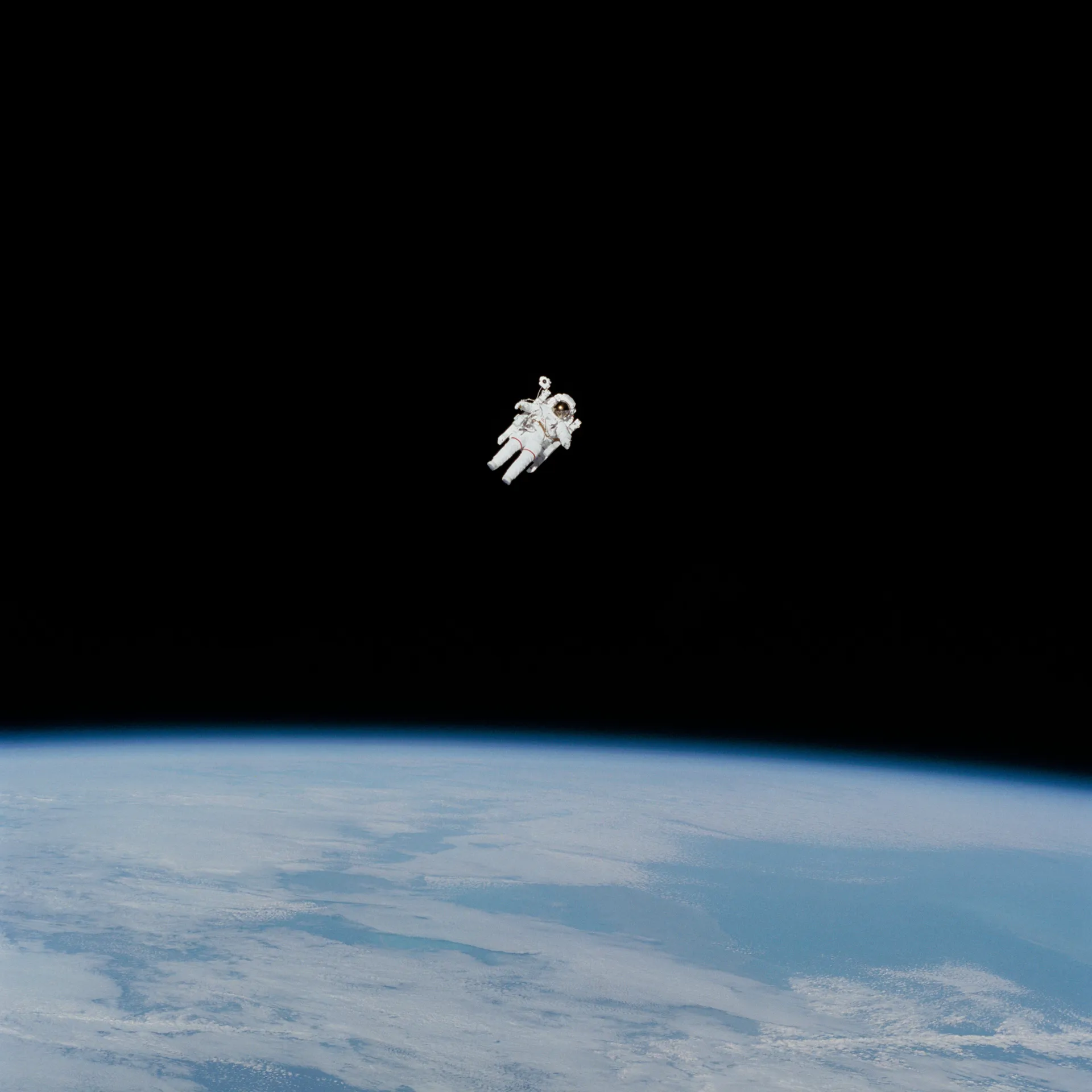
Bruce McCandless on the first untethered spacewalk, STS-41B, February 1984. NASA
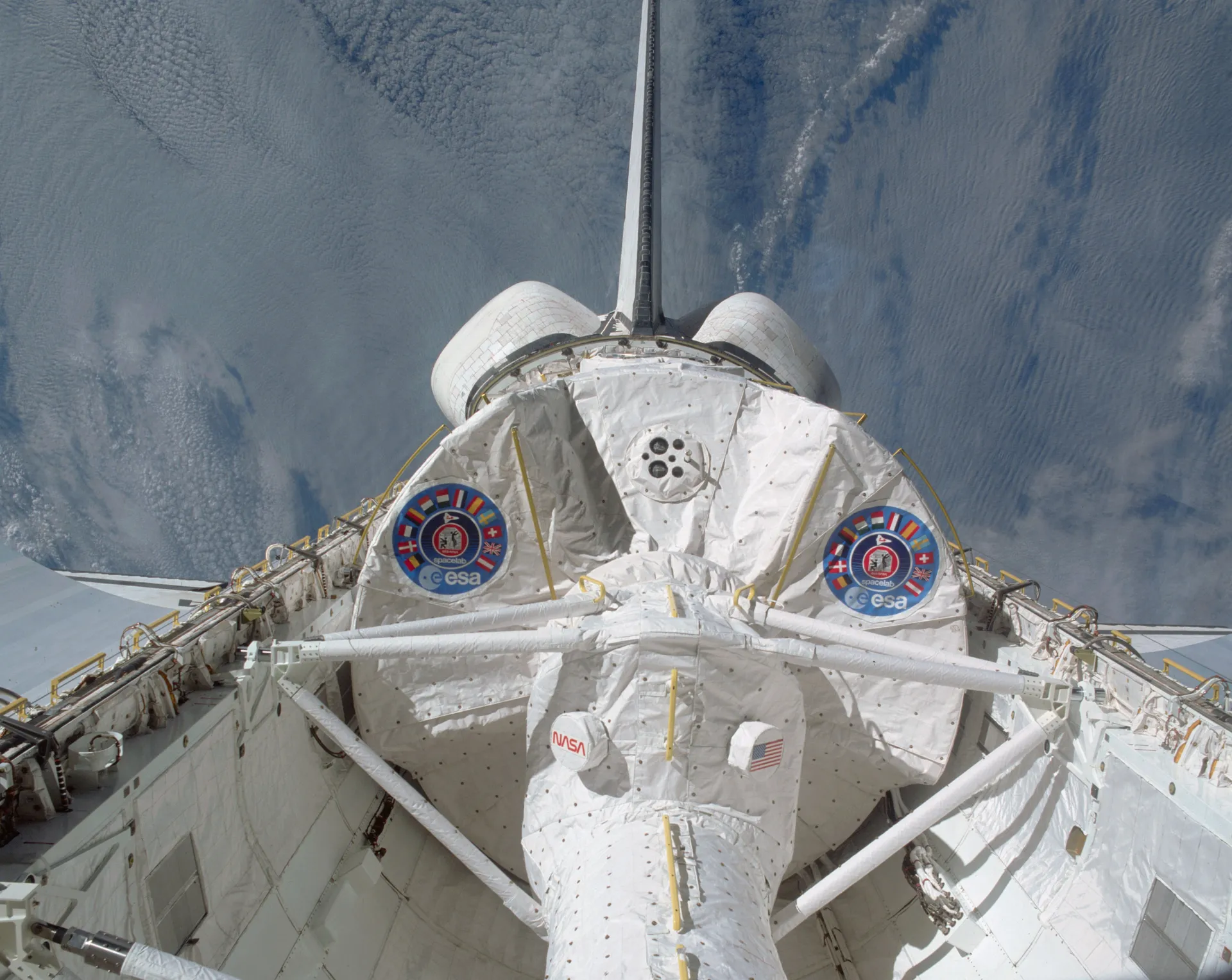
The first Spacelab, Europe’s contribution, in Columbia’s cargo bay on STS-9, late 1983. NASA
Twenty-four flights a year was the plan; nine was the most ever flown
A Shuttle ascent filmed by a long-range tracking camera.
From its inception NASA had advertised a vehicle that would make space operations “routine and economical,” and the more flights a year, the more routine and economical they would be. One early plan contemplated a mission a week. In 1985 NASA published a projection calling for 24 flights a year by 1990. On July 4, 1982, the day the test flights ended, President Reagan declared the Shuttle the primary launch system for both national security and civil government missions.9
Space Shuttle launches per year, 1981–201115
Show the numbers
| year | Launches |
|---|---|
| 1981 | 2 |
| 1982 | 3 |
| 1983 | 4 |
| 1984 | 5 |
| 1985 | 9 |
| 1986 | 2 |
| 1987 | 0 |
| 1988 | 2 |
| 1989 | 5 |
| 1990 | 6 |
| 1991 | 6 |
| 1992 | 8 |
| 1993 | 7 |
| 1994 | 7 |
| 1995 | 7 |
| 1996 | 7 |
| 1997 | 8 |
| 1998 | 5 |
| 1999 | 3 |
| 2000 | 5 |
| 2001 | 6 |
| 2002 | 5 |
| 2003 | 1 |
| 2004 | 0 |
| 2005 | 1 |
| 2006 | 3 |
| 2007 | 3 |
| 2008 | 4 |
| 2009 | 5 |
| 2010 | 3 |
| 2011 | 3 |
The flight rate never came close. The Rogers Commission found that NASA had not provided the resources to meet its schedule: the system was strained by the modest nine missions of 1985, and NASA probably could not have flown the 15 scheduled for 1986. Training schedules were compressed, spare parts ran short, and resources were focused on near-term problems.9
Challenger: a joint design that NASA and Thiokol had come to accept
On January 28, 1986, Challenger and its seven-member crew were lost 73 seconds after launch. The presidential commission chaired by William P. Rogers concluded that the cause was the failure of the pressure seal in the aft field joint of the right solid rocket motor. The failure was due to a faulty design unacceptably sensitive to a number of factors: temperature, physical dimensions, the character of materials, the effects of reuse, processing and the joint’s reaction to dynamic loading.6,13
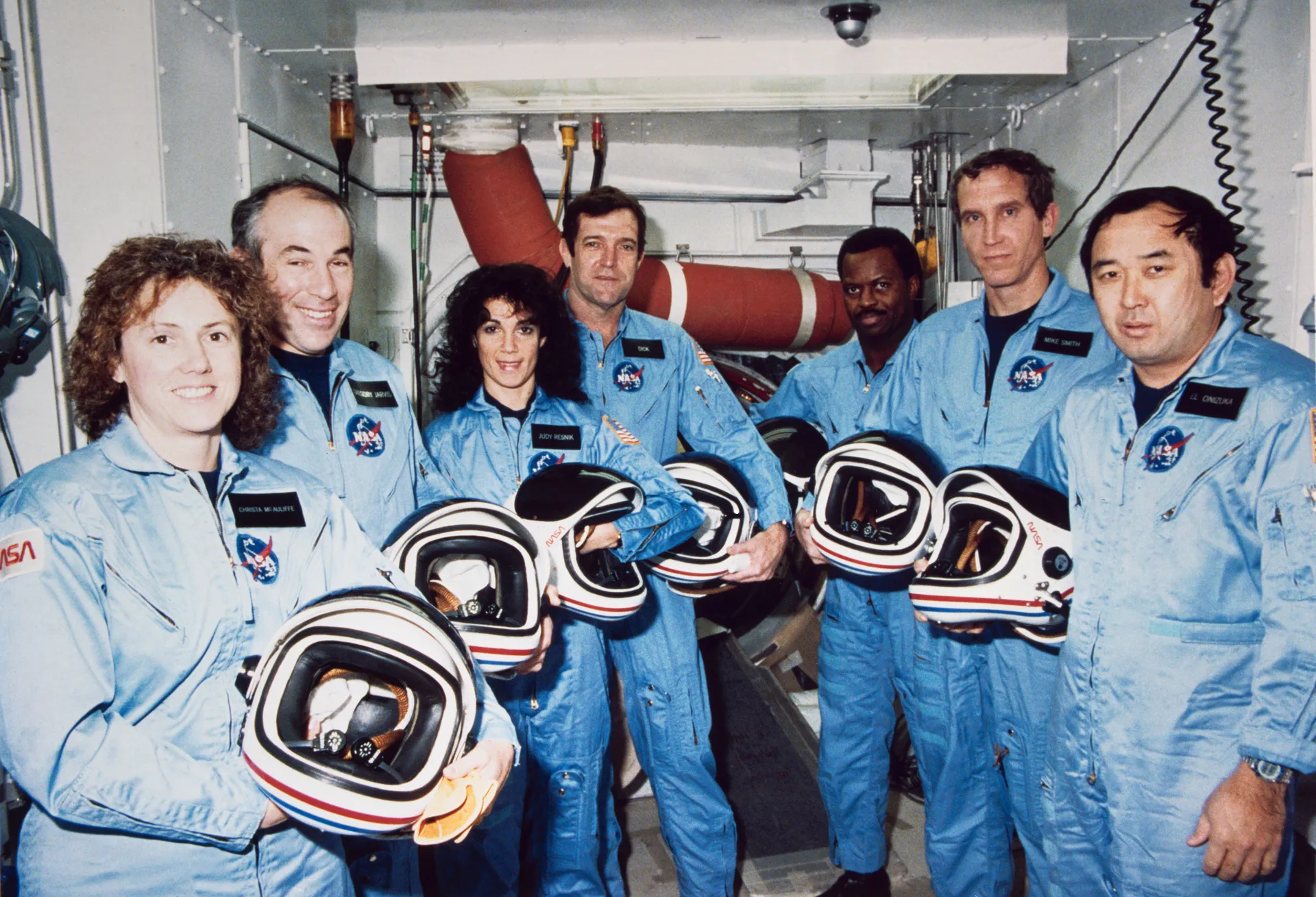
The commission found the decision to launch flawed. Those who made it did not know the recent history of problems with the O-rings and the joint. They did not know that Thiokol had initially recommended in writing against launching at temperatures below 53 degrees Fahrenheit, or that its engineers continued to oppose the launch after the company’s management reversed its position. Had the decision-makers known all the facts, the commission wrote, it is highly unlikely that they would have launched on January 28.7
The problem began with the faulty design of the joint and grew as NASA and contractor management first failed to recognize it as a problem, then failed to fix it, and finally treated it as an acceptable flight risk. As tests and flights showed hot gas eroding the rubber O-rings, both NASA and Thiokol increased the amount of damage they considered acceptable. At no time did management recommend a redesign or call for the Shuttle’s grounding until the problem was solved.8
A kind of Russian roulette. … [The Shuttle] flies [with O-ring erosion] and nothing happens. Then it is suggested, therefore, that the risk is no longer so high for the next flights. We can lower our standards a little bit because we got away with it last time.
The Shuttle was grounded for more than two years while NASA and its contractors redesigned the solid rocket boosters and put management reforms in place to increase safety. It returned to flight on September 29, 1988.13 Endeavour was built to replace Challenger and was delivered to Florida in May 1991.4
A workshop in orbit: Hubble, Mir and a space station
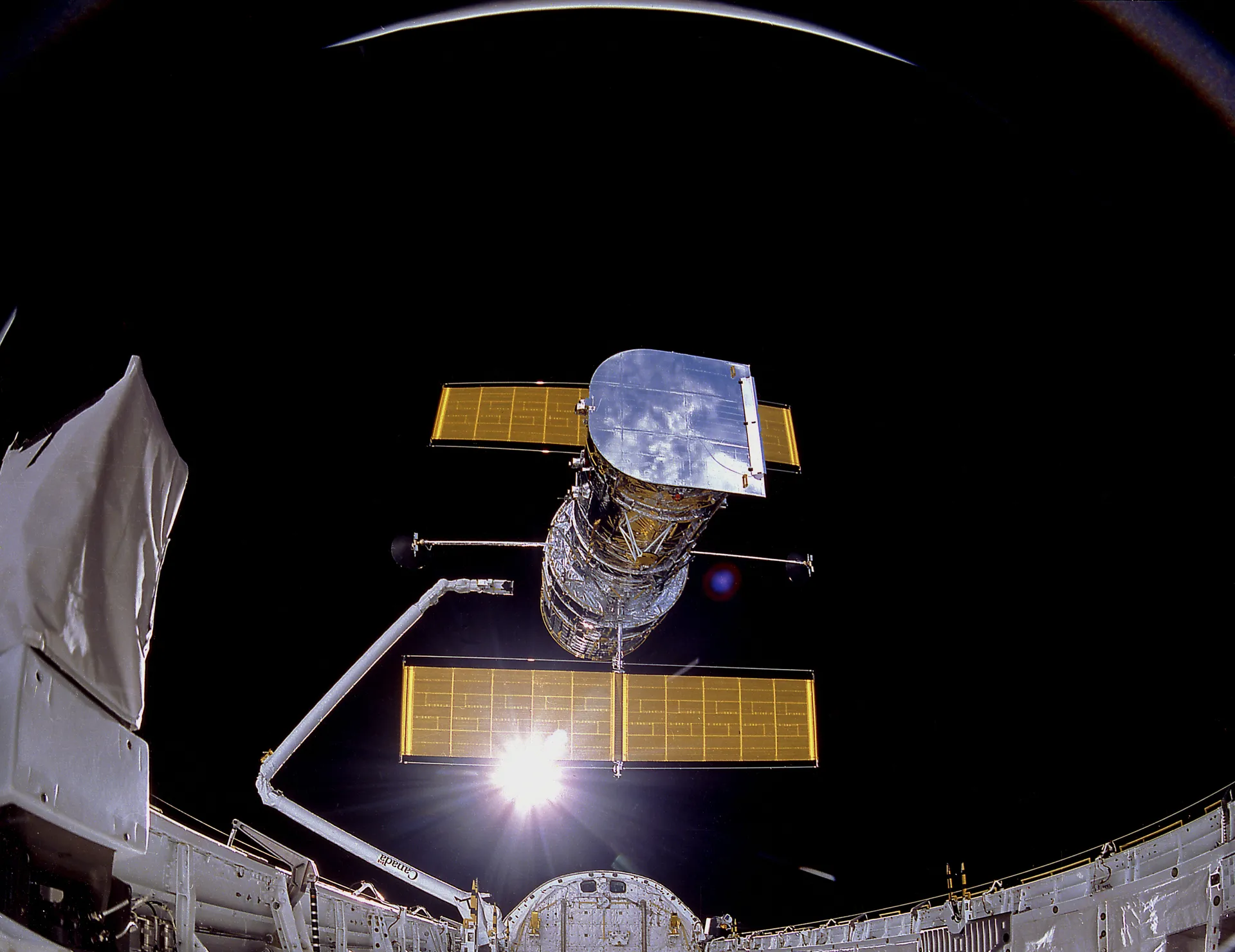
Hubble held above Discovery’s cargo bay before its release, April 25, 1990.
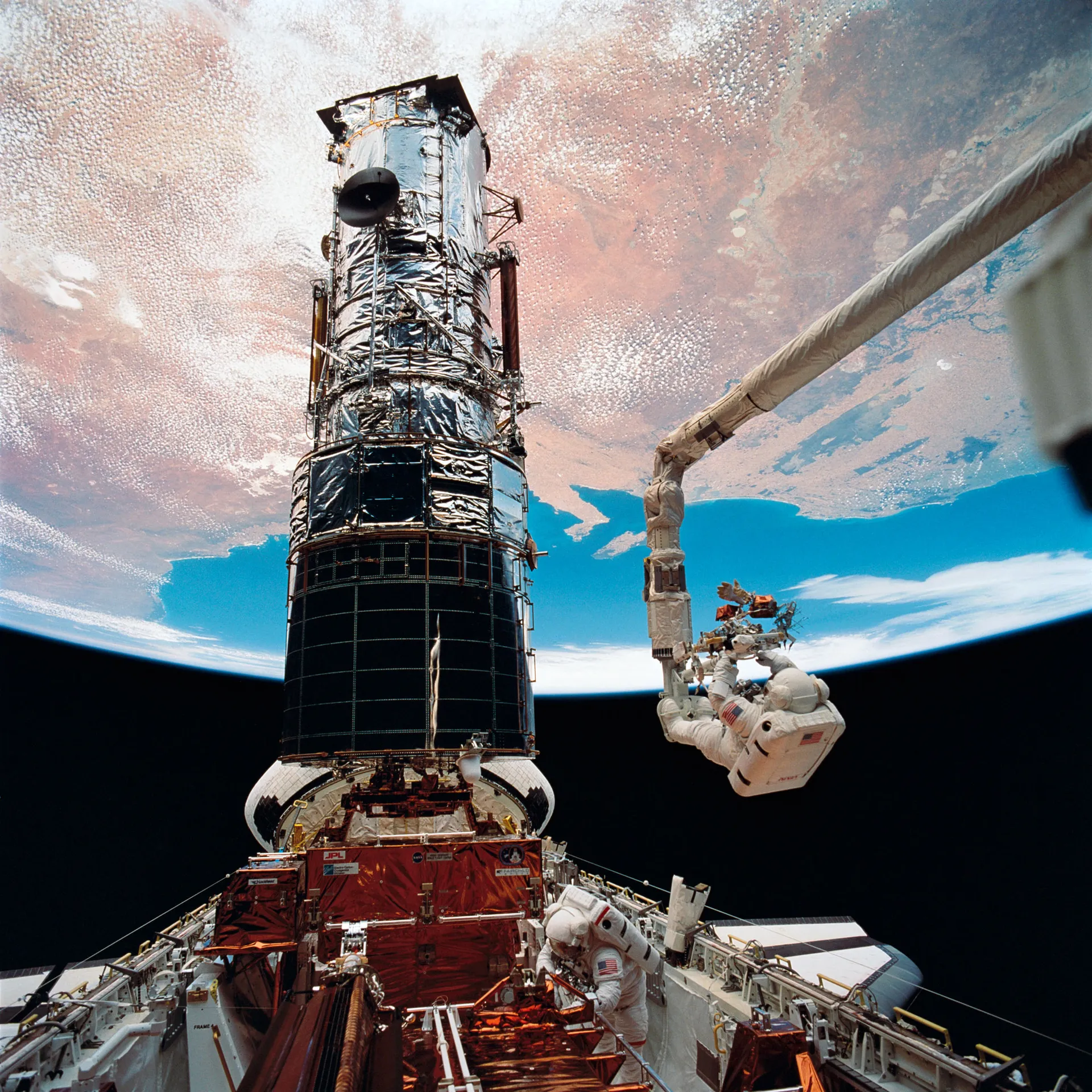
Discovery launched the Hubble Space Telescope in April 1990.4 Scientists soon found that a microscopic spherical aberration in the polishing of its mirror badly limited its observing power. During a previously scheduled servicing mission in December 1993, astronauts made a dramatic series of spacewalks to install corrective optics, which worked like a contact lens and restored Hubble’s capabilities. The mission demonstrated again the ability of humans to work in space and greatly restored public confidence in NASA.13 Shuttle crews returned to Hubble four more times; the last servicing mission flew in May 2009.14
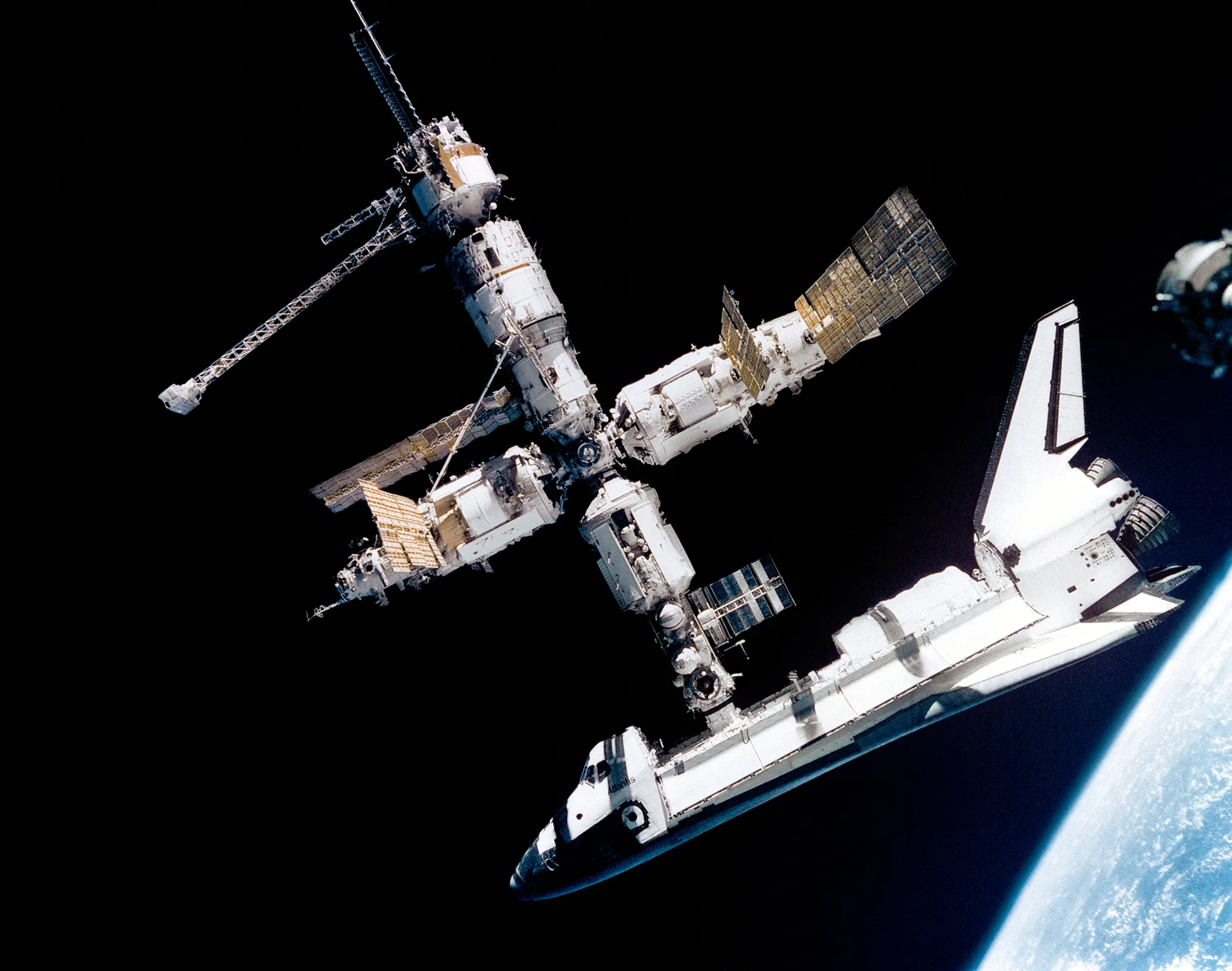
In 1993 Russia joined the United States and its partners in building the International Space Station. To prepare, the Shuttle flew a series of missions to the Russian station Mir, and seven American astronauts lived aboard Mir for long stays; assembly of the new station began in late 1998.13 Atlantis alone carried up the Destiny laboratory, the Quest airlock and several of the station’s truss segments.14 When Atlantis delivered its last cargo in 2011, a tiny satellite called PicoSat became the 180th and final payload deployed from a Space Shuttle.12
Columbia: a foam strike, a damaged wing and the end of the program
Columbia, NASA’s oldest orbiter, launched on January 16, 2003, for a 16-day research flight. About 82 seconds into the flight, a piece of foam insulation broke from the external tank’s left bipod ramp and struck the orbiter’s left wing near its reinforced carbon-carbon leading-edge panels. Mission Control told the crew about the strike by email on the eighth day, assuring them that foam loss had occurred on previous flights and caused no concern for reentry. On February 1, flying over Texas at 207,000 feet, 16 minutes from landing, Columbia broke apart. The seven astronauts were killed.11
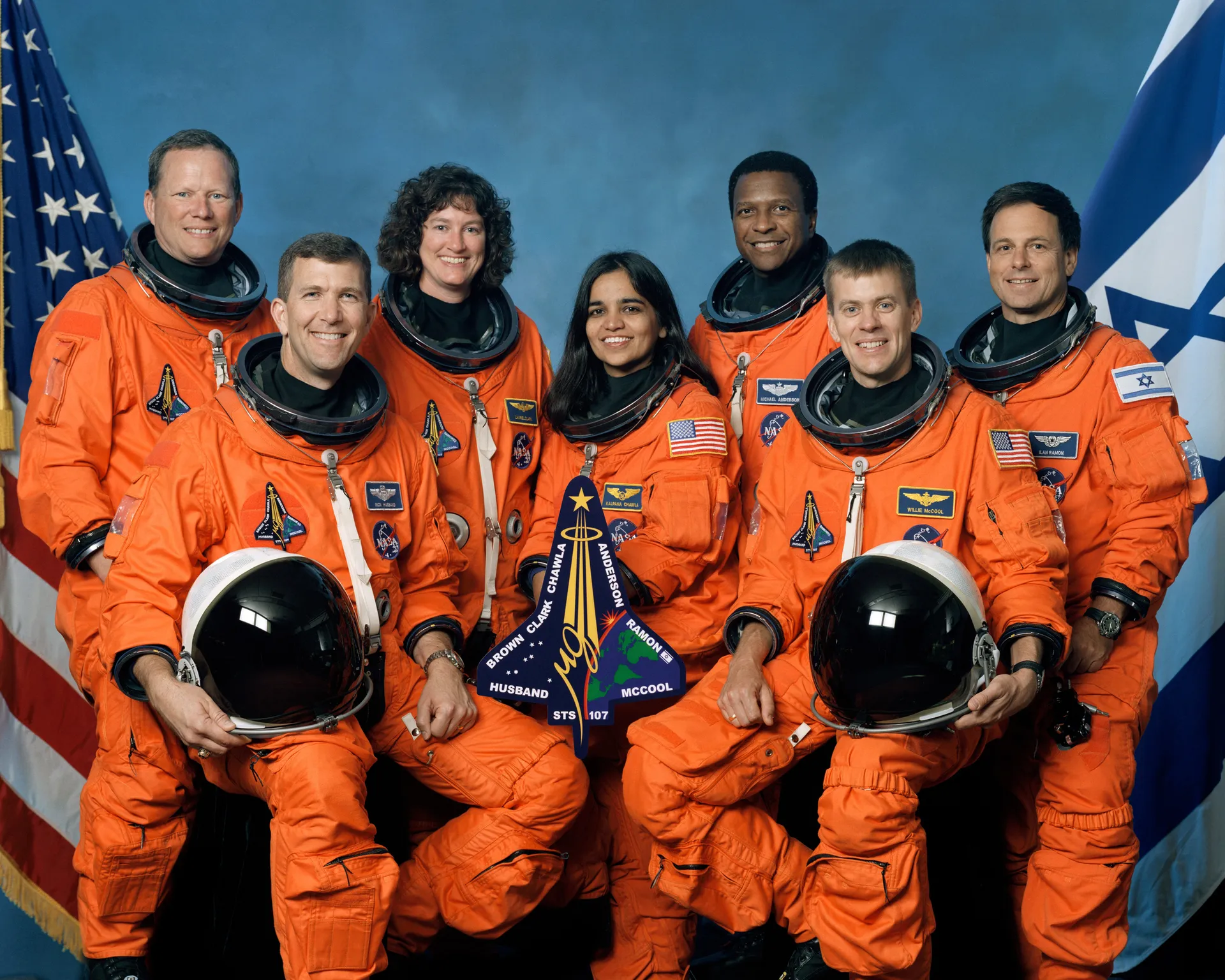
The Columbia Accident Investigation Board, chaired by retired Admiral Harold W. Gehman Jr., found that the damaged wing had let hot gas into the leading edge and its support structure during entry, leading to loss of control and breakup. Its report, published on August 26, 2003, made 29 recommendations, from on-orbit inspection and repair of the heat shield to better cameras for watching launches.10
The board also examined NASA’s organization and safety culture and found faults similar to those behind Challenger. NASA had become complacent about foam loss because none had yet caused serious damage. Schedule pressure and inadequate resources contributed, and the board recommended an independent technical engineering authority that “should have no connection to or responsibility for schedule or program cost.”10,11
The fleet stayed grounded for more than 29 months, until Discovery flew STS-114 in July 2005. By then President George W. Bush had announced, in January 2004, a Vision for Space Exploration that called for retiring the Shuttle once the space station was assembled.11
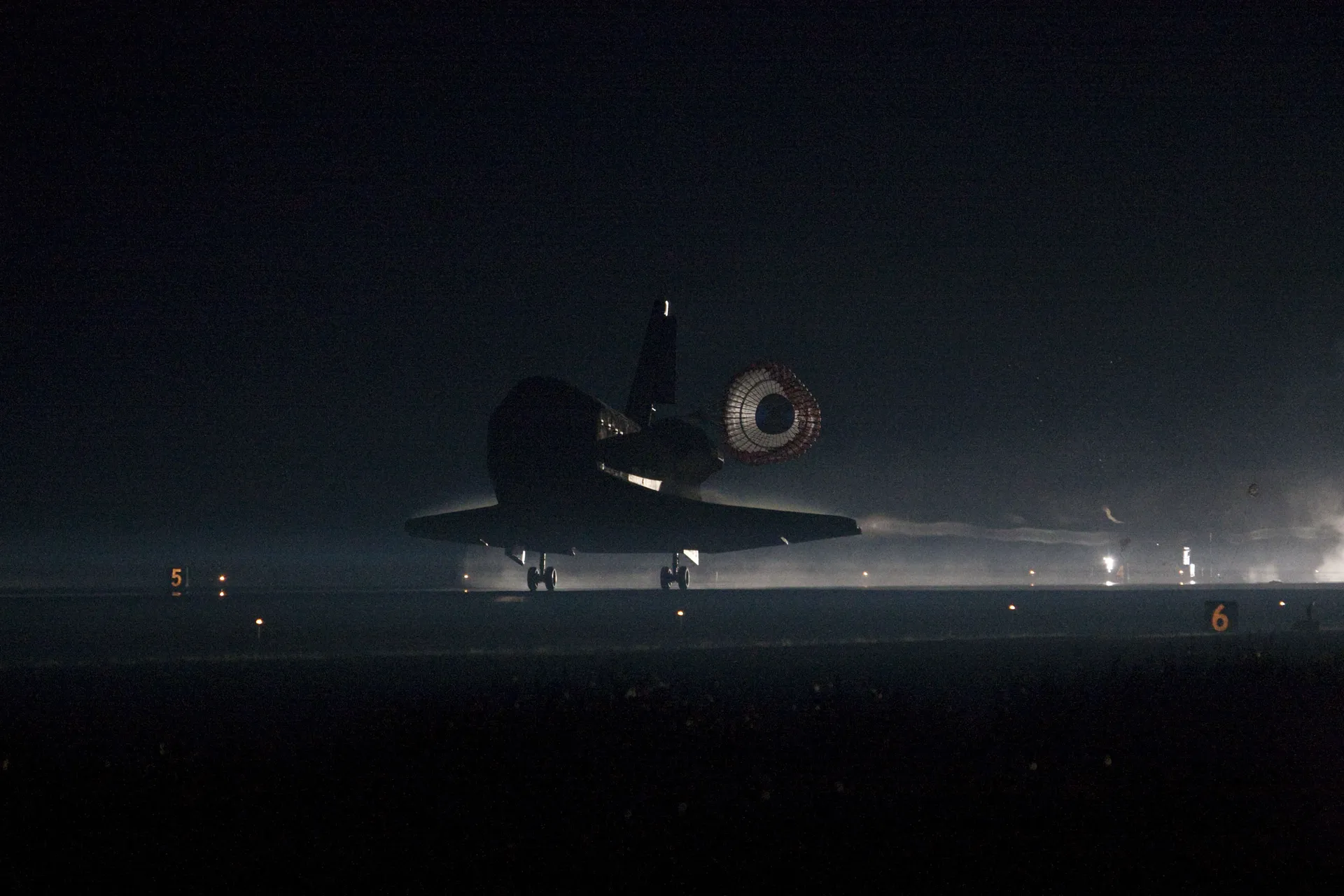
Atlantis landed for the last time at 5:57 a.m. on July 21, 2011
Nearly a million spectators gathered along Florida’s beaches, rivers and causeways for the final launch, on July 8, 2011. Atlantis carried four veteran astronauts—Chris Ferguson, Doug Hurley, Sandy Magnus and Rex Walheim—and more than 9,400 pounds of supplies in the Raffaello logistics module to sustain the space station for a year. On July 21, after its 200th orbit of the mission, Atlantis dropped out of the predawn darkness and landed at Kennedy. It was the program’s 26th night landing and 78th at Kennedy, and the 33rd and final flight for Atlantis, which had spent 307 days in space and traveled 125,935,769 miles.12
“Although we got to take the ride,” Ferguson said on the runway, “we sure hope that everybody who has ever worked on, or touched, or looked at, or envied or admired a space shuttle was able to take just a little part of the journey with us.”12 For the next nine years, NASA relied on Russian Soyuz spacecraft to carry its astronauts to the station it had built, until commercial crew launches from Florida began in May 2020.11
Sources
The text above is drawn from these 15 sources. Government works are adapted closely; company and press material is summarized. Numbers in the text point here. Last checked October 1, 2026.
Show all 15 sourcesShow fewer
Continue
Related stories
- ApolloKennedy’s 1961 goal became a program of 400,000 people and more than 500 contractors. It chose a risky route to the Moon, survived a fire on the pad, and landed six crews before Congress ended it.
- ISSHow five space agencies assembled the largest structure ever flown, what it has cost the United States, why its oldest Russian tunnel leaks, and how NASA plans to bring it down after 2030.
- Commercial crewHow NASA stopped owning its crew vehicles and started buying rides, why SpaceX’s Dragon has flown every rotation since 2020, and what still stands between Boeing’s Starliner and its first crew.