Hubble Space Telescope
The telescope launched by the Shuttle in 1990 and repaired by astronauts five times.
- Type
- Observatory
- Status
- Operating
- First flight
- April 24, 1990
- Size
- 13.2 m (43 ft)
- Built by
- Lockheed Martin, NASA
- $16B
- mission cost since 1977, in 2021 dollars, not counting Shuttle flights
- 5
- servicing missions by Shuttle crews, 1993–2009
- 200,000
- orbits completed on September 19, 2026
- 1.7M+
- observations in 36 years
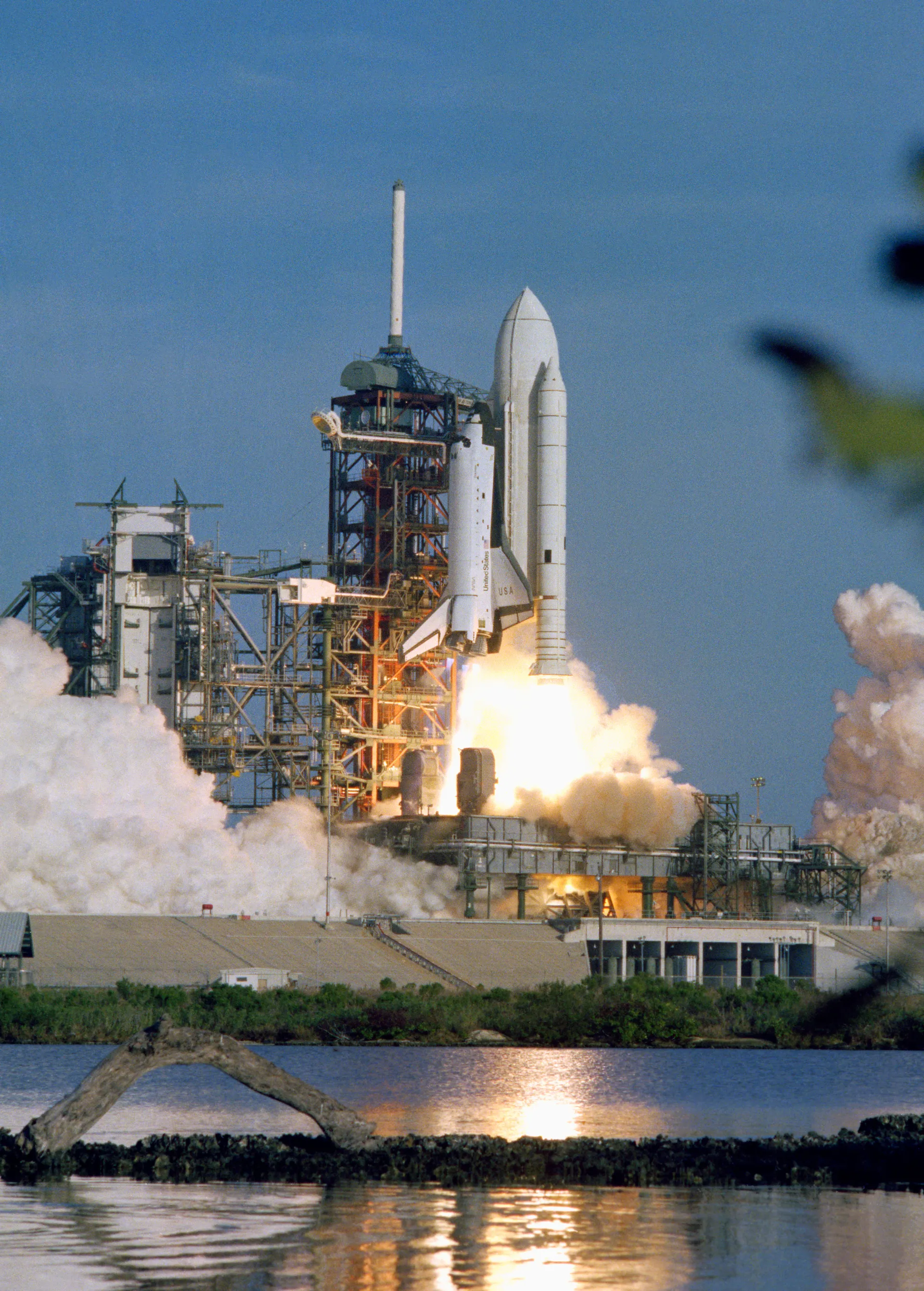
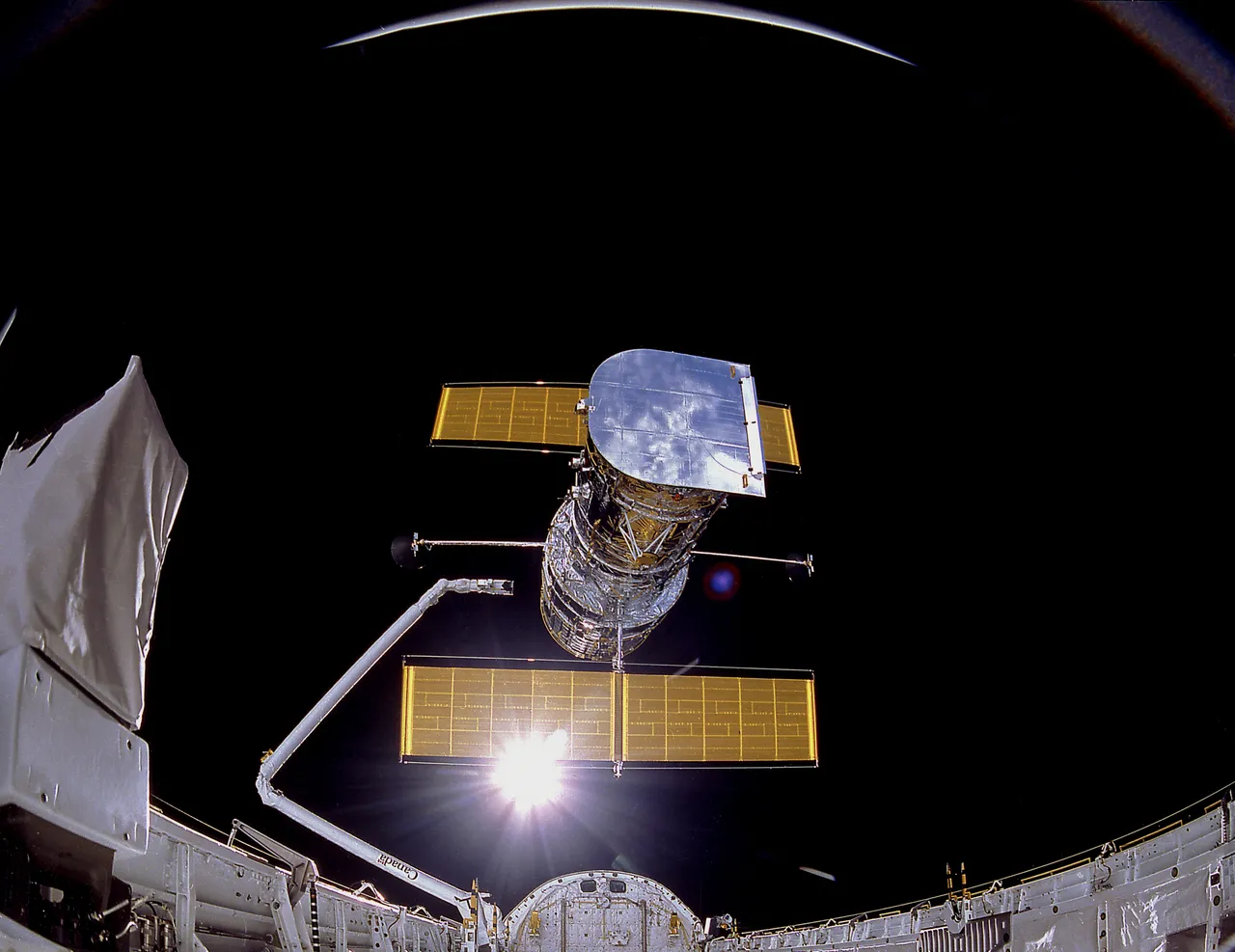
Named for the astronomer Edwin Hubble, the Hubble Space Telescope is a large, space-based observatory that was launched and deployed by the Space Shuttle Discovery in April 1990. It orbits about 300 miles (483 kilometers) above Earth, above the distorting effects of the atmosphere, and sees from the ultraviolet through visible light into the near-infrared. Marshall Space Flight Center managed its construction; Lockheed built the spacecraft and Perkin-Elmer the optics, and Goddard Space Flight Center operates it with the Space Telescope Science Institute.
Hubble was the first space observatory designed to be serviced by astronauts in orbit. Two months after launch, NASA announced that its 2.4-meter primary mirror had been ground too flat near the edge, blurring its images; astronauts installed corrective optics on the first of five Shuttle servicing missions in December 1993. Those missions, the last in May 2009, also replaced instruments, gyroscopes, batteries and solar arrays.
Since June 2024 Hubble has operated with one gyroscope, keeping another in reserve, which costs some observing efficiency. It completed its 200,000th orbit on September 19, 2026. No further servicing is planned, and NASA does not expect the telescope to reenter the atmosphere before the mid-2030s.
Read more about Hubble Space Telescope
Sources
- 1
- 2
- 3
- 4
- 5
- 6