The American space program, from the launch pad to a million miles out
Rockets, spacecraft, missions, money and the people who build them — told from NASA’s own records and the companies’ accounts, with 3D machines you can turn, open and take apart.
On the ground
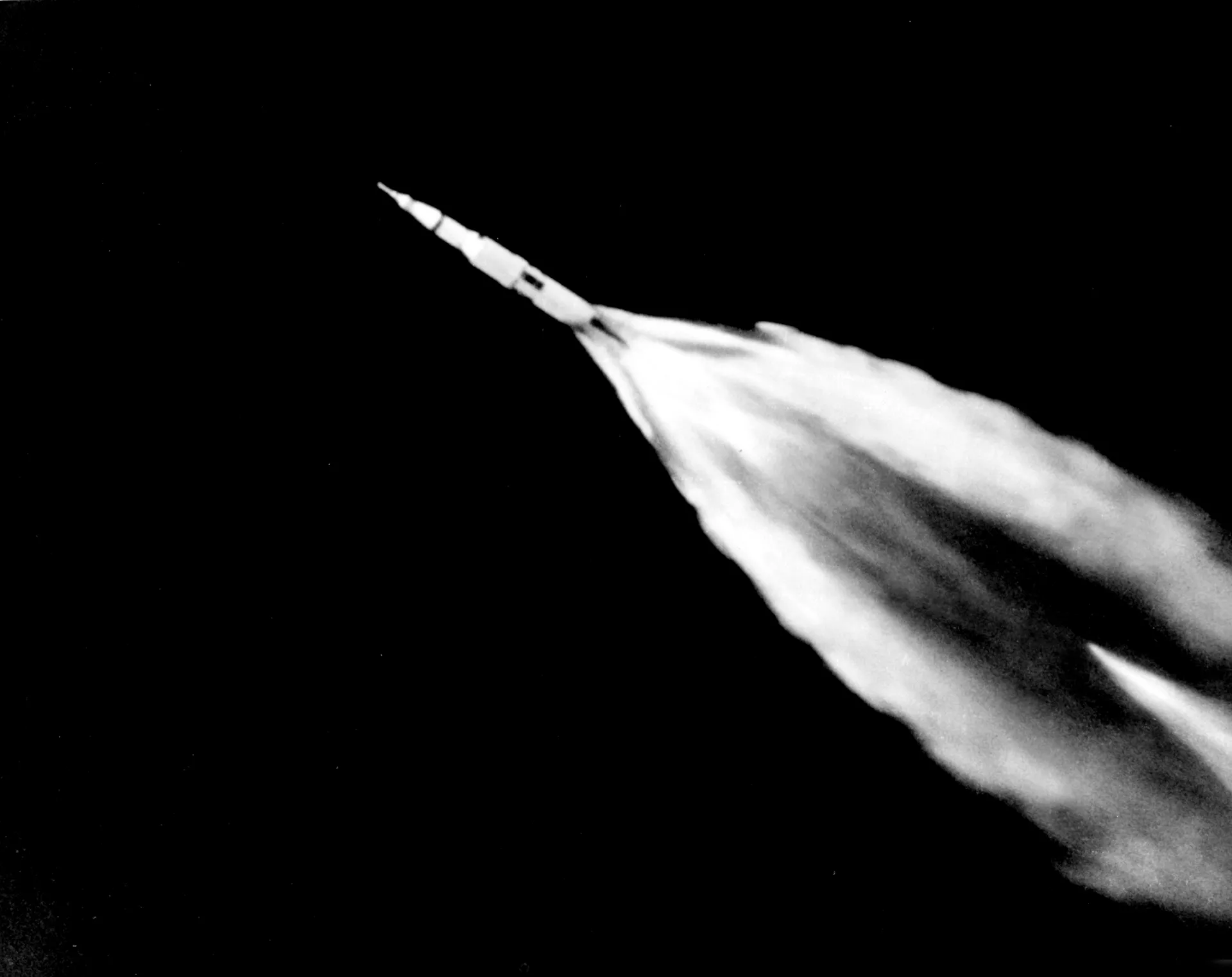
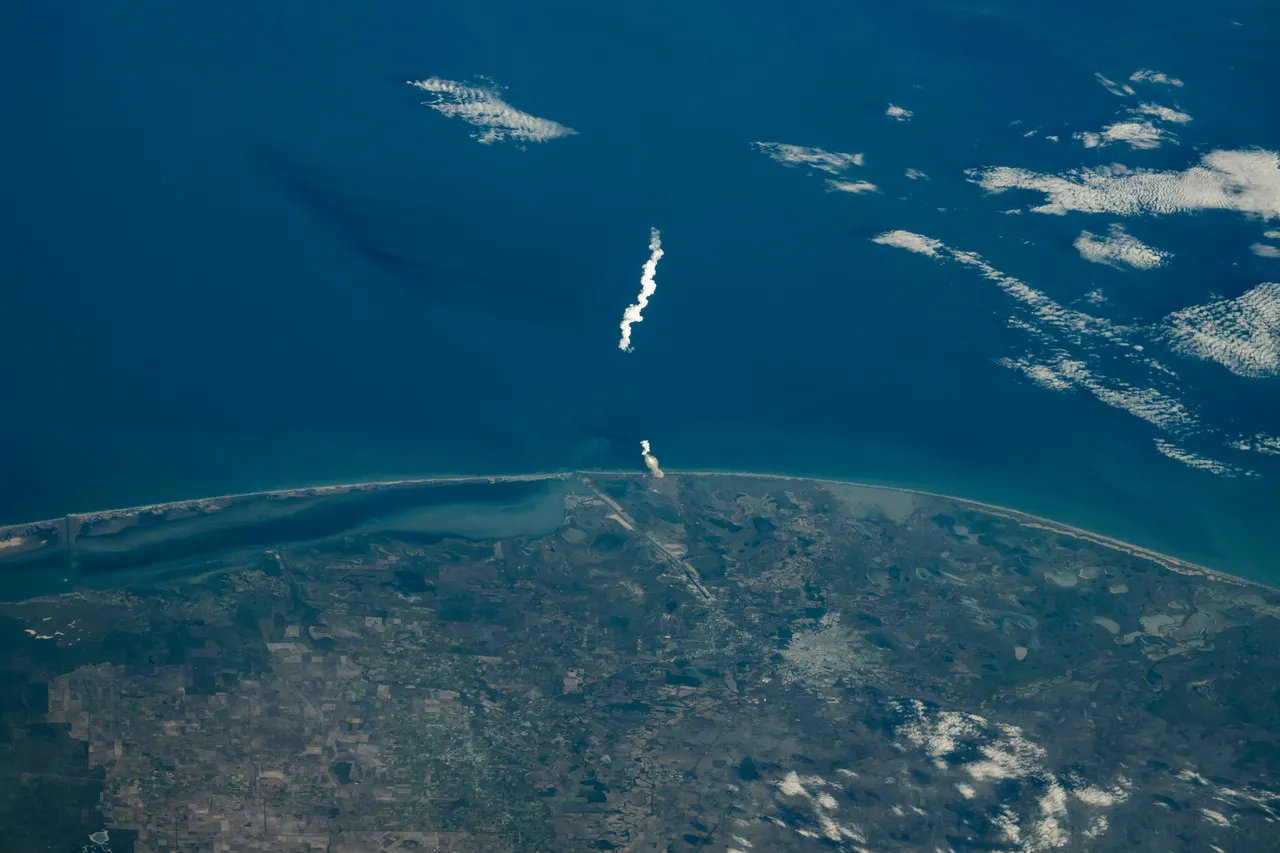
Everything starts with a launch
A rocket must reach about 17,500 miles per hour to stay in orbit. Most of what it carries is propellant, and how a rocket is built — and whether it comes back — decides what a mission costs.
Chapter 2Getting to orbit420 km up
People live in low orbit
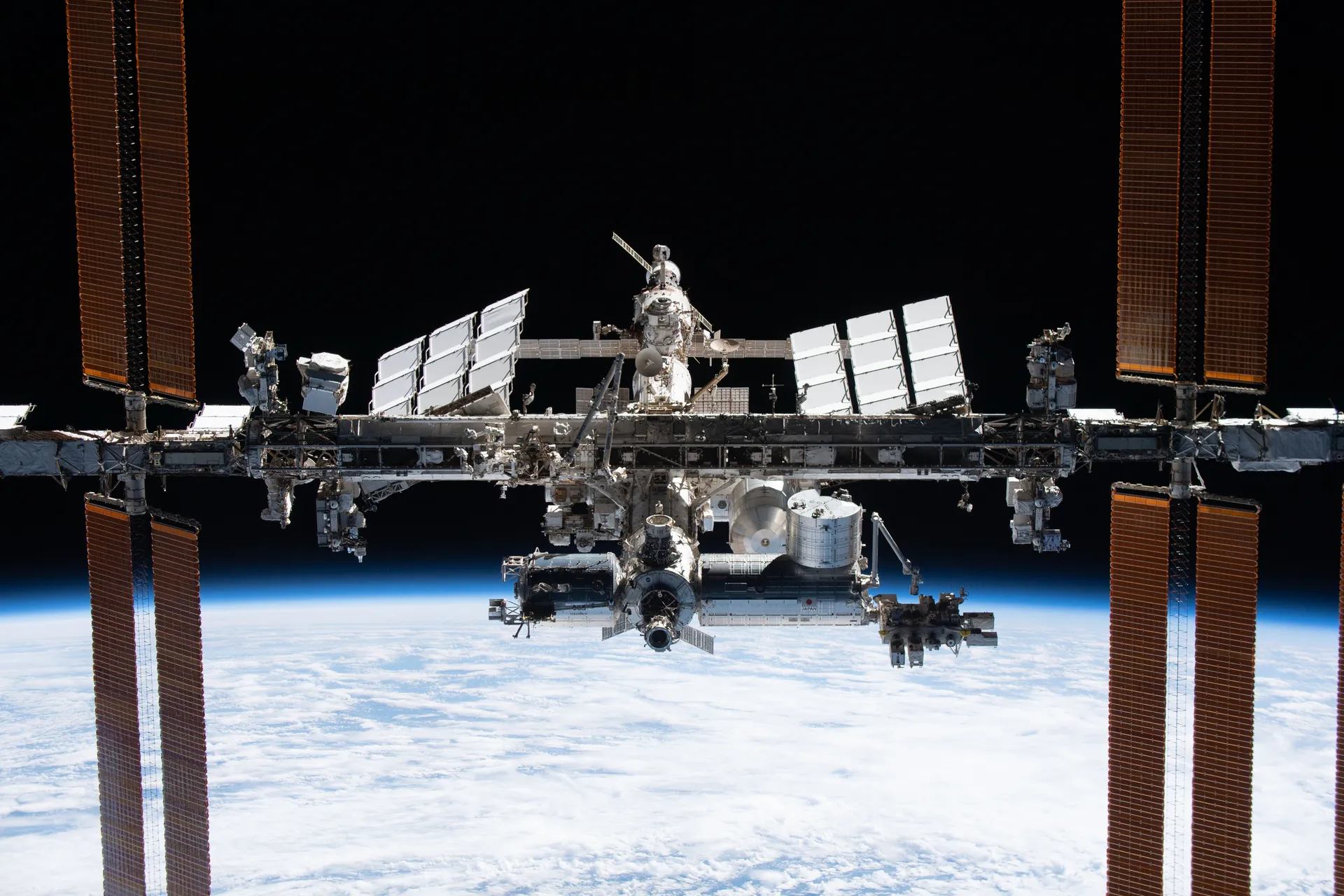
The International Space Station has been occupied without a break since November 2000. Crews now ride commercial capsules, and NASA plans to deorbit the station around 2030.
Chapter 3Living in orbit20,200 km up
Satellites tell the world where it is
The Space Force’s GPS satellites broadcast time signals that phones, aircraft and power grids use to find their place. Below them, Landsat has photographed every place on Earth since 1972.
Chapter 4Serving Earth35,786 km up
Weather watched from a fixed point
At this height a satellite circles once a day and seems to hang still. NOAA’s GOES satellites image the Americas every few minutes from two such points.
Chapter 4Serving Earth384,400 km away
Back to the Moon, in pieces
Artemis chains together a NASA rocket and capsule, commercial landers and propellant refilled in orbit. Four astronauts flew around the Moon in April 2026; the first landing is planned for 2028.
Chapter 5Return to the Moon1.5 million km away
Instruments that look outward
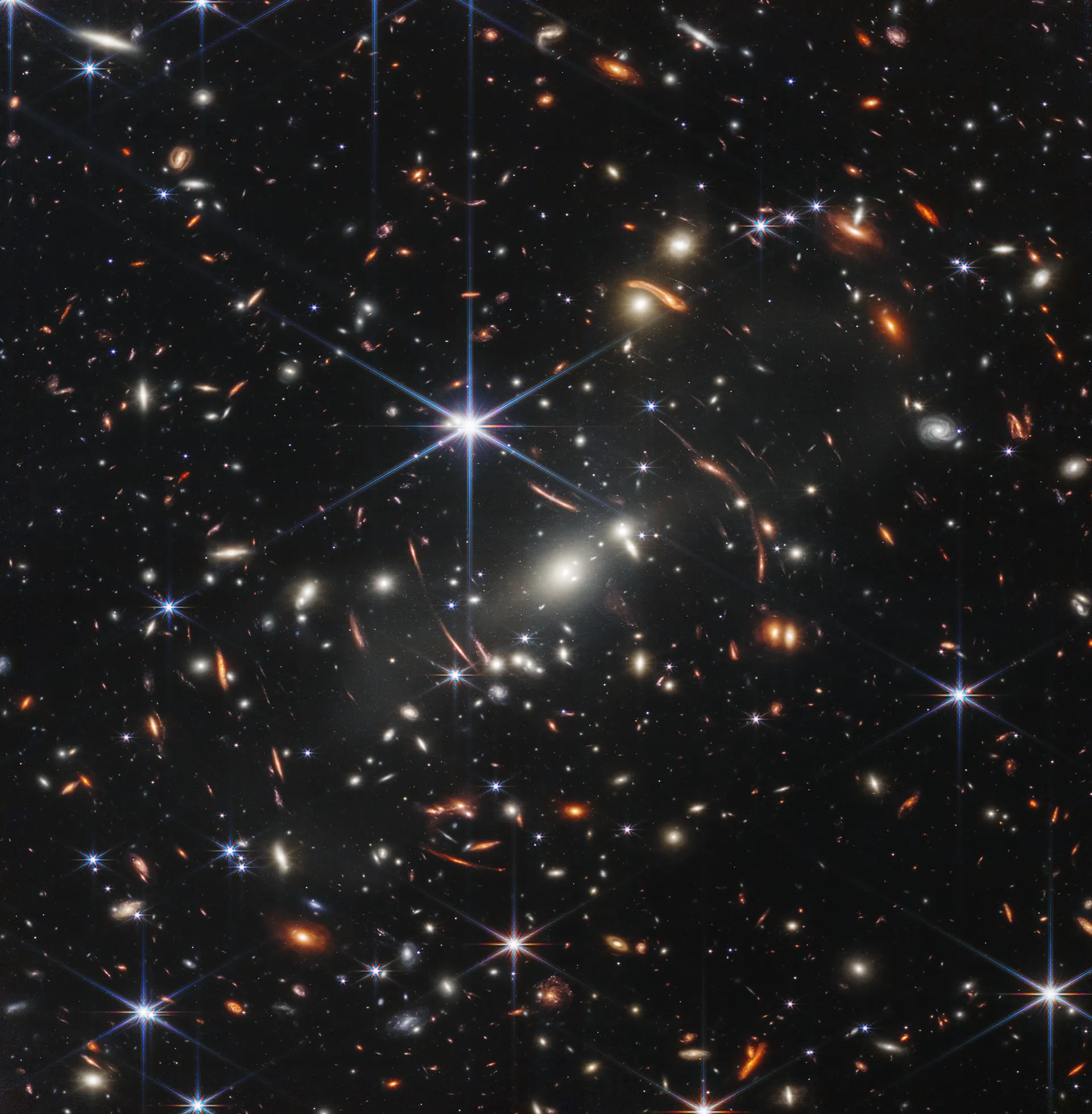
Webb works a million miles out, behind a sunshield the size of a tennis court. Rovers work on Mars; Voyager has left the Sun’s bubble. Science takes nearly a third of NASA’s budget.
Chapter 6Reading the universeThe story, in seven chapters
Read in order, the chapters run from the founding of NASA in 1958 to the plans being argued over now. Each one stands on its own if you would rather start with the part that interests you.
- 1How it beganHow did the United States learn to fly in space?The birth of NASA, Mercury & Gemini, Apollo, The Space Shuttle
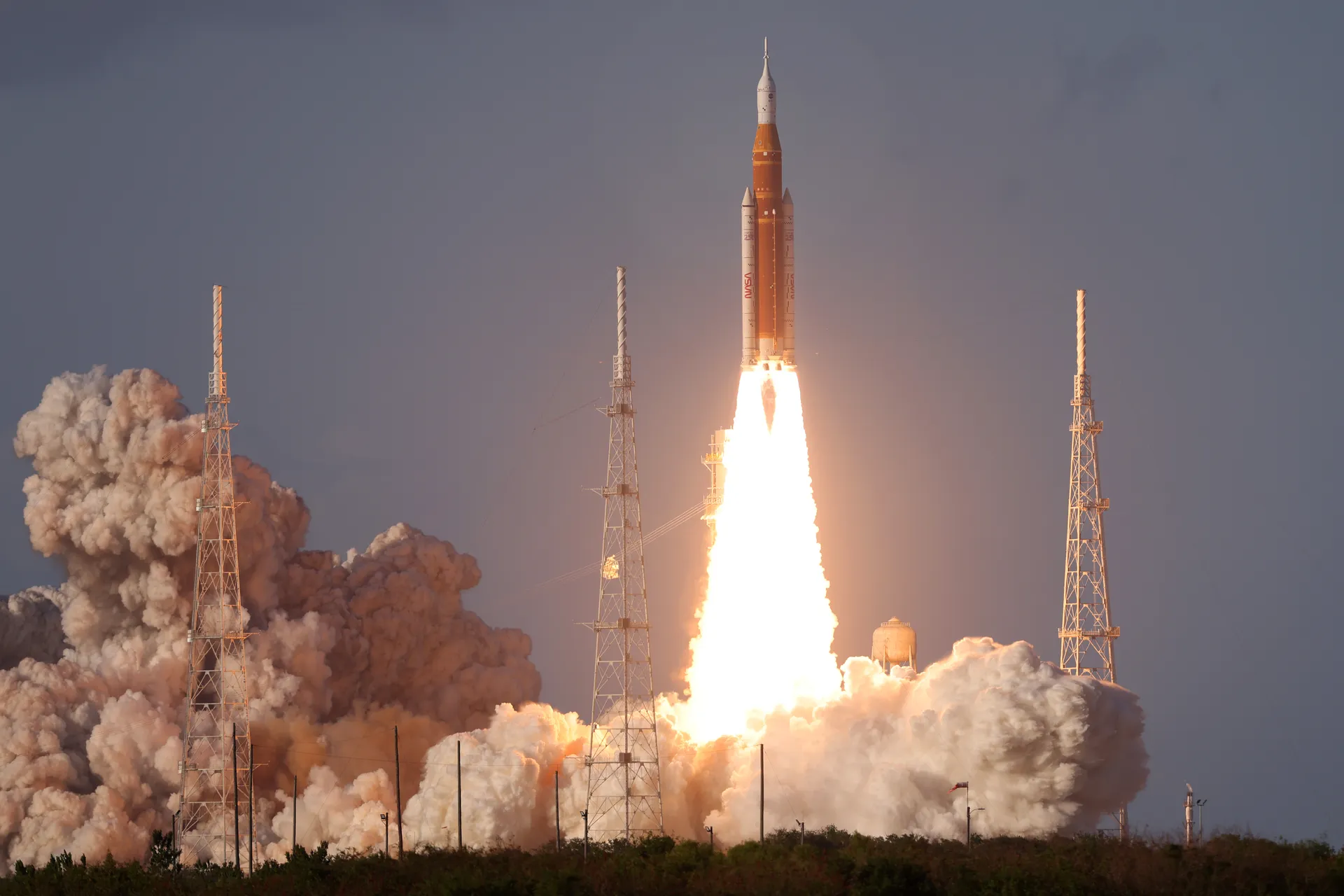
- 2Getting to orbitHow does anything get to space, and who builds the rockets?How rockets reach orbit, Falcon 9, Starship, Space Launch System, New Glenn & Vulcan, Spaceports
- 3Living in orbitWhat do people do in orbit, and what happens after the Space Station?ISS, Life in orbit, Commercial crew, Commercial stations
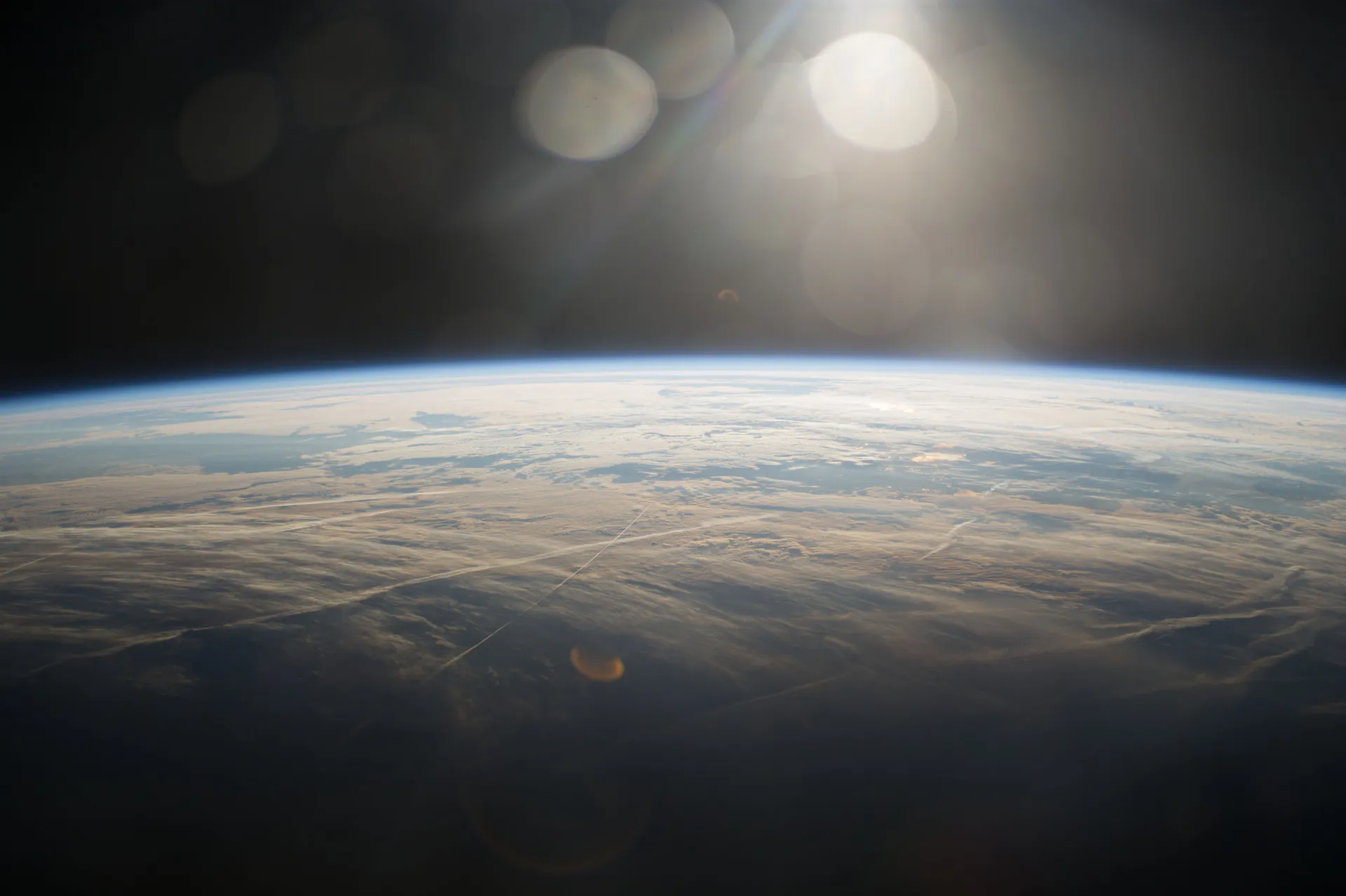
- 4Serving EarthWhat do satellites do for people on the ground?Orbits, GPS, Weather satellites, Landsat
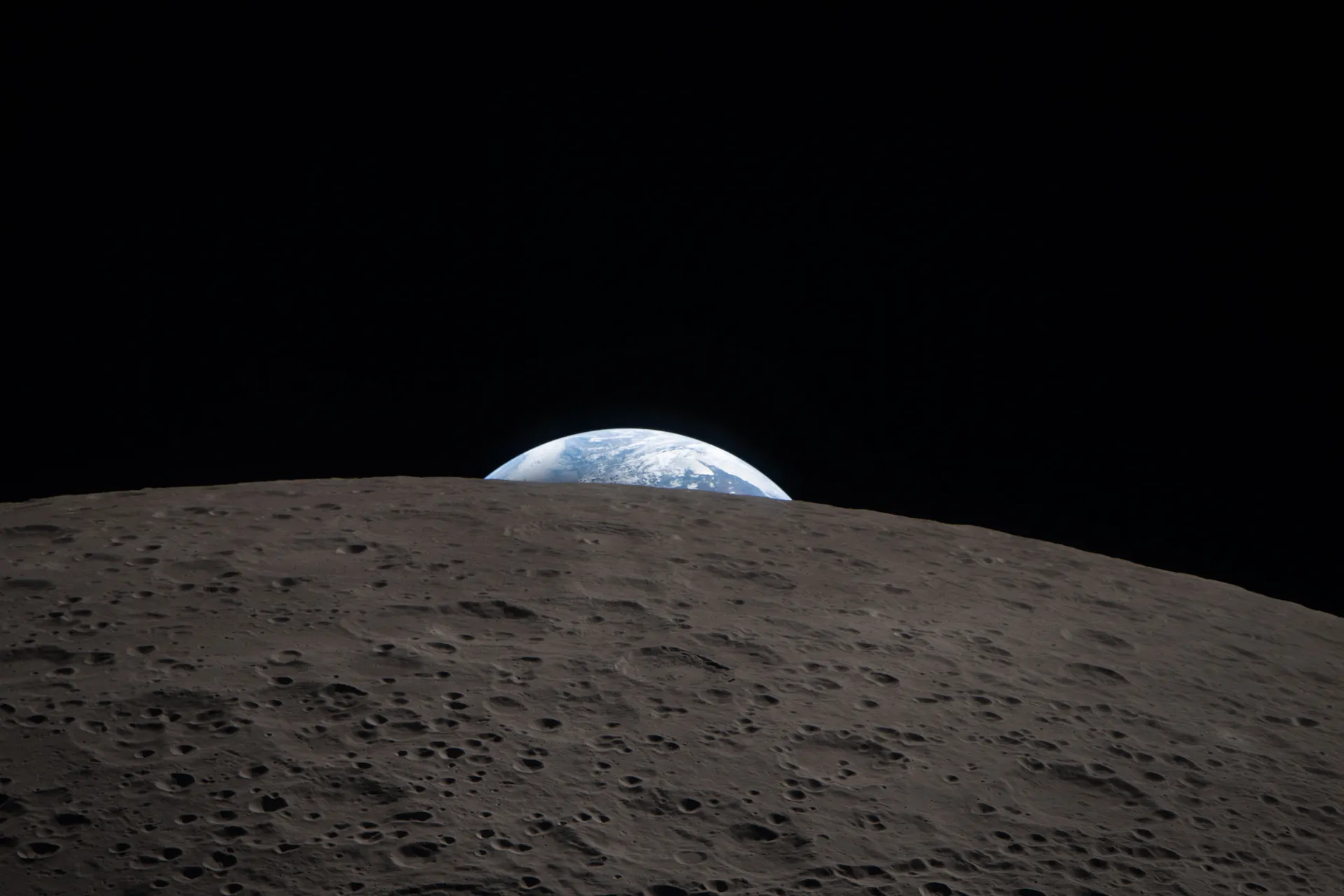
- 5Return to the MoonHow is NASA going back to the Moon, and who is building the pieces?The Artemis plan, Artemis II, Orion, Starship HLS, Blue Moon, Refilling in orbit, Gateway, CLPS
- 6Reading the universeWhat are the observatories and probes for, and what have they found?Hubble, Webb and Roman, Mars, The outer planets, The Sun
- 7Who builds it, who paysWhere does the money come from, and which companies do the work?The builders, NASA’s budget, Mission operations
Machines you can take apart
Every rocket and spacecraft in the atlas is a 3D model built to its real dimensions. Turn it, separate its stages, look up at its engines or into the cabin — then read how it was built and what it cost.
- Saturn VThe three-stage rocket that launched every Apollo crew to the Moon, and Skylab on its last flight.
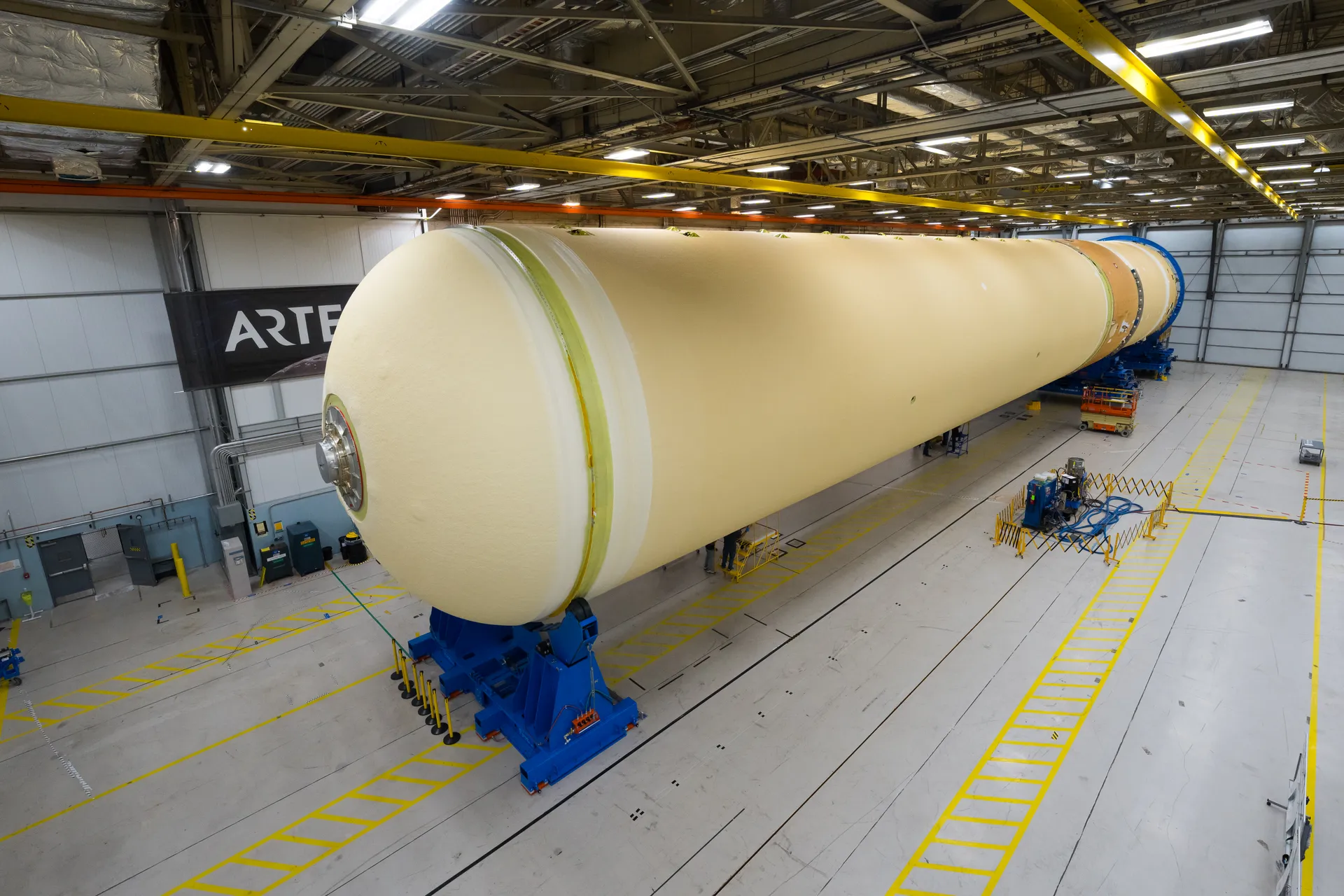
- Space Launch SystemNASA’s Moon rocket: a core stage and four RS-25 engines from the Shuttle era, two solid boosters and Orion on top.
- StarshipA two-stage system designed to be fully reusable: the Super Heavy booster and the Starship upper stage, built from stainless steel.
- Falcon 9SpaceX’s workhorse: a two-stage rocket whose first stage lands and flies again.
- New GlennBlue Origin’s heavy rocket, with a reusable first stage and seven BE-4 engines.
- OrionNASA’s deep-space capsule: a Lockheed Martin crew module on a European service module.
- Crew DragonSpaceX’s capsule that carries NASA crews to the Space Station under a fixed-price contract.
- Starship HLSThe lunar version of Starship, chosen by NASA to land astronauts—refilled in orbit before every trip.
Who pays, and for what
Congress gave NASA $24.4 billion for fiscal 2026, about a third of one percent of federal spending. Most of it leaves the agency as contracts with companies.
See who builds whatFiscal 2026 enacted appropriations, in billions of dollars. Source: Congressional Research Service, NASA Budget overview (R43419), April 2026.
Where things stand
The program as of October 1, 2026. Each line leads to the story that explains it.
- April 1–10, 2026
Artemis II carried four astronauts around the Moon and back, 252,756 miles from Earth at the farthest — the first crewed lunar flight since 1972. Artemis II
- February 27, 2026
NASA restructured Artemis: Artemis III becomes a 2027 docking test with the commercial landers in Earth orbit, and the first landing moves to Artemis IV in 2028. The Artemis plan
- October 1, 2026
Crew-13 launched on a Falcon 9 with three astronauts and a cosmonaut for a six-month stay aboard the Space Station, with docking scheduled about eight hours after liftoff. Commercial Crew
- September 28, 2026
Starship reached orbit for the first time on its fourteenth test flight. The ship-to-ship propellant transfer that every Starship lunar landing depends on has not yet been tried. Starship
- August 30, 2026
The Nancy Grace Roman Space Telescope launched on a Falcon Heavy, joining Hubble and Webb. Three observatories
- October 1, 2026
NASA begins fiscal 2027 on a continuing resolution at its 2026 level of $24.4 billion. The White House had asked for $18.8 billion, with science cut by 46 percent. NASA’s budget
Built from the original record
The stories here are assembled mostly from NASA’s own writing — mission pages, history books, press kits, Inspector General audits — and from the reports of Congress, NOAA, the U.S. Geological Survey and the Space Force. Those are public works, and the atlas uses their words closely. Company and press material is summarized and credited. Every paragraph points to its source.