Apollo spent $25.4 billion to put twelve people on the Moon
Kennedy’s 1961 goal became a program of 400,000 people and more than 500 contractors. It chose a risky route to the Moon, survived a fire on the pad, and landed six crews before Congress ended it.
NASA · Apollo 11, 1969
Drawn from 8 sources: NASA (5), NASA History Office (2) and NASA Kennedy Space Center. About 11 minutes. Checked October 1, 2026.
Apollo became NASA’s priority on May 25, 1961, when President John F. Kennedy asked Congress to commit the nation to landing a man on the Moon and returning him safely to Earth before the decade was out. It was a direct response to Soviet successes in space, and Kennedy used it to demonstrate American scientific and technological superiority over its Cold War adversary. NASA spent the next 11 years carrying it out. The program cost $25.4 billion; only the building of the Panama Canal rivaled it as the largest non-military technological endeavor ever undertaken by the United States, and only the Manhattan Project was comparable in a wartime setting.1,2
Money, people and three new installations
The first challenge was funding. Congress appropriated money for Apollo enthusiastically after the President’s announcement, but NASA Administrator James E. Webb worried, rightly, that the sense of crisis would fade and the political consensus with it. Initial NASA estimates put Apollo at about $20 billion through the end of the decade; Webb stretched those estimates as far as he could so that the program could be completed even if NASA did not receive its full requests, as it did not in the second half of the decade. NASA’s annual budget rose from $500 million in 1960 to a high of $5.2 billion in 1965. About half of each year’s budget went to human spaceflight, and most of that to Apollo.1
- $25.4B
- total cost of Project Apollo, in dollars of the day1
- 376,700
- contractor employees on NASA work in 1965, up from 36,500 in 19601
- 500+
- contractors coordinated by the Apollo program office1
People had to be mobilized as well. NASA’s civil service grew from 10,000 in 1960 to 36,000 by 1966. More important, NASA’s leaders decided early that they would rely on outside researchers and technicians, and contractor employees on its work increased tenfold, from 36,500 in 1960 to 376,700 in 1965. Through the 1960s, between 80 and 90 percent of NASA’s budget went to contracts for goods and services. The reliance on industry and universities had begun under T. Keith Glennan, partly from the Eisenhower administration’s mistrust of large government establishments; Webb and Kennedy did not share that mistrust, but found it both good politics and the only way to harness the talent already in the aerospace industry and the leading research universities.1
NASA also built. In 1962 it created the Manned Spacecraft Center near Houston to design the Apollo spacecraft, train astronauts and house mission control. It greatly expanded the Launch Operations Center at Cape Canaveral, renamed the John F. Kennedy Space Center in November 1963, buying more than 111,000 acres of Merritt Island for Launch Complex 39 and its Vehicle Assembly Building. To test the Saturn’s stages it created the Mississippi Test Facility, now the Stennis Space Center. The expansion cost more than $2.2 billion over the decade, 90 percent of it spent before 1966.1,7
Lunar-orbit rendezvous: a smaller lander and a riskier route
One of the first and most important decisions was how to go to the Moon. Direct ascent called for a huge booster, the Nova, to send a spacecraft straight to the Moon, land a large vehicle and send part of it back. Earth-orbit rendezvous would launch the pieces of a Moon ship separately, assemble and refuel them in Earth orbit, and send the whole to the Moon. Lunar-orbit rendezvous would send the entire spacecraft up on one launch, put it in orbit around the Moon, and send down a small lander. It was the simplest of the three in development and operating cost, but it was risky: the rendezvous took place around the Moon, with no room for error.1
A small group of engineers at Langley Research Center, led by John C. Houbolt, pressed for lunar-orbit rendezvous. A landing craft that met its “mother ship” in lunar orbit could be much smaller. “I would rather bring down 7,000 pounds to the lunar surface than 150,000 pounds,” Houbolt said.4 Over months in 1961 and 1962 his group persuaded NASA’s leadership that the method was not as risky as it had seemed.1
The last to give in was Wernher von Braun and his team at the Marshall Space Flight Center, who favored Earth-orbit rendezvous—partly because it justified a space station and extended Marshall’s workload. At an all-day meeting at Marshall on June 7, 1962, after more than six hours of discussion, von Braun accepted lunar-orbit rendezvous. “A drastic separation of these two functions into two separate elements is bound to greatly simplify the development of the spacecraft system,” he said.1
Kennedy’s science adviser, Jerome Wiesner, objected because of the risk to the crew. The dispute surfaced during a presidential visit to Marshall in September 1962, when Kennedy remarked to von Braun, in front of the press, that he understood von Braun and Wiesner disagreed. Asked later how the debate would turn out, Kennedy said that Wiesner would lose: “Webb’s got all the money, and Jerry’s only got me.” Webb announced the choice as final on November 7, 1962.1
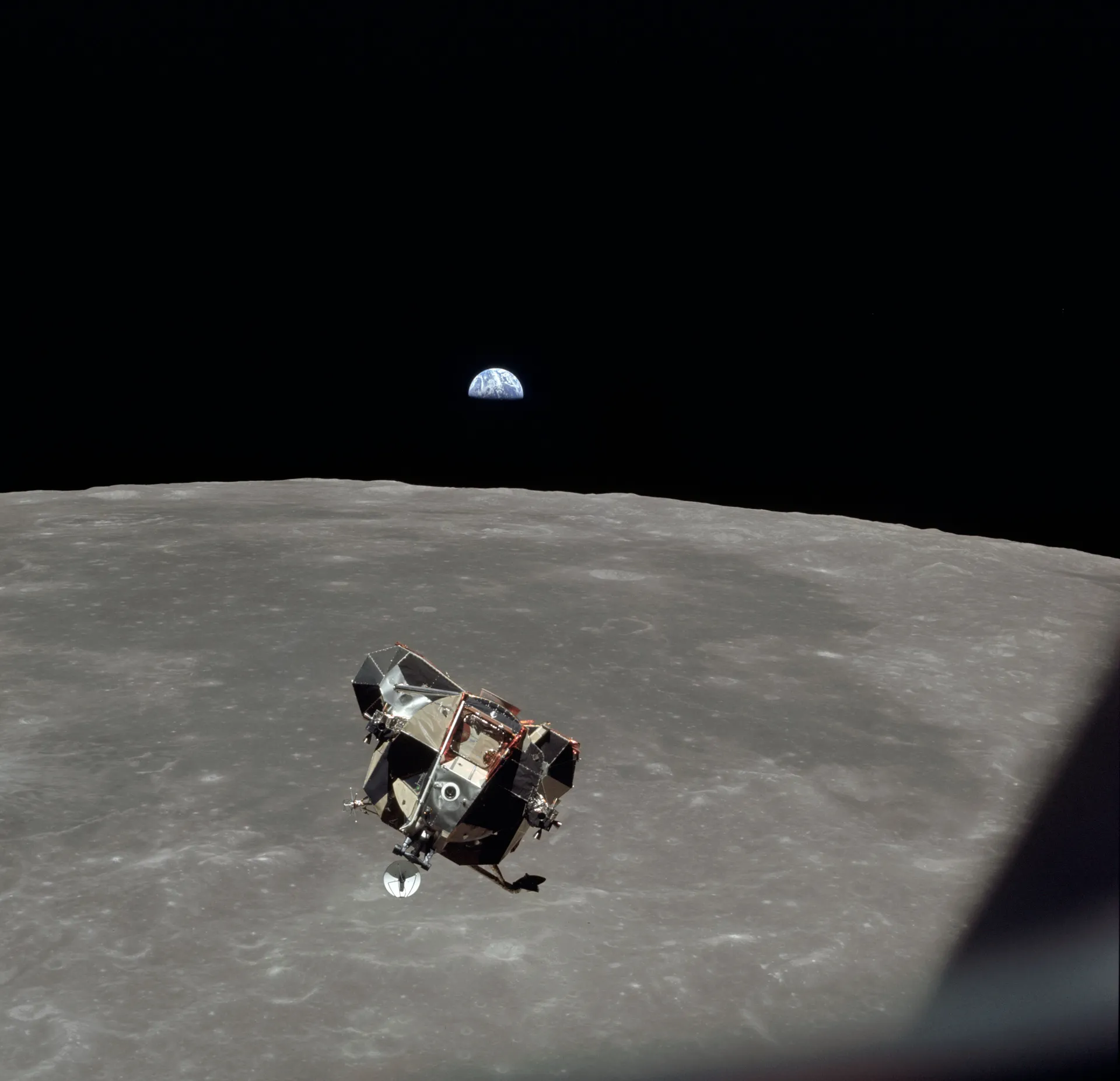

One rocket carried everything
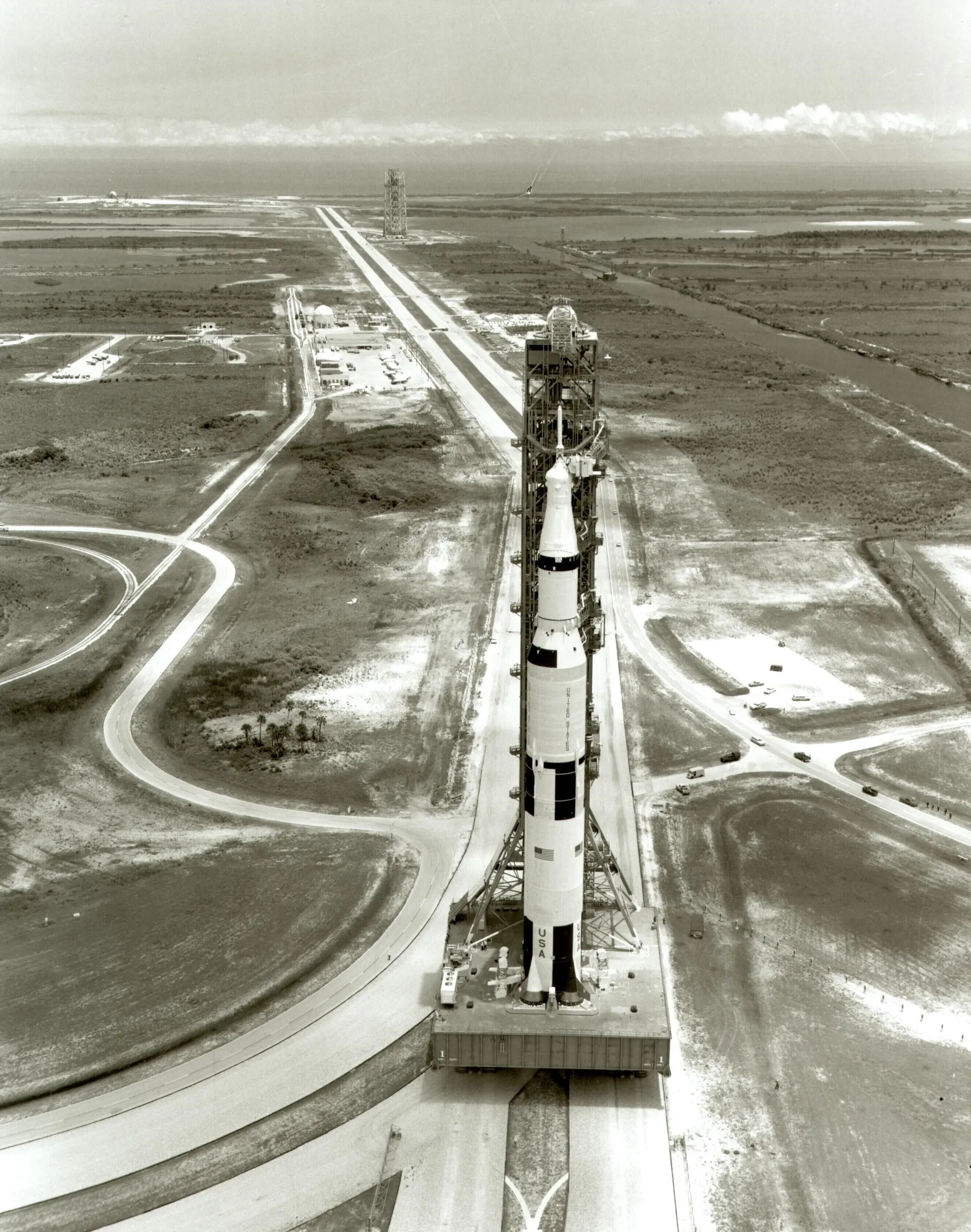
A single Saturn V launched the whole expedition: the command module for the crew, the service module with propulsion and supplies, and the lunar module tucked beneath them. After the third stage put the stack on a course toward the Moon, the command module pilot turned the ship around, docked with the lander’s upper hatch and backed the two vehicles away from the spent stage.3,6
Two astronauts went down in a separate lander
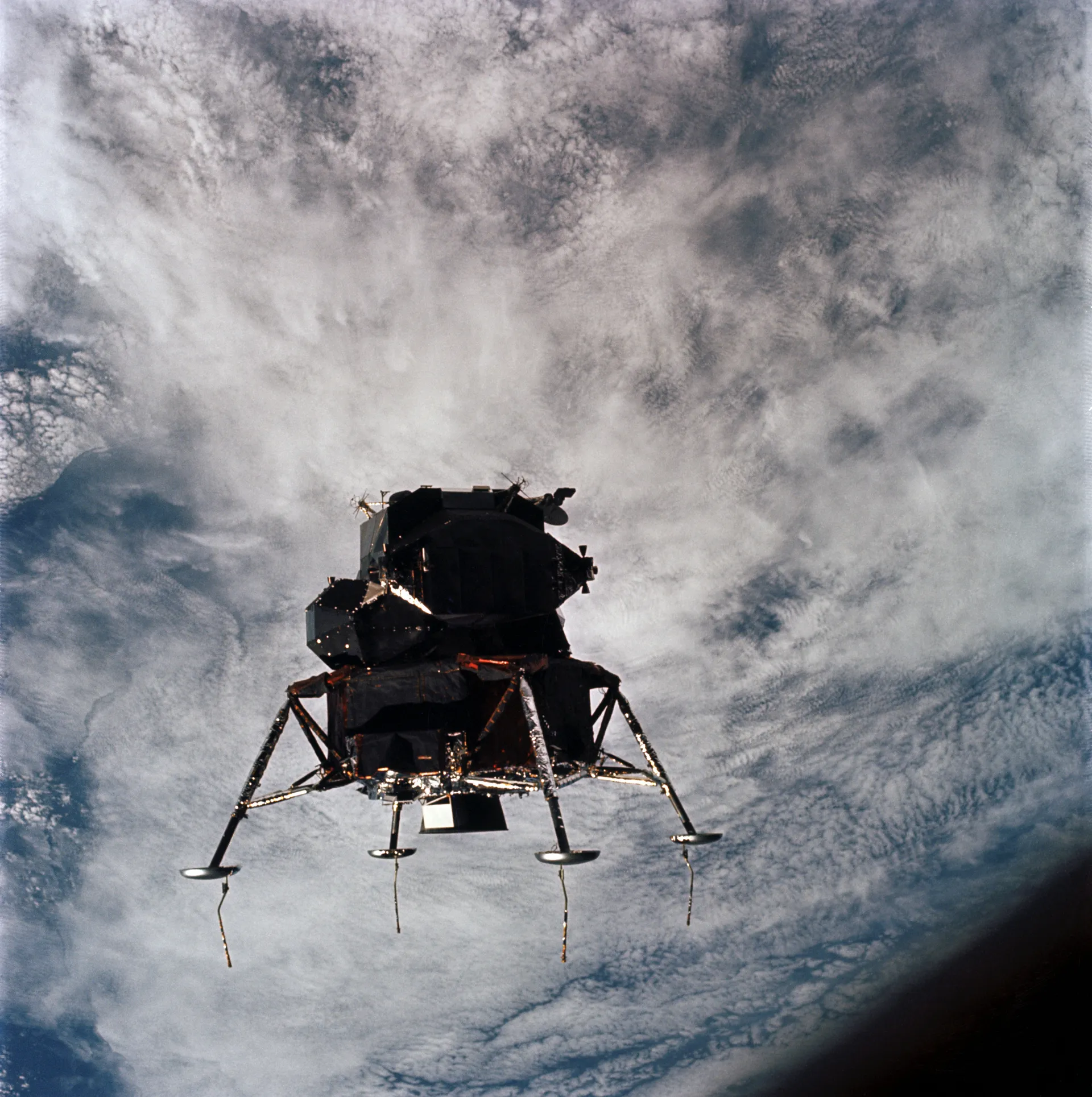
In lunar orbit, the commander and the lunar module pilot moved into the lunar module and undocked. Its throttleable descent engine controlled the final descent from about 50,000 feet, including a hover while the commander picked a spot to land. The command module pilot stayed in orbit. Apollo 9 flew the lunar module in Earth orbit in March 1969; Apollo 10 took one to within 50,000 feet of the Moon.3,4
The upper half flew back to lunar orbit
The lunar module was two spacecraft. The descent stage stayed on the Moon as a launch platform; the ascent stage, with the crew cabin, fired its own engine to reach a rendezvous with the command module. Both engines had to work perfectly or the crew would not come home. After docking, the crew moved back through the tunnel and the ascent stage was cast off.1,4
Who built the Moon rocket and the spacecraft
To bring order to a program spread across NASA centers, universities and industry, NASA expanded the “program management” concept borrowed from the military. Air Force Major General Samuel C. Phillips, architect of the Minuteman missile program, came to NASA in 1962 and created a program office with central authority over design, engineering, procurement, testing, construction, manufacturing, logistics, training and operations. Cost, schedule and reliability had to be managed together. The President had fixed the schedule and demanded safety, so redundancy was used extensively and cost was the factor that gave way.1
One rocket, more than 250 subcontractors
The Saturn V stood 363 feet tall. Its prime contractors, with more than 250 subcontractors, supplied millions of parts and components, all meeting exacting specifications for performance and reliability. Developing the Saturn launch vehicle cost $9.3 billion.1
Three stages, three companies
Boeing built the S-IC first stage, North American Aviation the S-II second stage and Douglas Aircraft the S-IVB third stage. IBM built the instrument unit, the ring of guidance electronics at the top of the third stage.1
Rocketdyne’s engines
North American’s Rocketdyne division built both engines. Five F-1s on the first stage generated 7.5 million pounds of thrust; they required new alloys and construction techniques to withstand the heat and shock of firing. J-2 engines burning liquid hydrogen powered the two upper stages.1
Phillips’s office orchestrated more than 500 contractors, and NASA’s procurement actions rose from about 44,000 in 1960 to almost 300,000 in 1965.1 North American Aviation won the prime contract for the command and service modules on November 28, 1961, and Grumman the contract for the lunar module in November 1962.1,4 The first Apollo contract of all, signed on August 10, 1961, went to the Instrumentation Laboratory at the Massachusetts Institute of Technology, whose director, Charles Stark Draper, had pioneered inertial guidance; it developed Apollo’s guidance and navigation system.6
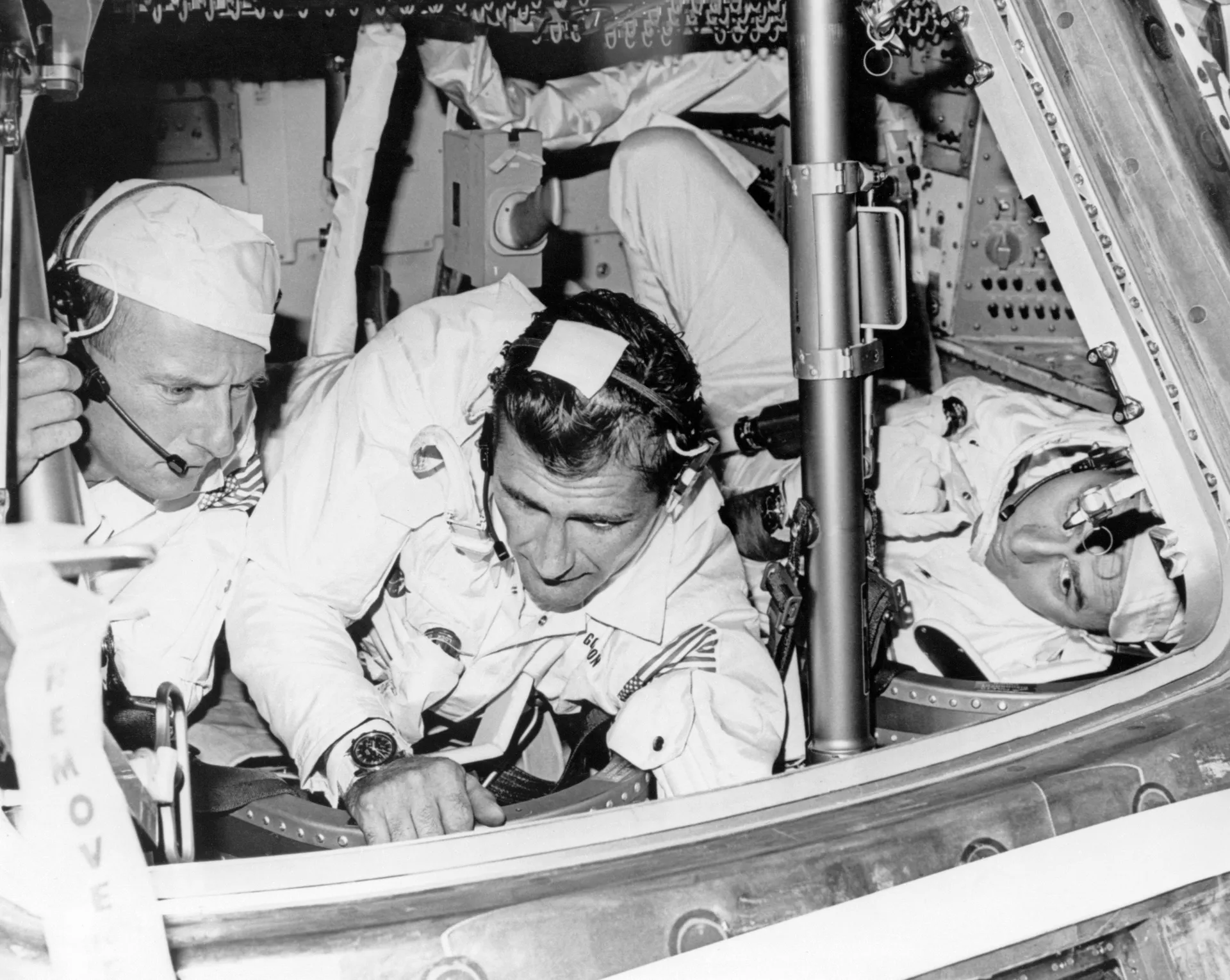
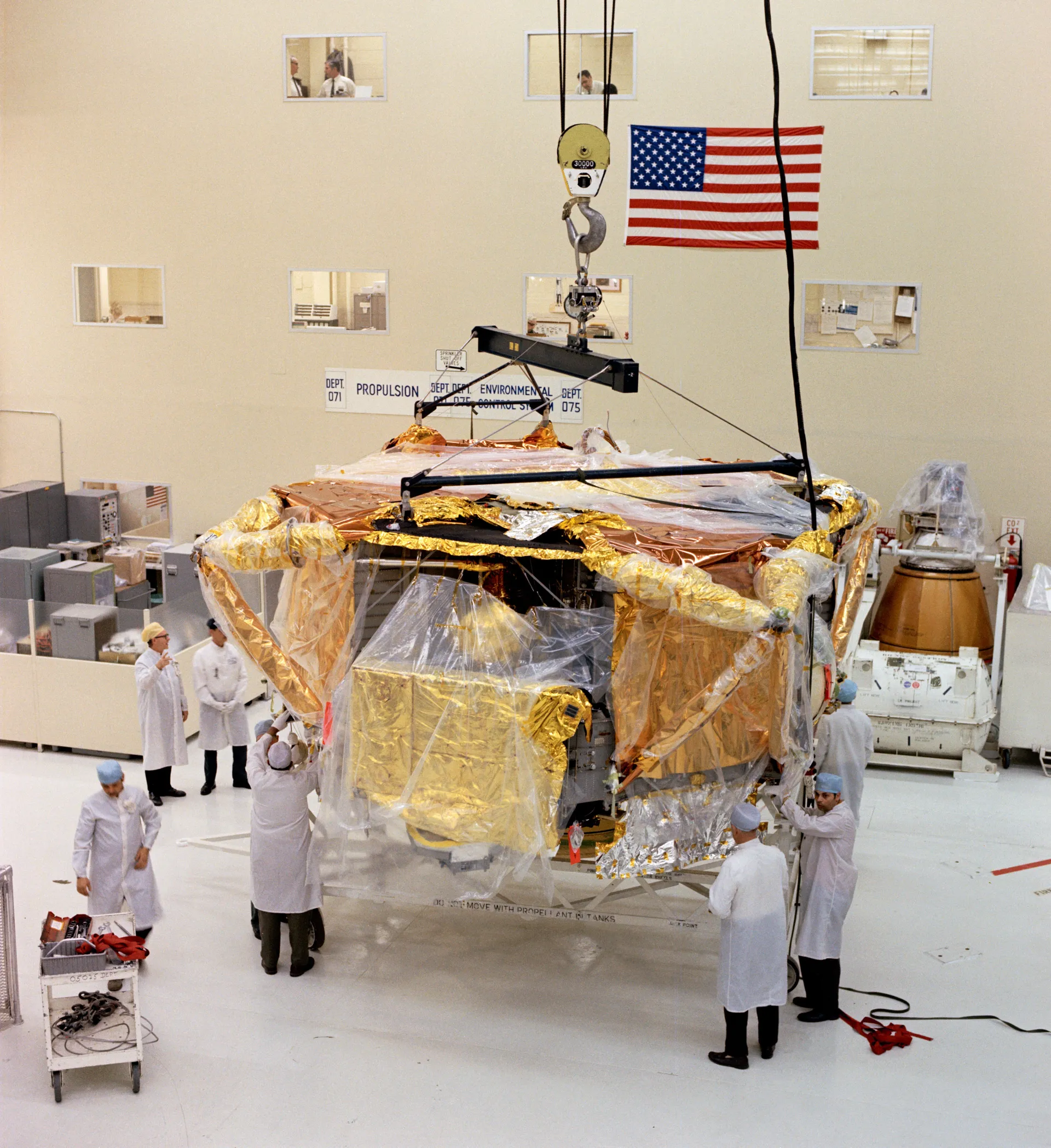
Relying on contractors raised its own problem: NASA needed enough in-house expertise to oversee them. The S-II second stage, built by North American at Seal Beach, California, was always behind schedule and nearly caused the landing goal to be missed. Von Braun’s engineers at Marshall began disassembling and examining every part of every stage North American delivered, grinding production almost to a halt. Webb told von Braun to desist—“We’ve got to trust American industry”—until, at a showdown meeting, one Marshall engineer produced a rag and said, “this is what we find in this stuff.” The compromise was the 10 percent rule: 10 percent of NASA’s funding would be spent to keep in-house expertise and, with it, to check contractor reliability.1
All-up testing put the whole Saturn V in the air at once
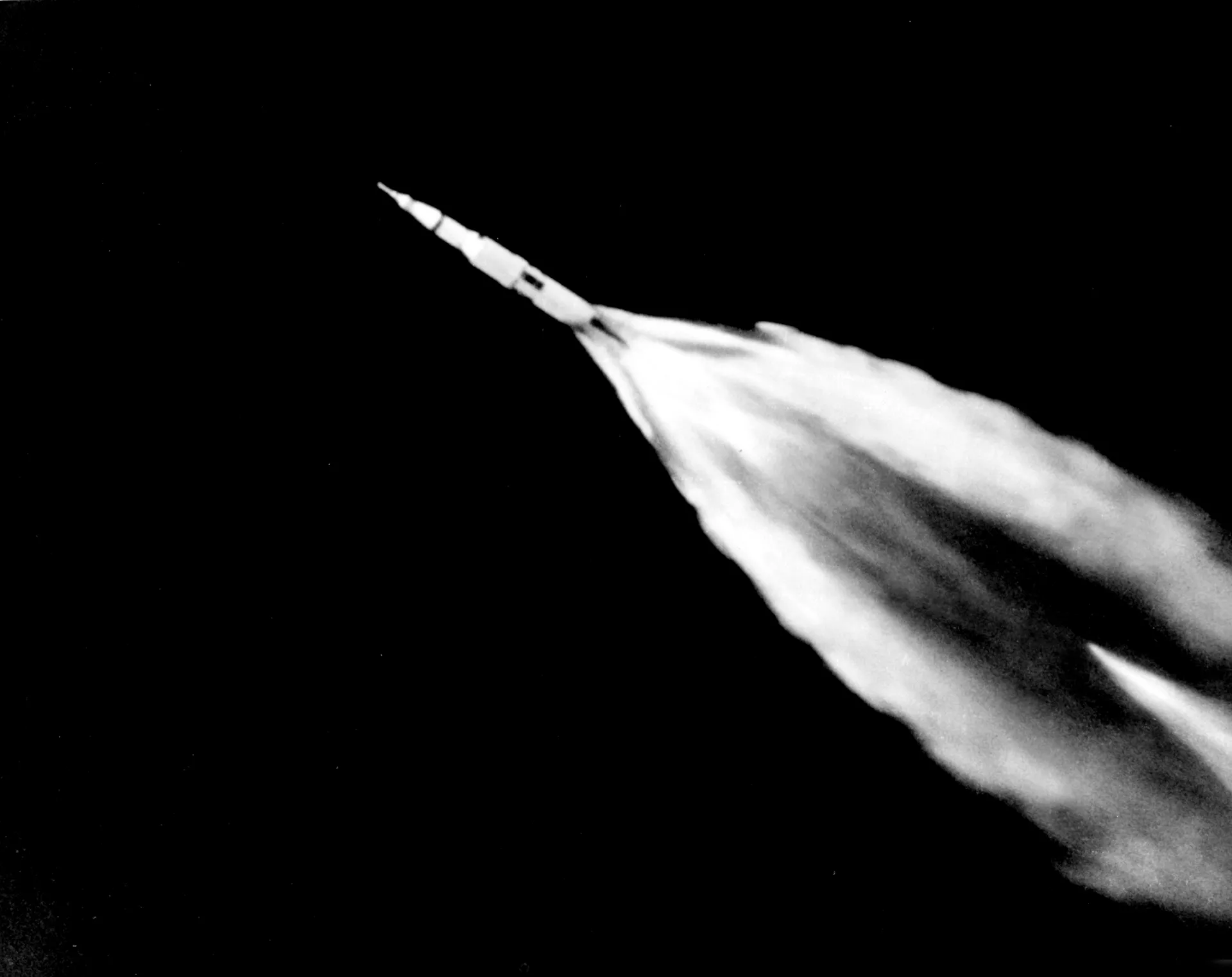
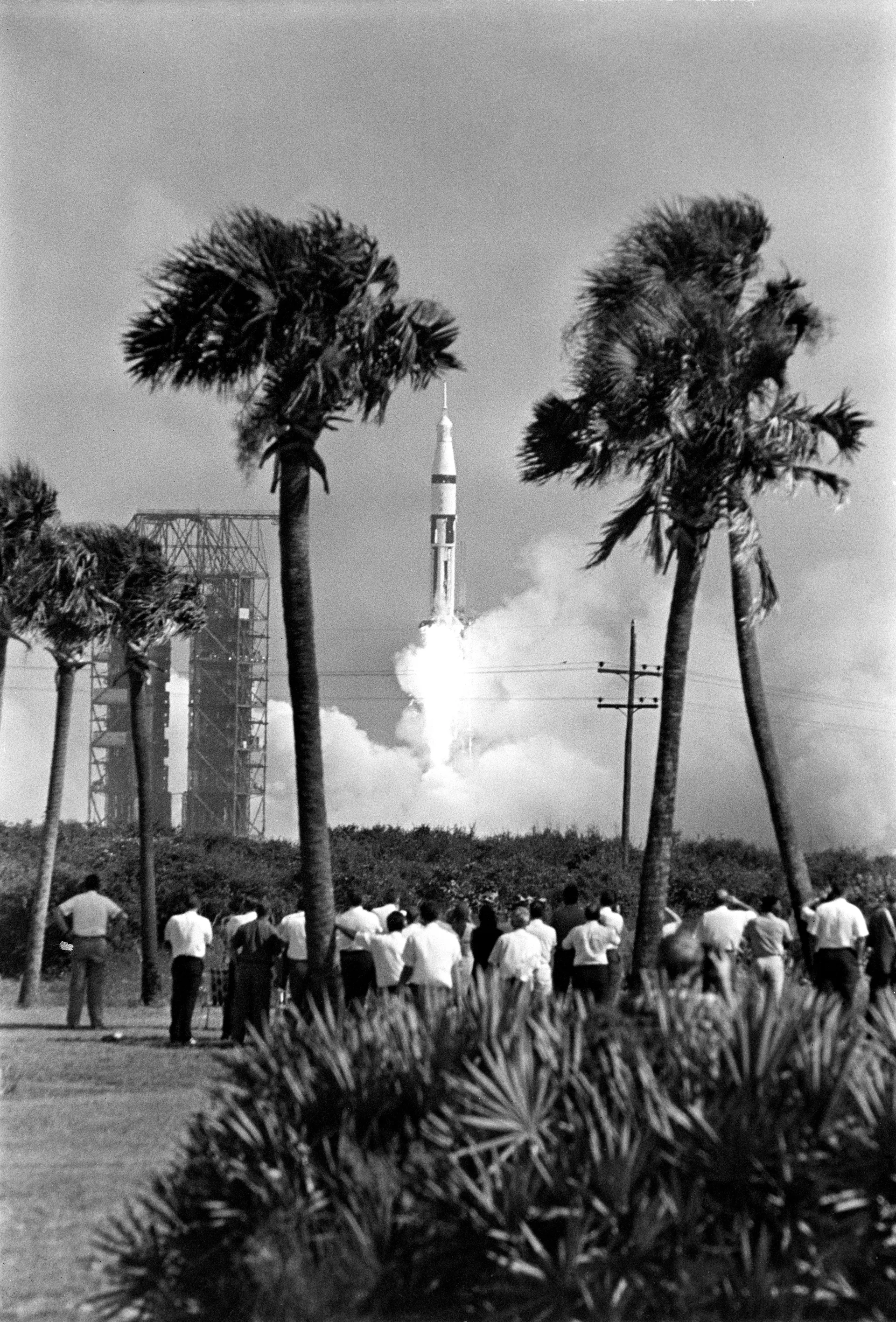
Apollo 11 lifts off, July 16, 1969, from 70 mm film slowed down.
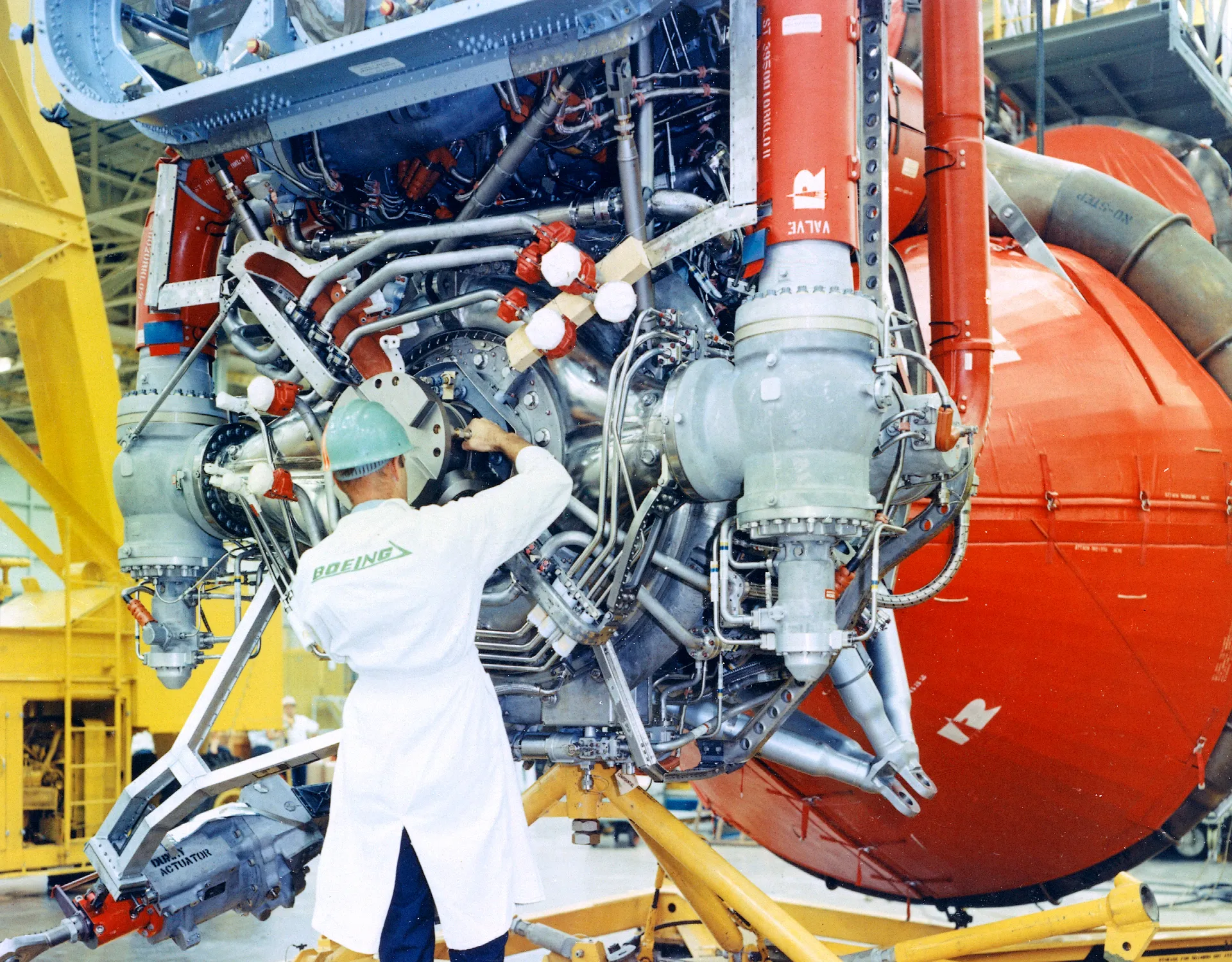
The Saturn family came to NASA with von Braun’s Army team in 1960. The Saturn I, a cluster of eight Redstone boosters around a Jupiter fuel tank, made ten research flights between October 1961 and July 1965. A Saturn IB launched the first crewed Apollo flight, Apollo 7, in October 1968. The first static test of the Saturn V’s first stage, at Huntsville on April 16, 1965, brought home to many that Kennedy’s goal was within reach.1
The biggest problem with the Saturn V was not the hardware but a clash of philosophies. Von Braun’s team tested each component individually, then ground-tested the assembled stages, then flew each stage before flying the whole. George E. Mueller, head of NASA’s Office of Manned Space Flight, had neither the time nor the money for that. He advocated “all-up” testing, in which the entire Apollo–Saturn system flew together. The first Saturn V launched complete on November 9, 1967. The second, on April 4, 1968, was only partly successful, yet Mueller declared the test program finished and said the next launch would carry astronauts. The gamble paid off: in 17 test and 15 piloted launches, the Saturn family had a perfect launch record.1
A fire on the pad, and a safer spacecraft
On January 27, 1967, Apollo-Saturn 204, the first planned crewed flight, sat on the pad at Launch Complex 34 for a simulated countdown. Gus Grissom, Ed White and Roger Chaffee were sealed inside a cabin pressurized with pure oxygen at 16.7 pounds per square inch. At 6:31 p.m. a flash fire broke out. Rising temperature and pressure cracked the command module’s pressure vessel; the astronauts tried in vain to open the inward-opening inner hatch while the pad crew fought dense smoke and heat to open the outer two. By the time they did, the crew had died.5
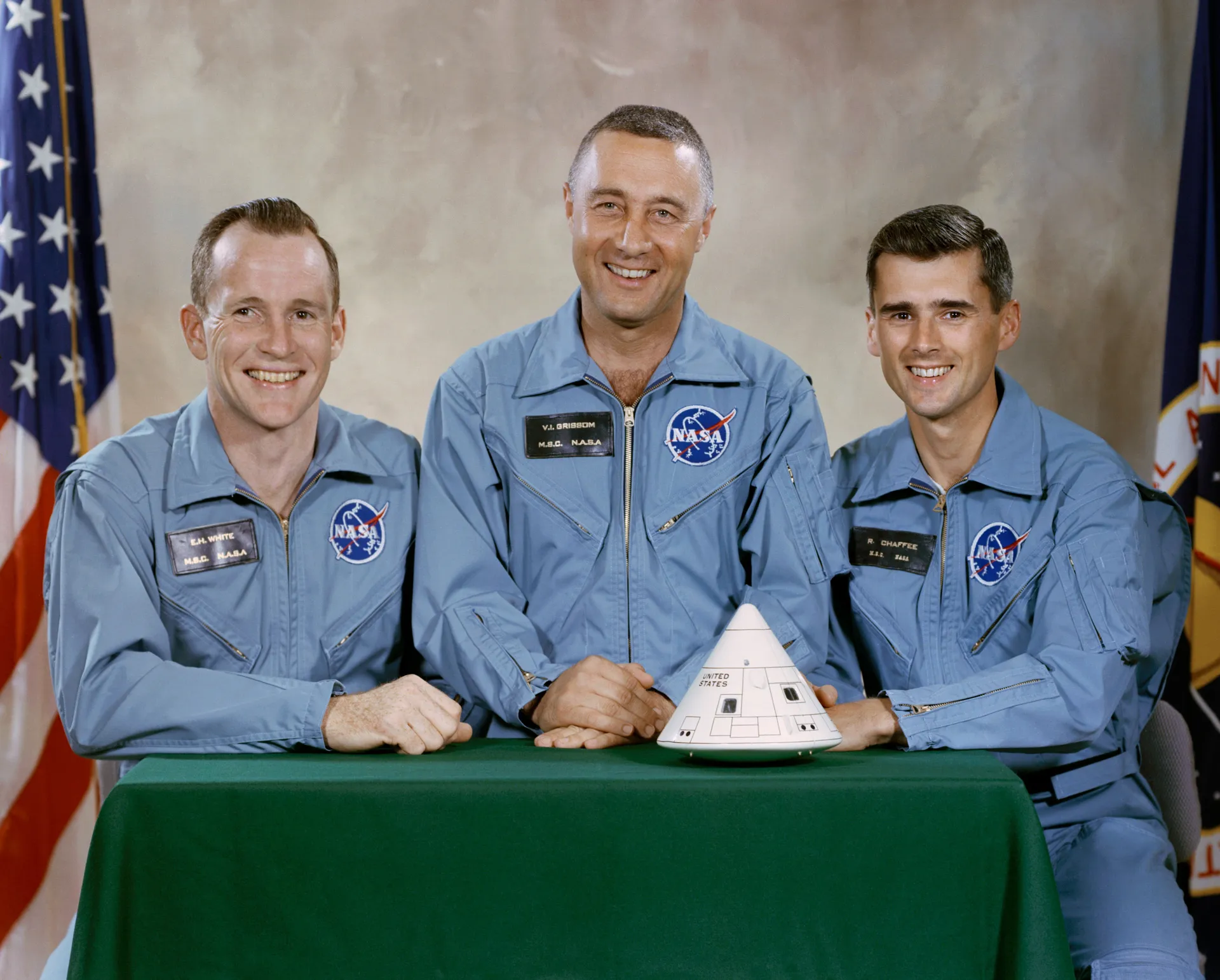
NASA appointed a review board the next day, chaired by Langley director Floyd L. Thompson. Its 3,000-page report, released on April 9, could not identify the exact source of ignition but found evidence of arcing in wires near the environmental control system, beneath Grissom’s couch. The pure oxygen atmosphere and a larger-than-allowable amount of flammable material had let the fire spread very rapidly. The three-piece hatch took 90 seconds to open even under ideal conditions.5
All later crews flew the more advanced Block II spacecraft. It had a unified hatch that opened from inside or outside in three seconds; flammable materials were removed or replaced, wiring was protected and spacesuits were made flame-resistant. Management changed too: the Apollo spacecraft program manager at NASA and the head of North American’s space division were replaced, and the Manned Spacecraft Center created a safety, reliability and quality assurance office.5
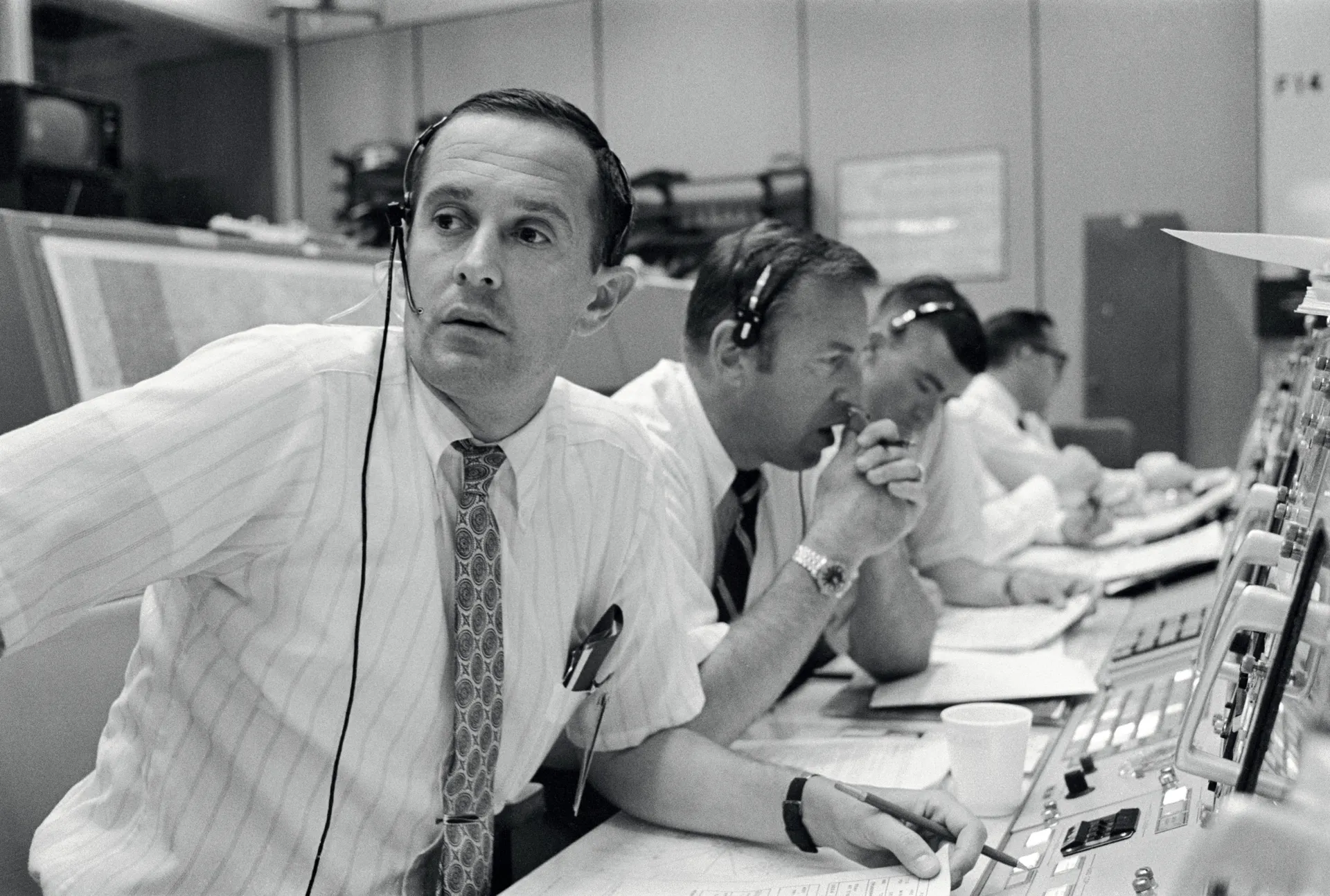
“Who would have thought that the first tragedy would be on the ground?” Webb asked. He went to President Johnson and asked that NASA be allowed to investigate itself, promising to assign blame to himself and NASA management where appropriate. He took a personal grilling before congressional committees, and he never recovered from the stigma of the fire; when he left NASA in October 1968, few mourned his departure.1 Less than two years after the fire, on October 11, 1968, Walter Schirra, Donn Eisele and Walter Cunningham launched on Apollo 7, a 10-day flight in Earth orbit that tested the redesigned command module.2,3
From circling the Moon to landing on it
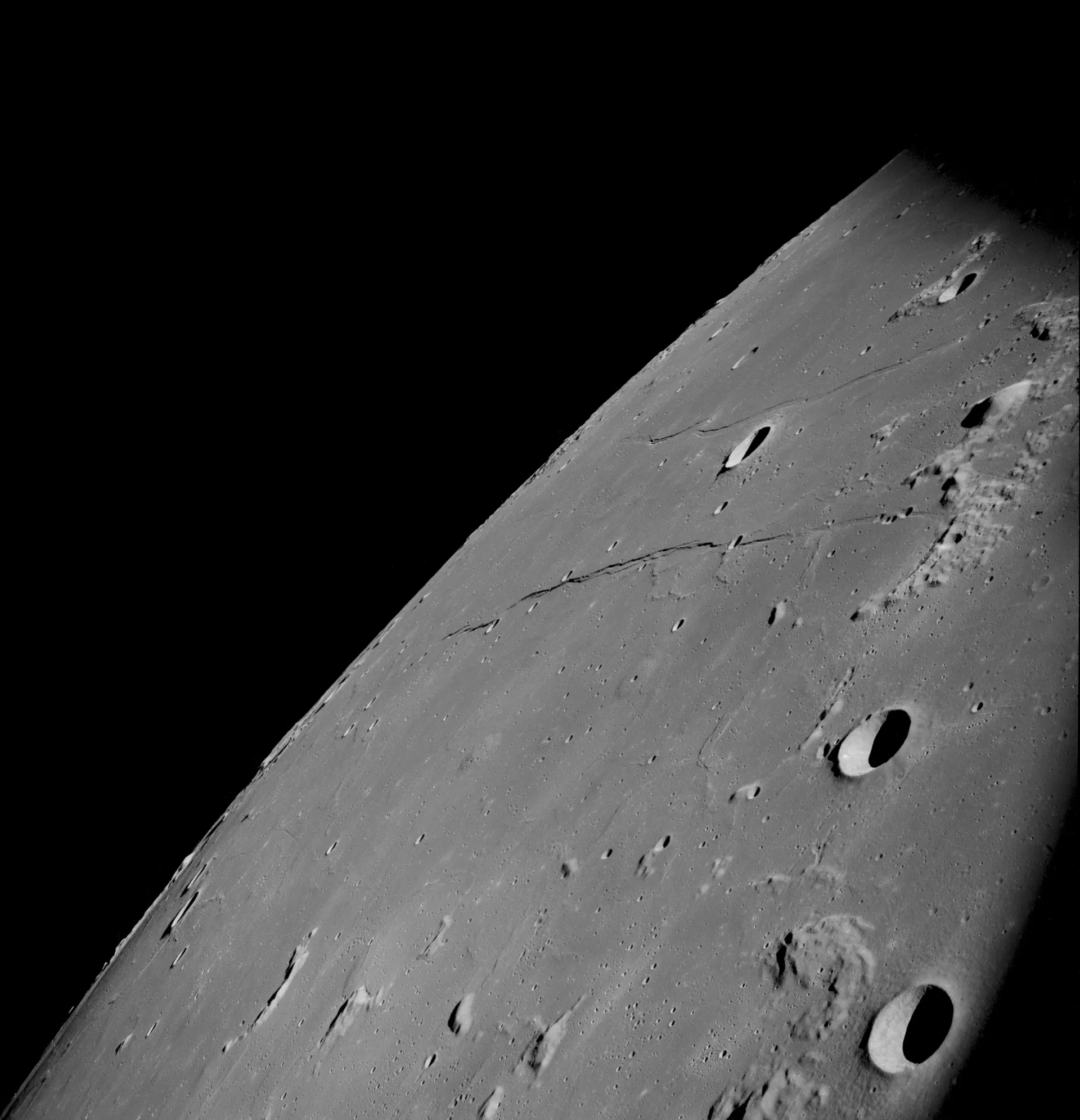
The Sea of Tranquility from Apollo 8 in lunar orbit, December 1968, seven months before the first landing there.
Apollo 8 had been planned as an Earth-orbit test. In the summer of 1968, George Low of the Manned Spacecraft Center proposed sending it around the Moon instead; Apollo program director Phillips carried the idea to the administrator, and in November the mission was reconfigured. Frank Borman, Jim Lovell and William Anders launched on December 21, 1968, reached the Moon on Christmas Eve, and sent back images of Earth as a small blue marble while reading from the book of Genesis. Apollo 9 flew the complete spacecraft, including the lunar module, in Earth orbit in March 1969; Apollo 10 tested every part of a landing except the landing itself in May.1,3
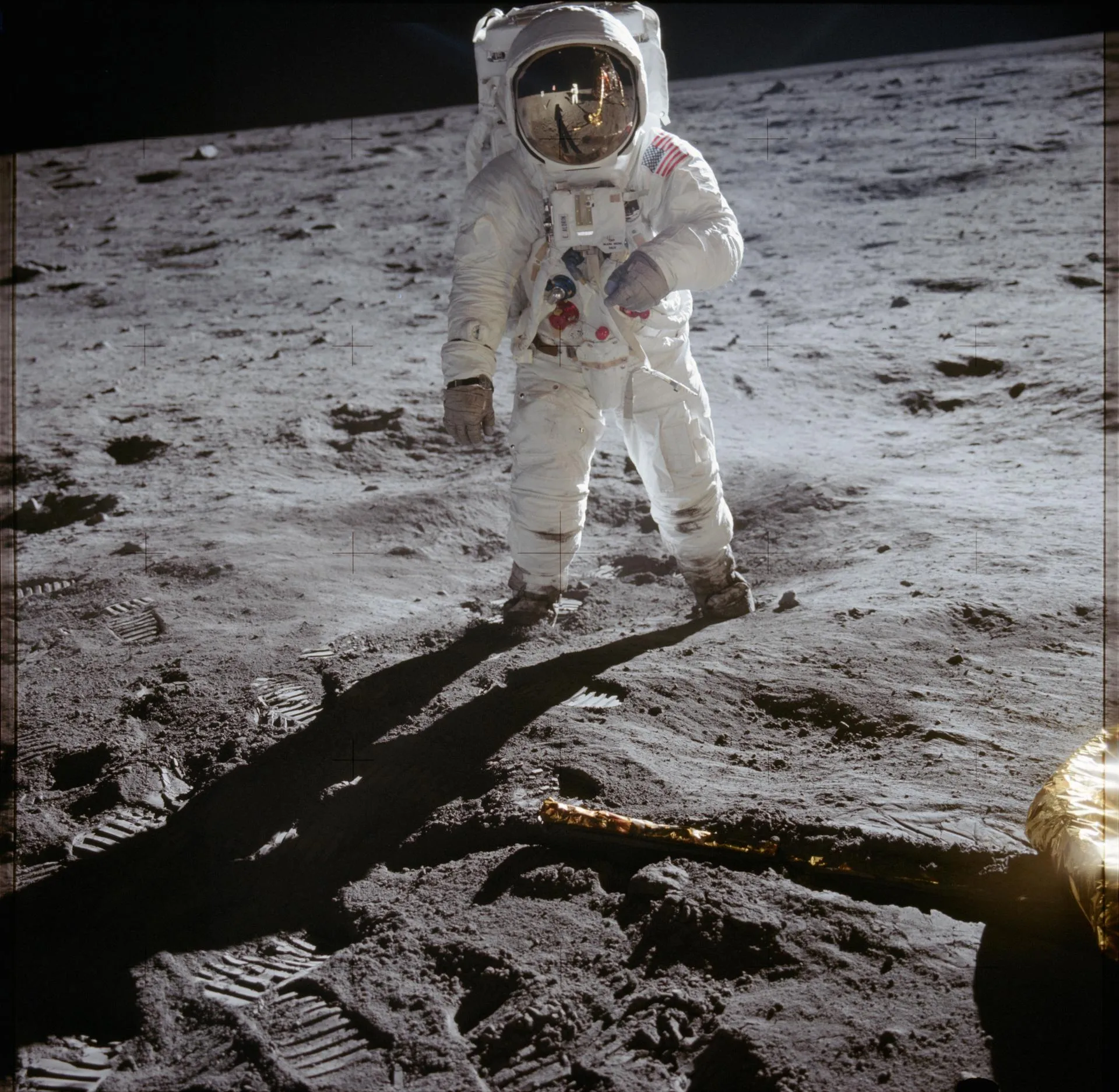
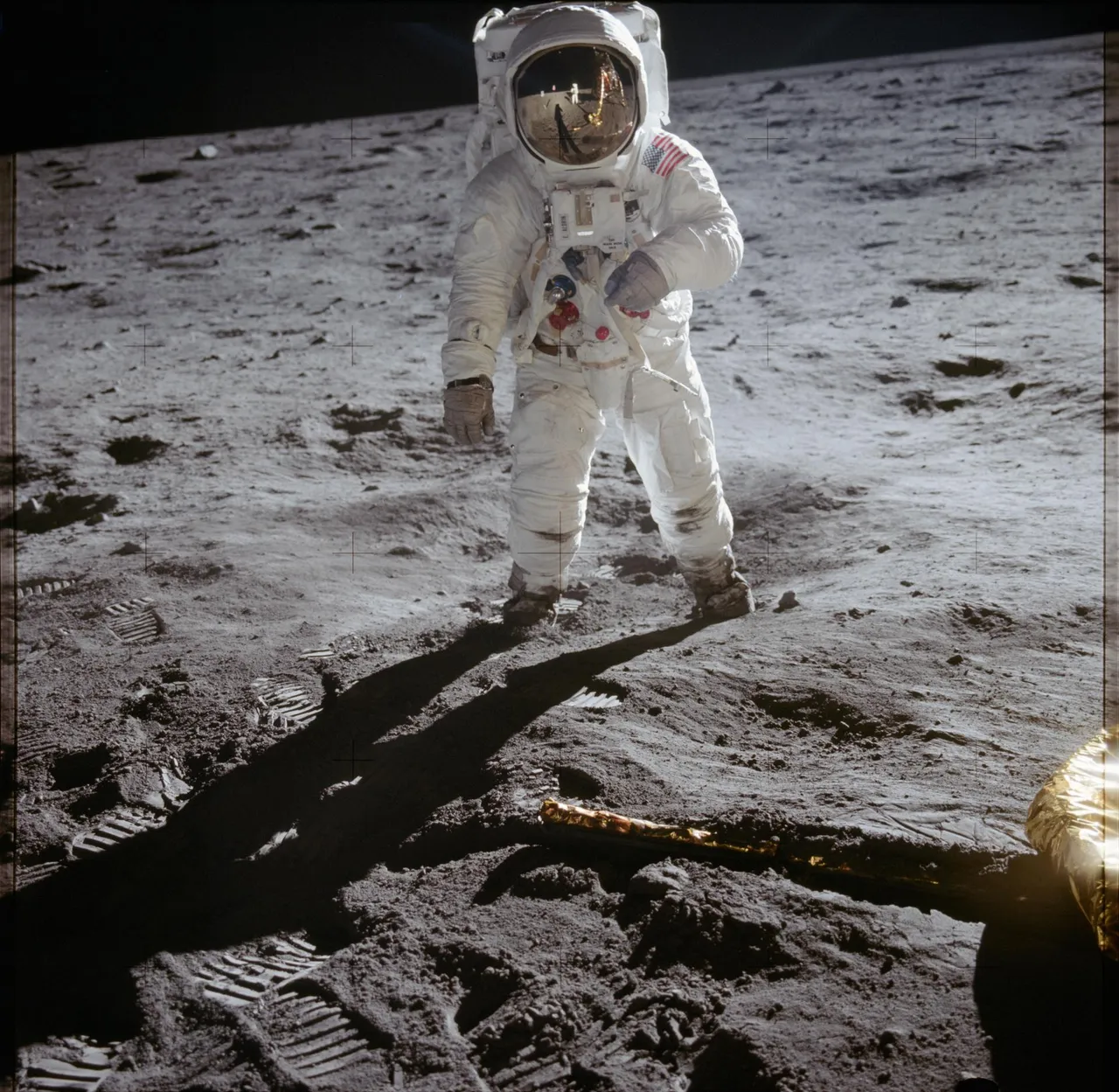
Apollo 11 lifted off on July 16, 1969. At 4:17 p.m. EDT on July 20, the lunar module, with Neil Armstrong and Edwin “Buzz” Aldrin aboard, landed on the Sea of Tranquility while Michael Collins orbited overhead in the command module. Armstrong piloted the lander to the surface with less than 30 seconds’ worth of fuel remaining. He stepped off the ladder saying “That’s one small step for man, one giant leap for mankind,” later adding the “a” he had meant before “man.”1,2
The two astronauts planted an American flag, collected soil and rock samples, and set up experiments. The next day they launched back to the command module and began the trip home, splashing down in the Pacific on July 24. The flight met with an ecstatic reaction around the world.1
Five more landings, a near disaster, and the flights that were cut
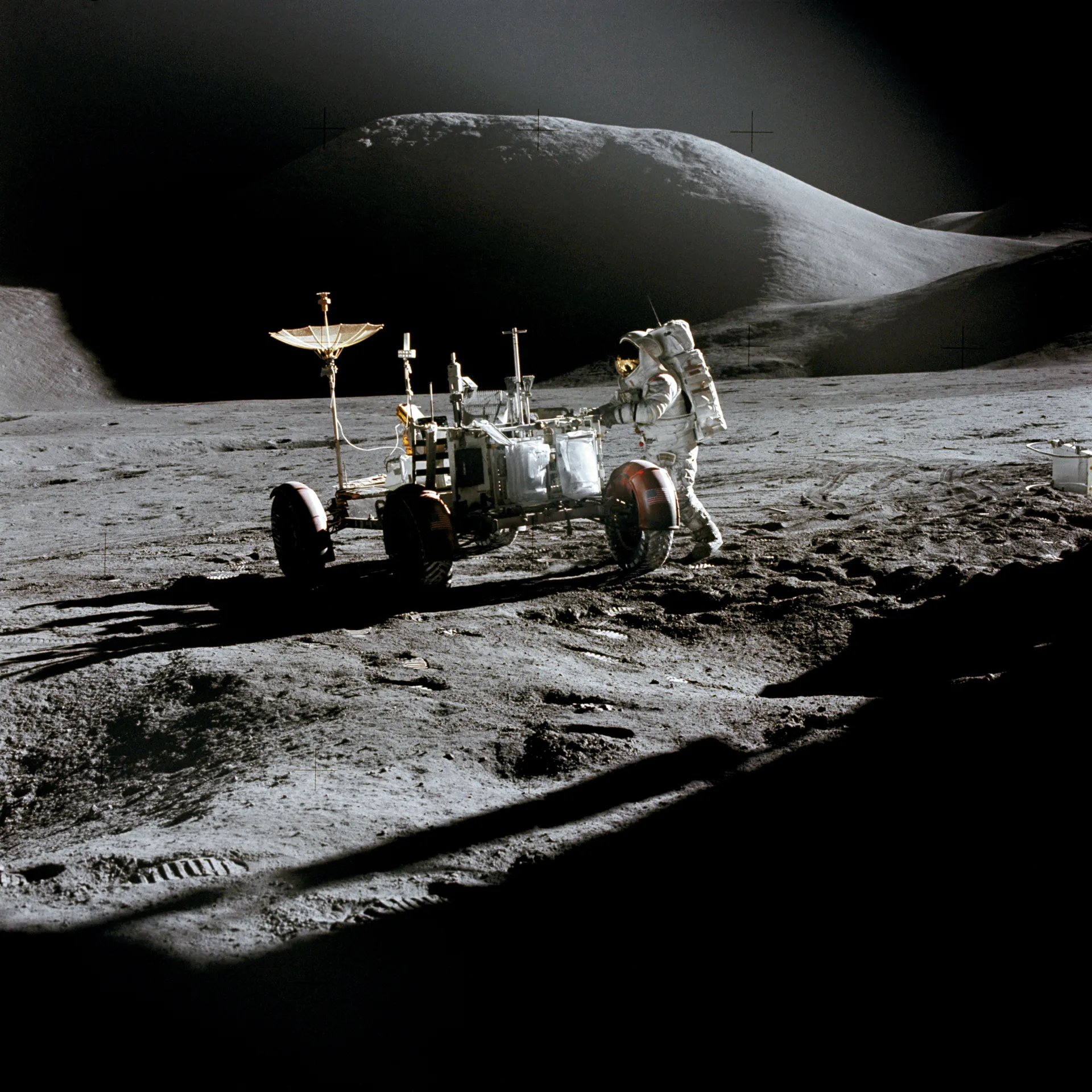
James Irwin and the first Lunar Roving Vehicle at Hadley–Apennine, Apollo 15, July 31, 1971.
Five more landing missions followed at roughly six-month intervals through December 1972, each spending more time on the Moon. Apollo 12 landed in November 1969. Apollo 13, launched on April 11, 1970, never landed: 56 hours into the flight an oxygen tank in the service module ruptured, damaging power, electrical and life-support systems. Engineers on the ground found that the lunar module, unaffected by the accident, could serve as a lifeboat, and astronauts and ground crews improvised a way home; the crew returned safely on April 17.1,2
The landings and the near miss, 1969–1972
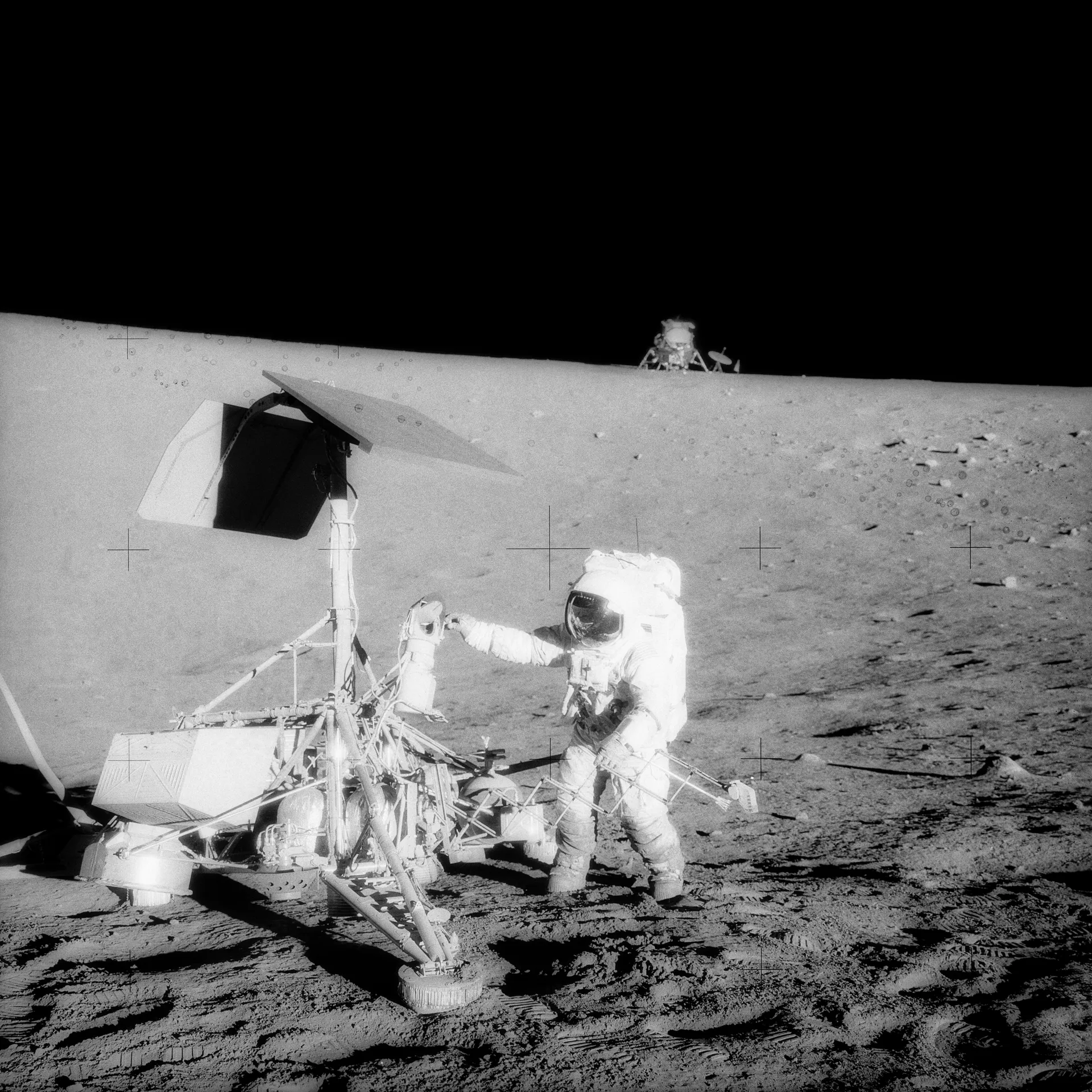
Apollo 12, November 1969: Pete Conrad at Surveyor 3, which had landed two and a half years earlier. NASA
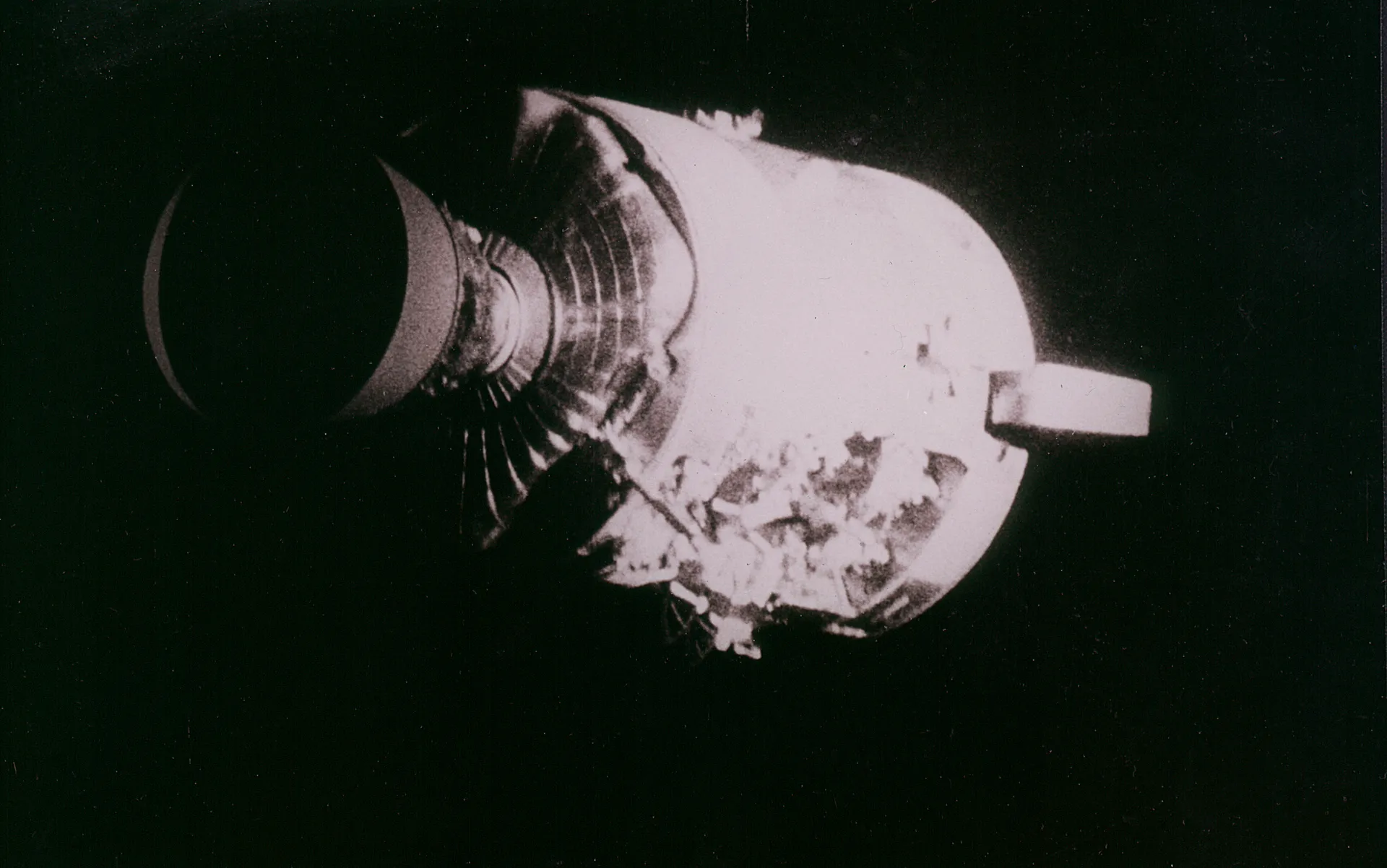
Apollo 13, April 17, 1970: the crew photographed the damaged service module after casting it off. NASA
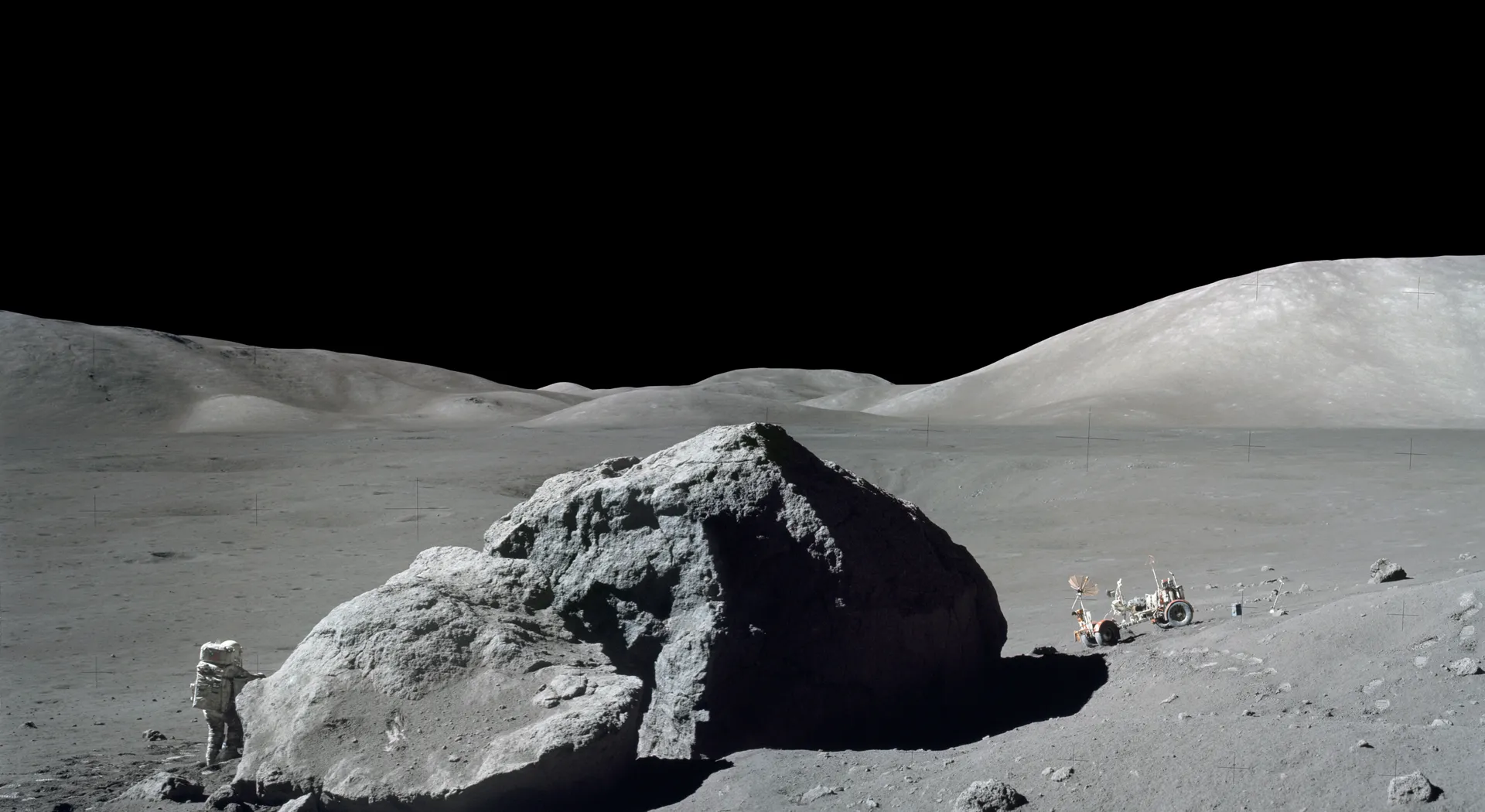
Apollo 17, December 1972: geologist Harrison Schmitt at a split boulder in the Taurus–Littrow valley. NASA
The worldwide euphoria over Apollo 11 did not rescue NASA’s budget. The Vietnam War and domestic problems had changed the political climate, and Congress cut NASA’s budget for fiscal 1970 to $3.7 billion. The basic Apollo mission continued, but the last three flights were deleted.7 Apollo 15, 16 and 17 carried the Lunar Roving Vehicle. Apollo 17, in December 1972, included Harrison Schmitt, a geologist and the first scientist selected as an astronaut, and its crew collected a record amount of lunar samples over three moonwalks. In all, 12 astronauts walked on the Moon during six landings.2,3
The distance record from those years belongs to a crew that did not land. Apollo 13’s farthest point from Earth, 248,655 miles, stood as the human record until April 6, 2026, when the four astronauts of Artemis II passed it on their way around the Moon.8
Sources
The text above is drawn from these 8 sources. Government works are adapted closely; company and press material is summarized. Numbers in the text point here. Last checked October 1, 2026.
Show all 8 sourcesShow fewer
Continue
Related stories
- Mercury & GeminiMercury’s six flights showed a person could ride to orbit and come home. Gemini’s ten taught maneuvering, rendezvous, docking, spacewalks and two-week flights—at about double the first estimate.
- The buildersNASA has always spent most of its money outside its own walls. From Apollo’s 500 contractors to SpaceX and Blue Origin, the question that shapes every program is who carries the risk when costs grow.
- Artemis IIFrom April 1 to 10, 2026, four astronauts flew Orion around the far side of the Moon and farther from Earth than anyone before them. What the flight tested, day by day, and what NASA found afterward.