Artemis II: the first crewed flight around the Moon since 1972
From April 1 to 10, 2026, four astronauts flew Orion around the far side of the Moon and farther from Earth than anyone before them. What the flight tested, day by day, and what NASA found afterward.
NASA
Drawn from 24 sources: NASA (24). About 8 minutes. Checked October 1, 2026.
The first astronauts to travel to the Moon in more than half a century came home on April 10, 2026. NASA astronauts Reid Wiseman, Victor Glover and Christina Koch, and Canadian Space Agency astronaut Jeremy Hansen splashed down at 5:07 p.m. PDT off the coast of San Diego, completing a nearly 10-day journey that took them 252,756 miles from home at their farthest point. They flew 695,081 miles in all, and their lunar flyby took them farther than any humans had ever traveled, past the record set by the Apollo 13 astronauts in 1970.1,4
Artemis II was a test flight. It was the first time people flew on NASA’s SLS rocket and Orion spacecraft, and its job was to confirm that Orion’s systems work as designed with a crew aboard in the actual environment of deep space, and to let the crew practice operations that later missions will need. It did not land and did not enter lunar orbit. It swung once around the far side of the Moon on a path that brought it home without a major engine firing.2,3
Four astronauts for the first crewed Orion
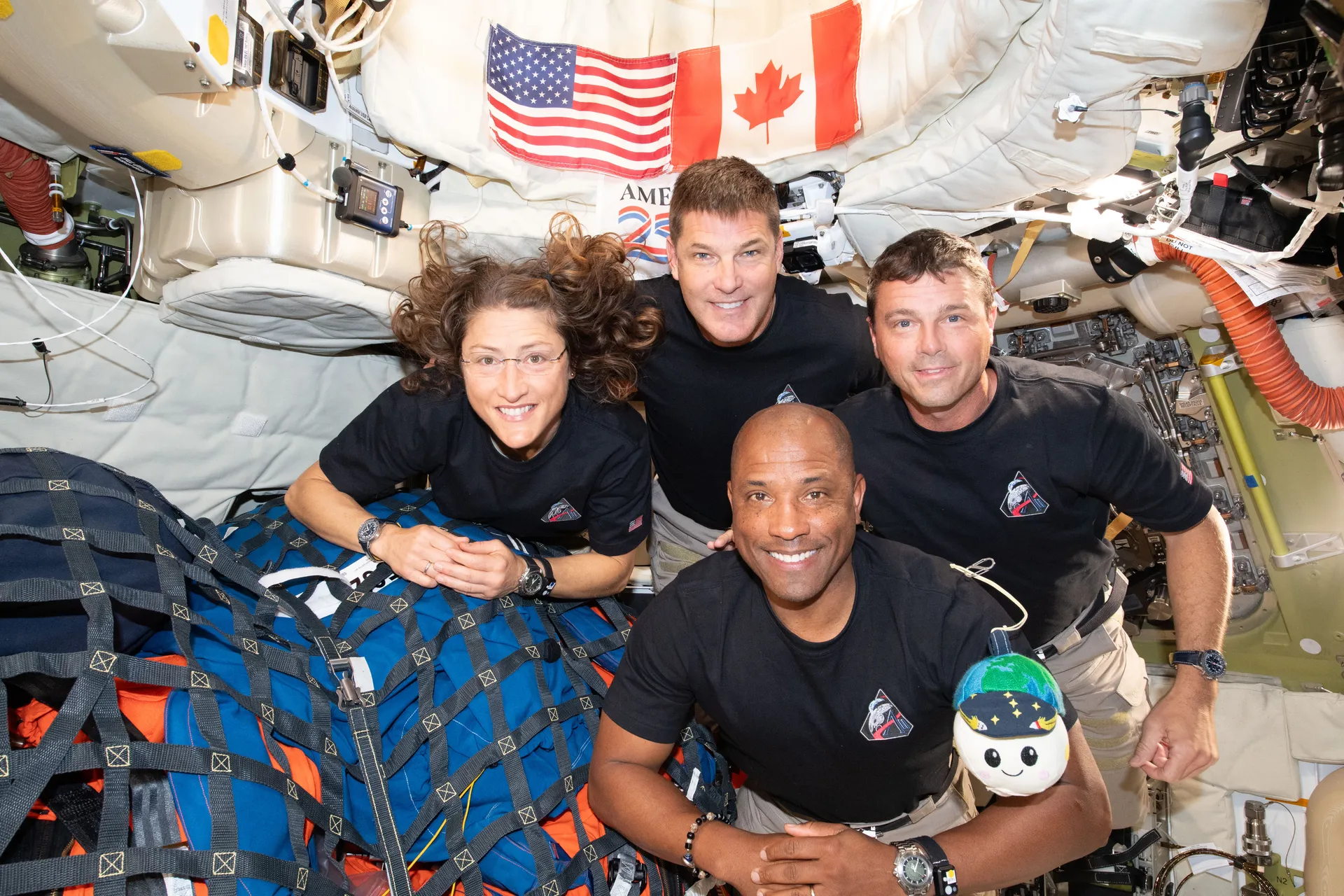
Reid Wiseman, the commander, had spent 165 days on the International Space Station in 2014 and served as chief of NASA’s Astronaut Office from December 2020 to November 2022. Victor Glover, the pilot, a naval aviator and test pilot, had flown the Crew-1 Dragon to the station. Christina Koch, a mission specialist, spent 328 consecutive days in space on a mission that filled almost all of 2019 and took part in the first all-female spacewalks. Jeremy Hansen of the Canadian Space Agency, a former fighter pilot selected in 2009, became the first Canadian to fly around the Moon.2
NASA named the crew in April 2023 and they trained together for three years.16 The flight slipped twice while they waited: in January 2024 to September 2025, to resolve a battery issue and a circuitry component for air ventilation and temperature control, and in December 2024 to April 2026, when NASA closed the Artemis I heat shield investigation and allowed more time to work on Orion’s life support system.21,22 On February 25, 2026, the stacked rocket rolled back to the Vehicle Assembly Building to repair the flow of helium to its upper stage and to replace batteries in its flight termination system.23 The crew named their spacecraft Integrity.1
Launch, and a day in high Earth orbit
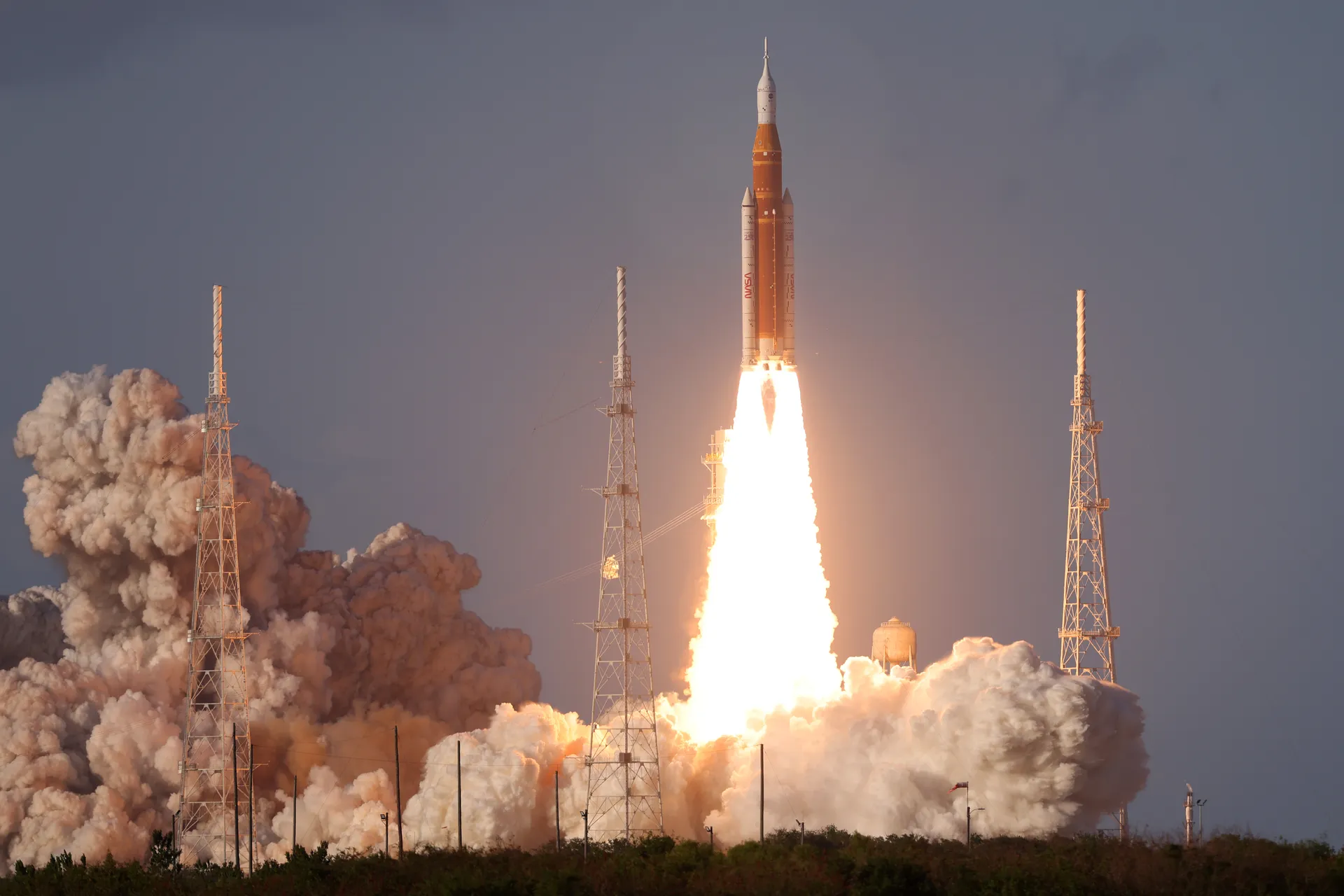
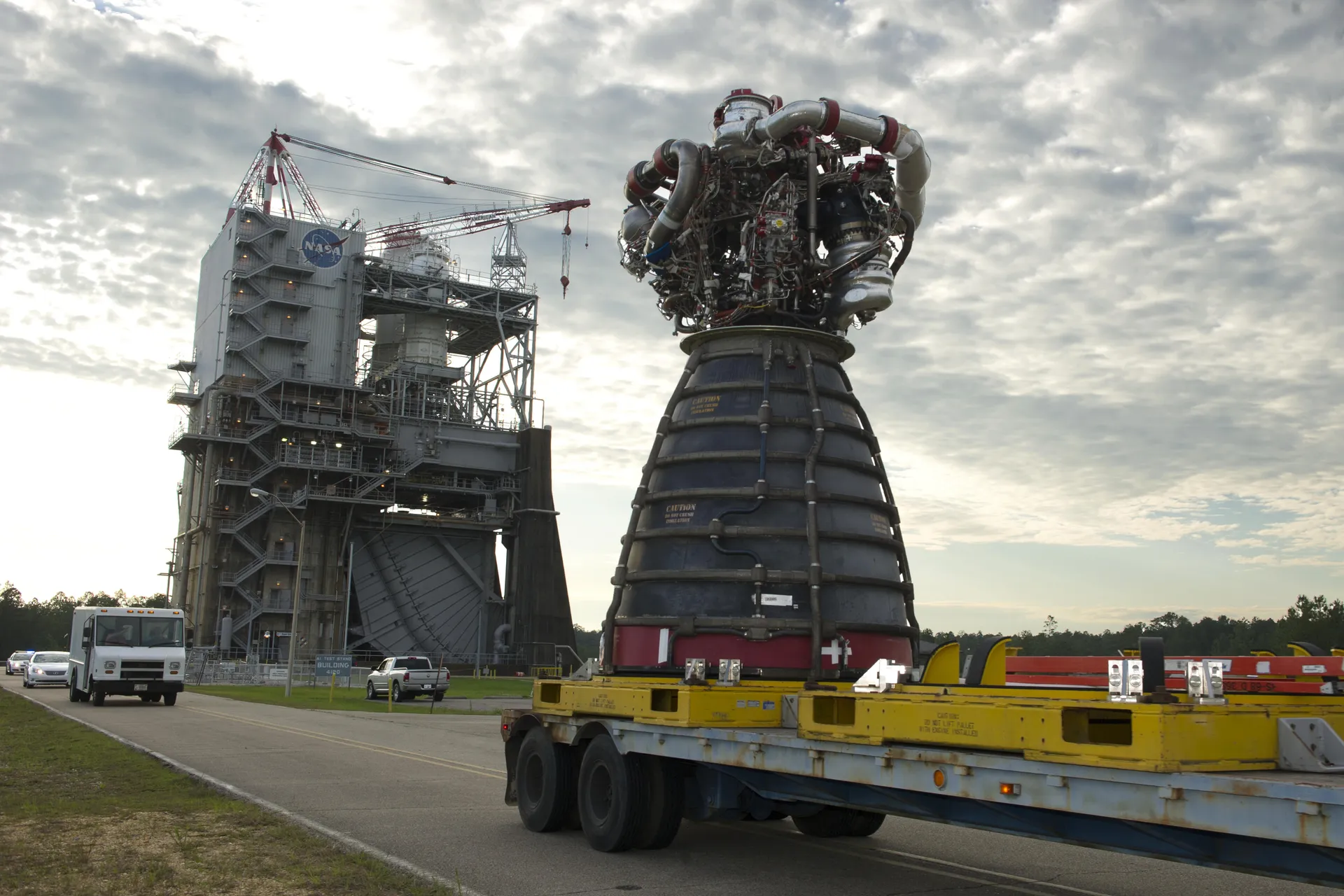
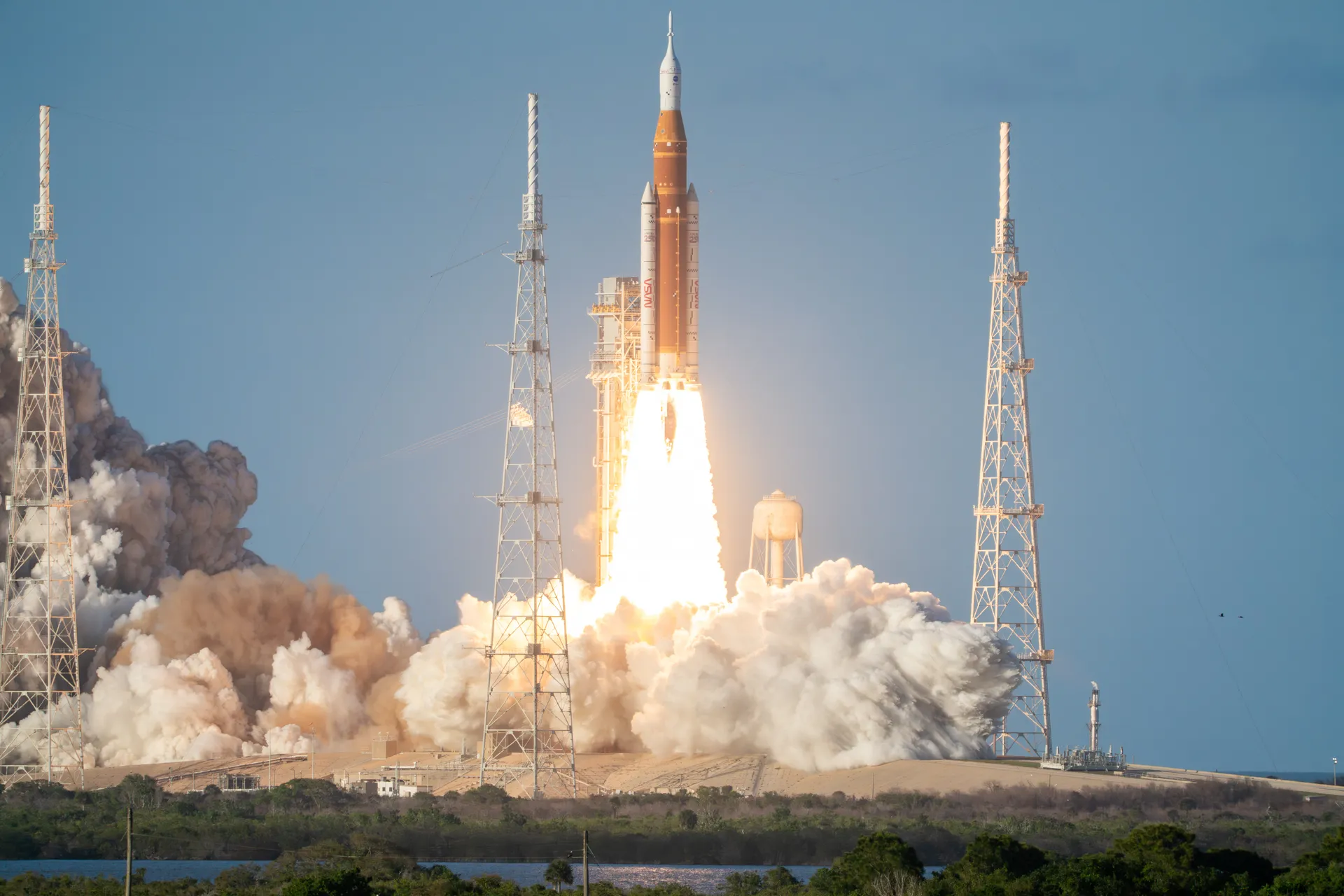
SLS lifted off from Launch Complex 39B at Kennedy Space Center at 6:35 p.m. EDT on April 1. The twin solid rocket boosters ignited first, delivering more than 75% of the thrust needed to lift the 5.75-million-pound rocket off the pad, and with the four RS-25 engines already at full thrust they produced 8.8 million pounds of force at liftoff. The boosters separated about two minutes into the flight, the launch abort system followed, and the core stage shut down eight minutes after liftoff.5
With a crew aboard, Orion and the upper stage did not head straight for the Moon. They first orbited Earth to make sure Orion’s systems were working while still close to home, ending in a high orbit that reached about 44,500 miles from Earth. After Orion separated from the upper stage, the crew used the spent stage as a target for a manual piloting test. For about 70 minutes Glover and Wiseman flew Orion through a series of approach and retreat maneuvers around it, gathering data for the docking that later missions must perform.2,6
A free-return path around the Moon
On the evening of April 2, after the mission management team polled “go,” Orion’s service module fired its main engine for five minutes and 50 seconds. The translunar injection burn sent the crew out of Earth orbit toward the Moon, making them the first people to leave Earth orbit since the Apollo program in 1972. It was the last major engine firing of the mission: it set Orion on a free-return trajectory, a fuel-efficient path that uses the gravity of Earth and the Moon to bring the spacecraft back without a burn on the far side.8,9,2
April 1–2, 2026
A day in high Earth orbit
Artemis II first flew a long, looping orbit around Earth so the crew could check Orion’s systems close to home before committing to the Moon.
April 2–6, 2026
Toward the Moon
A burn of the service module’s engine set Orion on a free-return path: a route that swings around the Moon and falls back to Earth without another major burn.
April 6, 2026
Around the far side
Orion passed thousands of kilometres beyond the Moon’s far side — 252,756 miles from Earth, farther than any people had travelled.
April 10, 2026
Home
The Moon’s gravity bent the path back toward Earth. The crew module separated from its service module and splashed down in the Pacific.
Drag to turn. Distances and sizes are to scale.
Small burns kept the trajectory precise. Flight controllers canceled two of the three planned outbound correction burns because Orion was already on course, and the spacecraft entered the Moon’s sphere of influence, where the Moon’s gravity pulls harder than Earth’s, at 12:41 a.m. EDT on April 6, 41,072 miles from the Moon.11 The path carried the crew about 4,067 miles above the lunar surface at closest approach, behind the far side, and then home.1
Ten days, flight day by flight day
April 1 · Day 1
Launch and the piloting test6
Liftoff at 6:35 p.m. EDT. In high Earth orbit the crew flies Orion around the spent upper stage for about 70 minutes. Engineers and the crew troubleshoot a blinking fault light on the toilet. Four international CubeSats are released.
April 2 · Day 2
Translunar injection8
A burn of five minutes 50 seconds at 7:49 p.m. EDT sends the crew toward the Moon. The crew exercises on the flywheel while engineers watch how the air system responds.
April 3 · Day 3
Deep-space checkout9
A CPR and choking-response drill, a test of the emergency communications system through the Deep Space Network, and high-definition video sent home by laser.
April 4 · Day 4
Manual piloting10
Koch and Hansen take turns flying Orion for 41 minutes, testing two thruster modes.
April 5 · Day 5
Suits and targets11
The crew leak-checks its orange Orion Crew Survival System suits, practices strapping in, eating and drinking while suited, and receives the final list of 30 lunar targets.
April 6 · Day 6
Lunar flyby and the distance record12
Past Apollo 13’s 248,655 miles at 1:56 p.m. EDT; closest approach, 4,067 miles above the surface, at 7:00 p.m.; farthest point, 252,756 miles from Earth, at 7:02 p.m.; then a solar eclipse of nearly an hour.
April 7 · Day 7
Leaving the Moon’s influence14
A call to the Expedition 74 crew on the space station, a debrief with the lunar science team, and the first return correction burn.
April 8 · Day 8
Tests on the way home15
Each astronaut tries the compression garment worn under the suit to help the body readjust to gravity. Flight controllers drop a planned piloting test, and a radiation-shelter drill is skipped to prepare the cabin for entry.
April 9 · Day 9
Stowing for entry16
Seats are installed and equipment stowed; the second return correction burn fine-tunes the path to the atmosphere.
April 10 · Day 10
Entry and splashdown17
The service module separates at 7:33 p.m. EDT; Orion meets the atmosphere at 7:53 p.m. at about 35 times the speed of sound and splashes down at 8:07 p.m. EDT off San Diego.
Seven hours at the Moon
Orion beyond the far side of the Moon, with Earth just past the lunar limb, lit as it was on April 6, 2026. Illustration rendered from the atlas’s Orion model.
The lunar observation period began at 2:45 p.m. EDT on April 6, when Orion’s main cabin windows were pointed at the Moon. The science team in mission control had sent up 30 targets. Among them was the Orientale basin, a nearly 600-mile-wide crater, 3.8 billion years old, that straddles the near and far sides; the Artemis II crew were the first humans to see the entire basin. Northwest of it lay the older Hertzsprung basin, whose features have been worn down by later impacts, so the two could be compared.9,11
The crew had been given handheld cameras with 80–400-millimeter and 14–24-millimeter lenses, and they reported colors as well as shapes. Shades of brown and blue that the human eye can pick out help show the mineral composition and age of a feature. As the crew’s descriptions came down, the scientists in the Science Evaluation Room updated the plan and sent up follow-up questions.9,12 The crew also proposed names for two small, unnamed craters: Integrity, after their spacecraft, and Carroll, for Wiseman’s late wife, Carroll Taylor Wiseman.12
At 6:41 p.m. Earth dropped below the lunar horizon. Three minutes later Orion passed behind the Moon and out of radio contact for about 40 minutes. “As we prepare to go out of radio communication, we’re still going to feel your love from Earth,” Glover said. “And to all of you down there on Earth and around Earth, we love you, from the Moon.”12 At 7:00 p.m. Orion made its closest approach, about 4,067 miles above the surface, traveling about 60,863 miles an hour relative to Earth but only 3,139 miles an hour relative to the Moon. Two minutes later the crew reached 252,756 miles from Earth, about 4,100 miles farther than Apollo 13.12
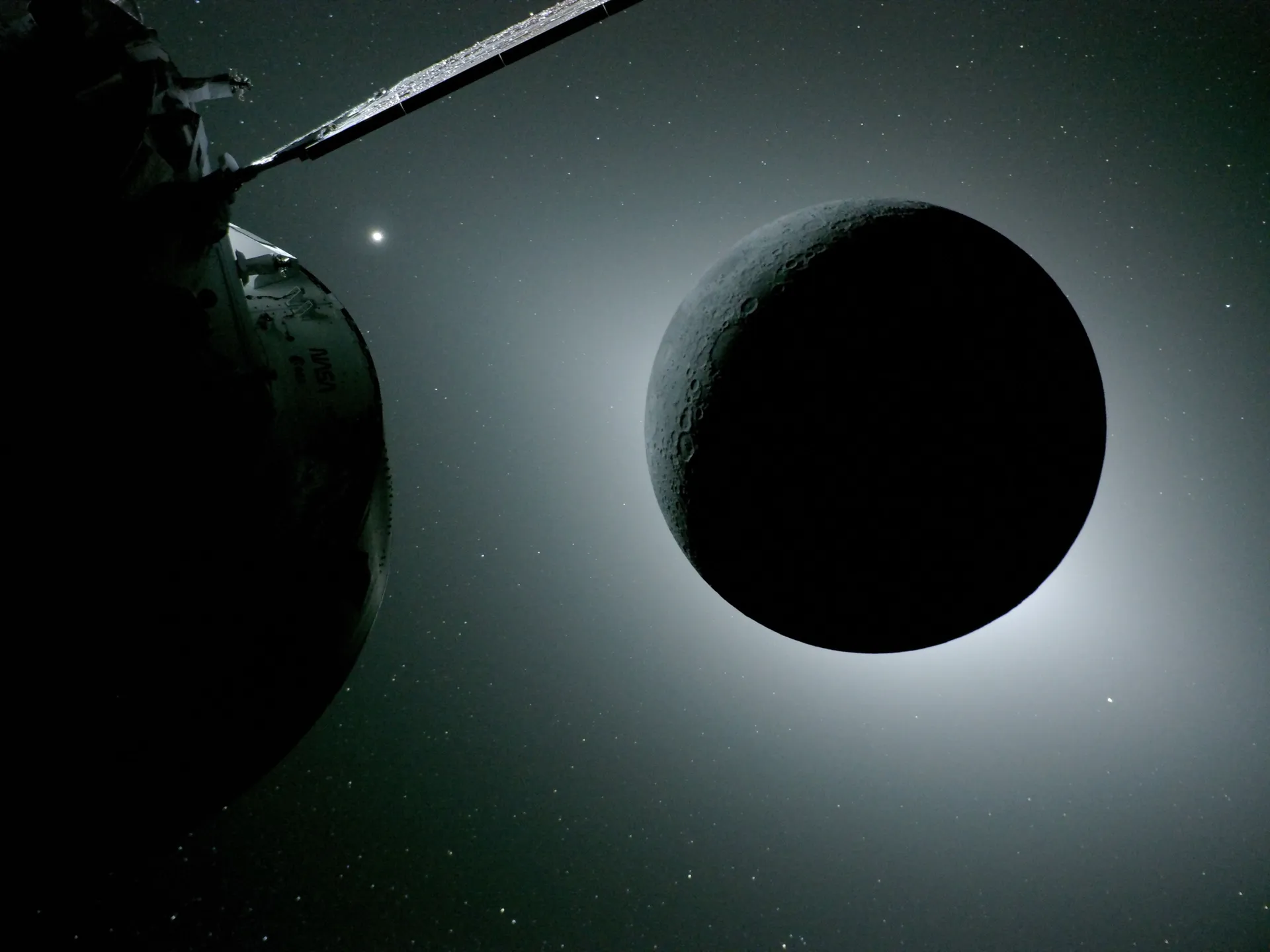
When the observations ended, Orion, the Moon and the Sun lined up. For nearly an hour the Moon hid the Sun from the crew, who studied the glow around its edge and watched the darkened surface; they reported six flashes of light from meteoroids striking the Moon.13 In all, the astronauts took more than 7,000 images during the flyby.1
What the crew saw
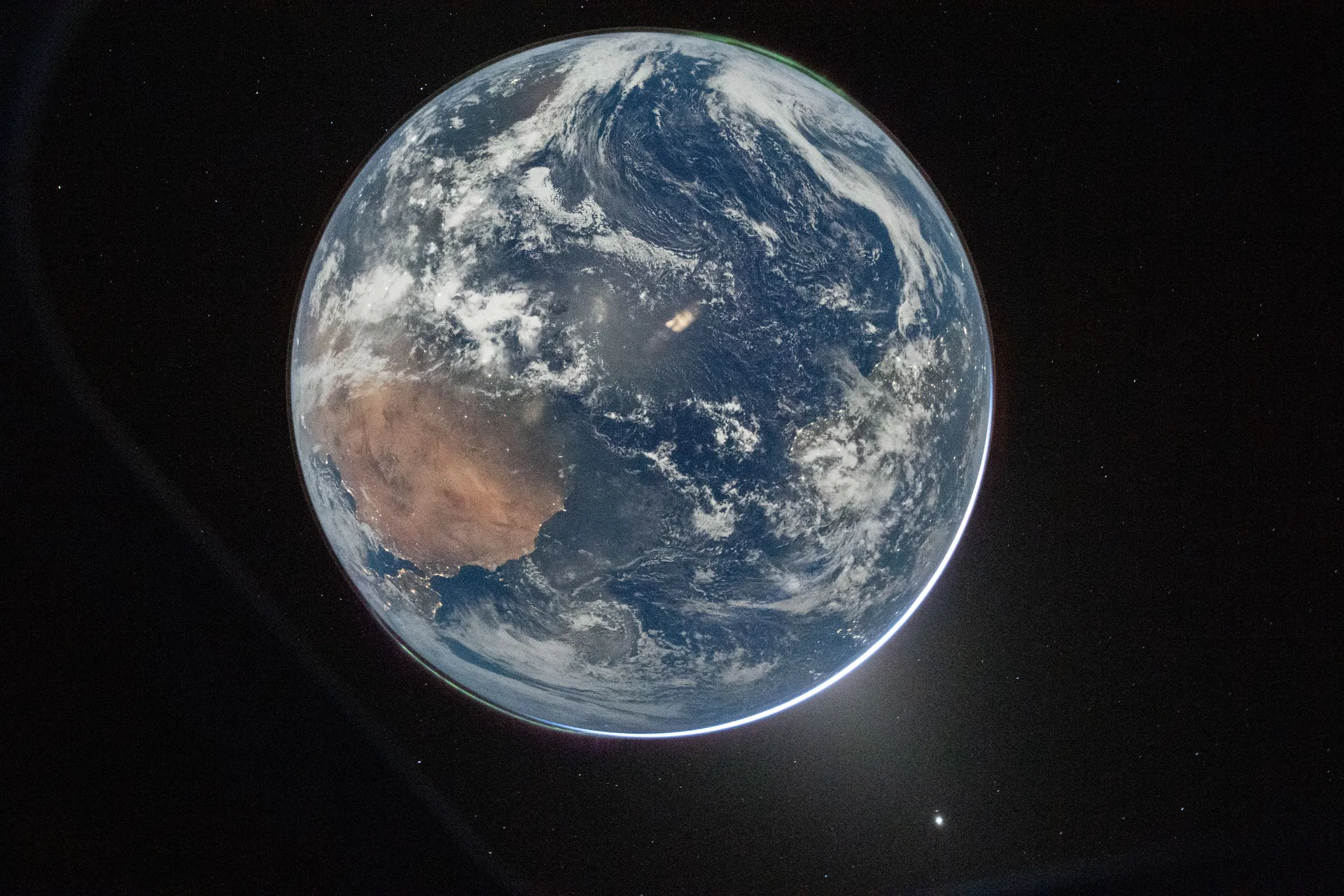
April 2, after the translunar injection burn: the night side of Earth, lit by moonlight, through an Orion window. Africa is at left, with green auroras at the edges of the disk. NASA
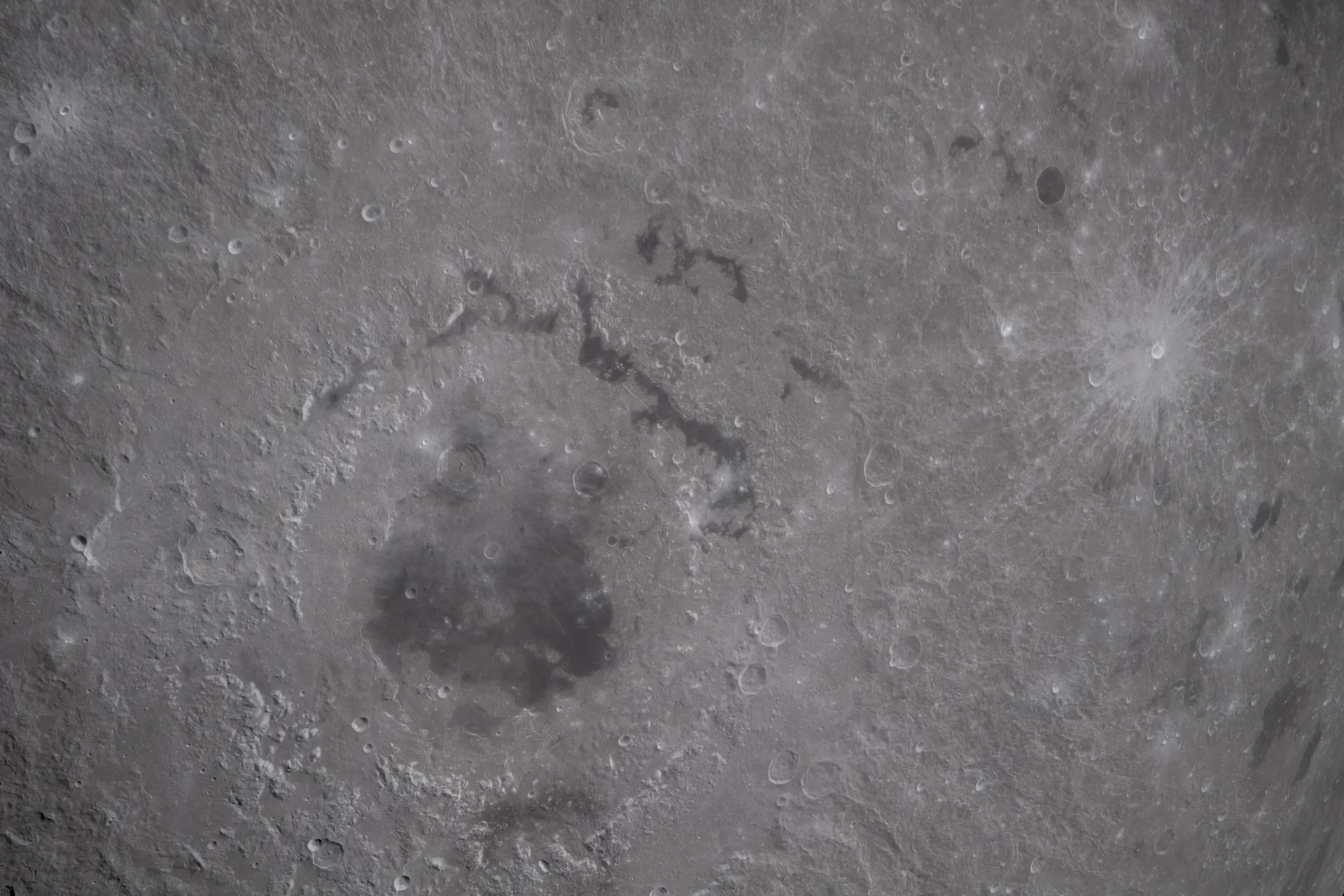
April 6: the rings of Orientale basin, which the crew were the first humans to see whole. NASA
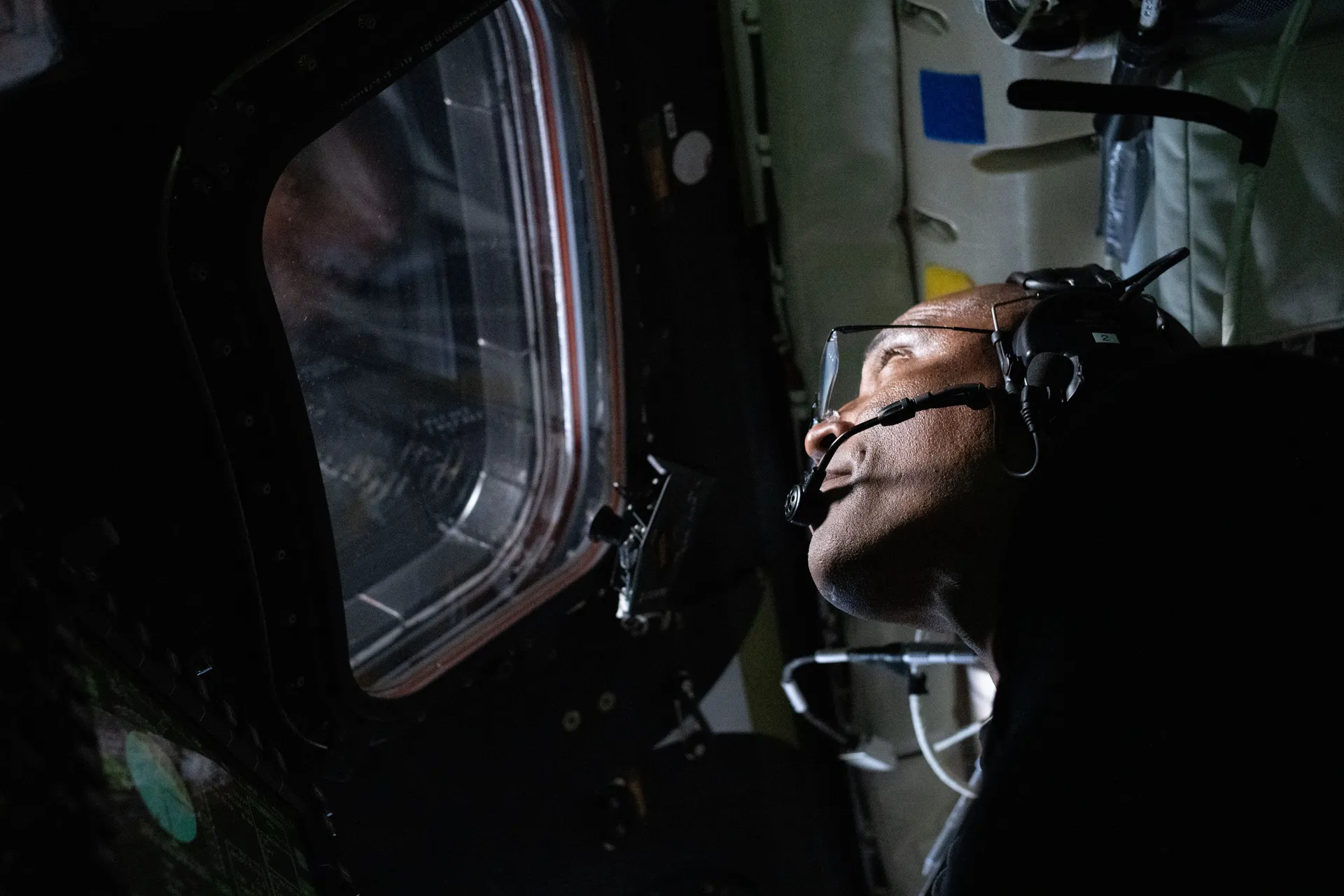
Pilot Victor Glover at a window during the seven-hour observation period. NASA
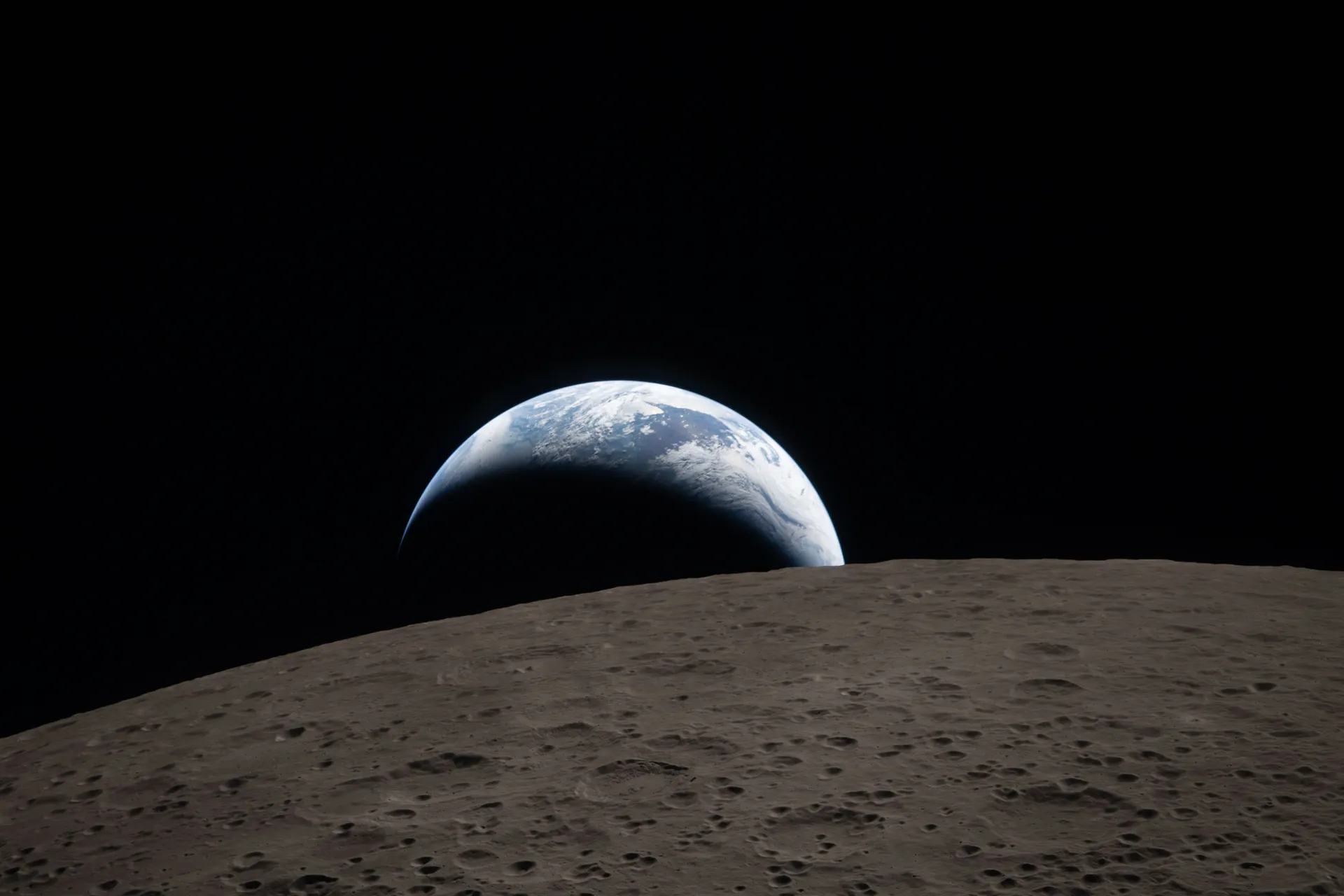
Earthset at 6:41 p.m. EDT on April 6. Clouds over Australia and Oceania are visible on the day side; Ohm crater is in the foreground. NASA
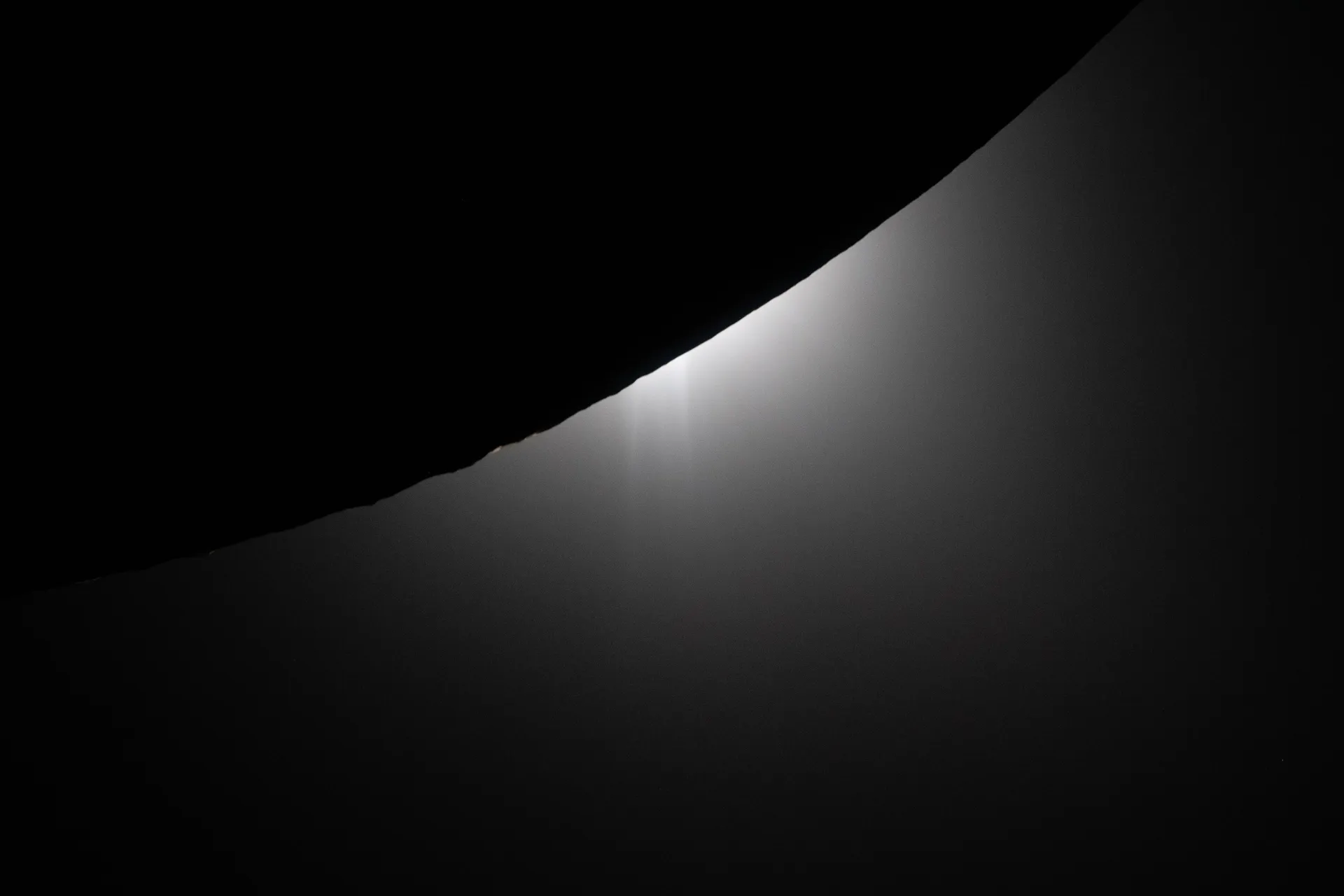
The start of the solar eclipse, as the Sun set behind the night side of the Moon. NASA
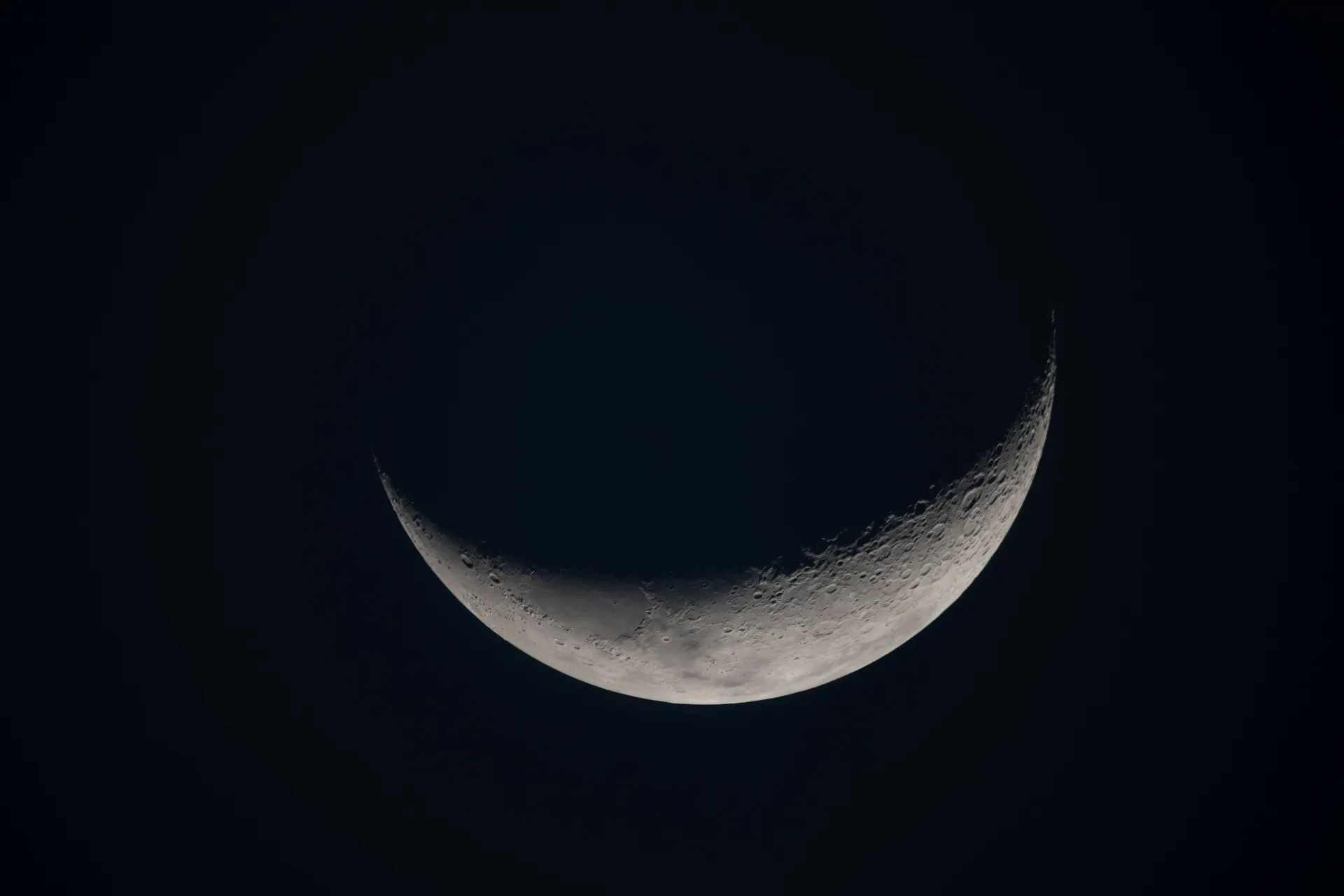
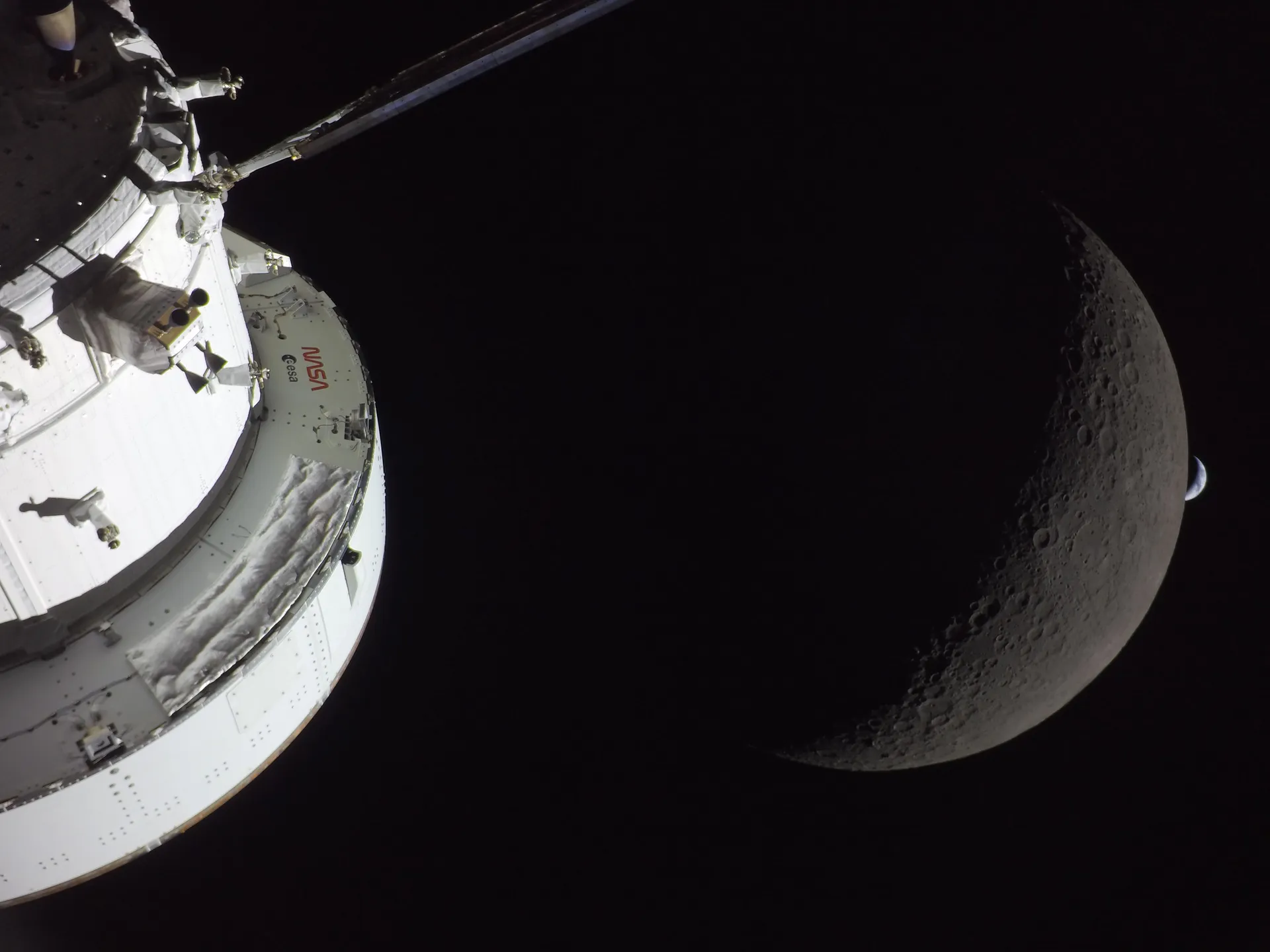
April 7, heading home: a crescent Moon, its craters lit at a low angle along the terminator. NASA
What the flight was testing
NASA set five priorities for the flight: show that its systems and teams could sustain the crew; demonstrate the systems and operations needed for a crewed lunar campaign, from ground equipment to recovery; bring back flight hardware and data; demonstrate emergency systems and procedures as far as practical; and verify a list of subsystems.2 With astronauts aboard for the first time, engineers put Orion through a full in-flight evaluation. The crew tested its life support systems, confirming that Orion can sustain people in deep space.1
Several tests looked ahead to the dockings that the next missions depend on. The piloting demonstrations near Earth and on the way to the Moon gave engineers data on Orion’s handling for the rendezvous and docking planned with landers from Artemis III onward.1 Others concerned the cabin itself: the flywheel exercise device, which weighs about 30 pounds against more than 4,000 pounds of exercise hardware on the space station; the emergency communications system; and an optical communications terminal that sent high-definition video to Earth by laser.8,9 Not every item flew as planned. The toilet needed troubleshooting on the first day, and engineers opened an investigation into a problem with the line that vents urine overboard.7,18
Coming home at nearly 24,000 miles an hour
The return was also the test of a decision about the heat shield. After the uncrewed Artemis I flight in 2022, pieces of the charred outer layer of Orion’s Avcoat heat shield had broken away. Engineers traced it to gases that could not vent from the material during Artemis I’s skip entry, in which the capsule dipped into the atmosphere, skipped back out and reentered.20 NASA kept the heat shield already attached to the Artemis II capsule and instead changed the trajectory, shortening how far Orion could fly between entering the atmosphere and splashing down, so that it spent less time in the temperature range in which the Artemis I problem occurred.19
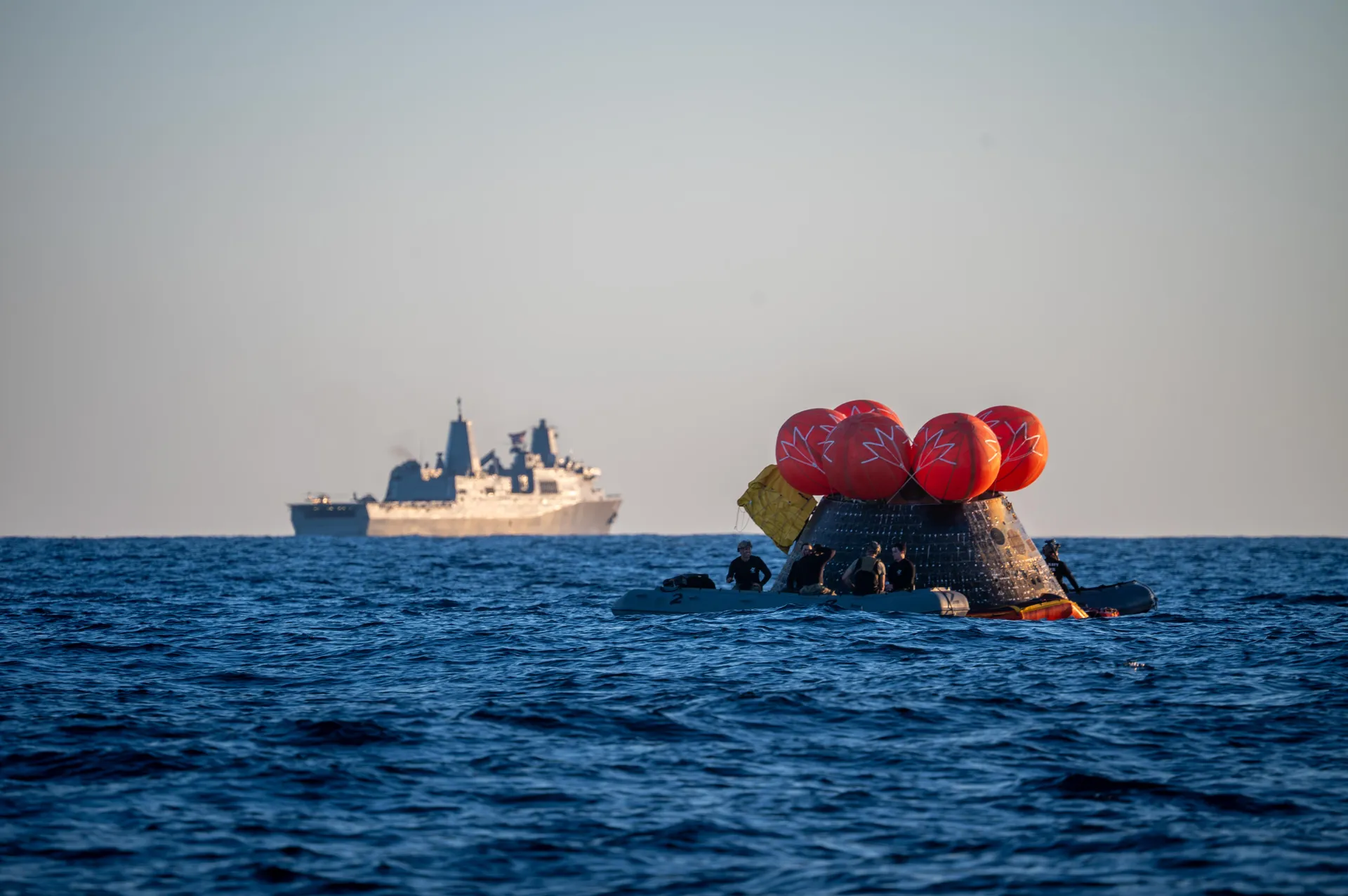
The service module separated at 7:33 p.m. EDT and burned up over the Pacific. Orion reached about 23,864 miles an hour just before it met the atmosphere at 7:53 p.m., 400,000 feet up and about 1,956 miles from the landing site, and lost contact for about six minutes inside the plasma of peak heating. Drogue parachutes opened at 23,400 feet, the three main parachutes at 5,400 feet, and Orion splashed down at 8:07 p.m. EDT. Navy divers helped the crew out onto an inflatable raft, and helicopters flew them to USS John P. Murtha.16,17,18
What NASA found after splashdown
On April 20 NASA published its initial assessment. The thermal protection system had performed as expected, with no unusual conditions identified. Diver imagery taken after splashdown, and inspections on the recovery ship, showed that the char loss seen after Artemis I was significantly reduced, both in quantity and in size, and consistent with the arc jet tests run after Artemis I. Airborne imagery of the capsule taken during reentry was to show when the remaining char loss occurred. The heat shield was to go to NASA’s Marshall Space Flight Center over the summer for sample extraction and internal x-ray scans.18
The rest of the return was close to prediction. Orion splashed down 2.9 miles from its target, and its speed at entry was within one mile per hour of predictions. The tiles on the capsule’s backshell performed as expected. SLS placed Orion precisely where it needed to be, traveling more than 18,000 miles an hour at main engine cutoff, and the launch pad and mobile launcher, reinforced with lessons from Artemis I, came through with minimal damage. Engineers set out to find the root cause of the urine vent line problem and correct it before Artemis III.18
The capsule itself is being taken apart for the next flights. Seats, video processors and camera controllers were removed in San Diego for reuse, and more than 250 components from the Artemis II Orion are to fly again on Artemis IV and Artemis V.18,24
Sources
The text above is drawn from these 24 sources. Government works are adapted closely; company and press material is summarized. Numbers in the text point here. Last checked October 1, 2026.
Show all 24 sourcesShow fewer
- 1Back to the text
- 2Back to the text
- 3Back to the text
- 4Back to the text
- 5Back to the text
- 6Back to the text
- 7Back to the text
- 8Back to the text
- 9Back to the text
- 10Back to the text
- 11Back to the text
- 12Back to the text
- 13Back to the text
- 14Back to the text
- 15Back to the text
- 16Back to the text
- 17Back to the text
- 18Back to the text
- 19Back to the text
- 20Back to the text
- 21Back to the text
- 22Back to the text
- 23Back to the text
- 24Back to the text
Continue
Related stories
- The Artemis planA rocket, a capsule, two commercial landers, new suits and propellant refilled in orbit: who builds each piece, what it costs, and how a 2024 landing became Artemis IV in 2028.
- Space Launch SystemCongress wrote SLS into law in 2010, with Shuttle engines and boosters and a 2016 goal. It first flew in 2022, at an estimated $4.1 billion a launch with Orion, and in 2026 NASA stopped upgrading it.
- GatewayA small international station that was to circle the Moon once a week. Its power module was nearly built when NASA paused it in March 2026; the hardware is being turned to a nuclear Mars spacecraft and Moon Base tests.