Apollo command module
The three-seat capsule that carried every Apollo crew to the Moon and back.
- Type
- Crew spacecraft
- Status
- Retired
- First flight
- February 26, 1966
- Size
- 3.2 m (10 ft)
- Built by
- NASA
- 11
- crewed Apollo missions, 1968–1972
- 9
- crewed flights to the Moon, 1968–1972
Apollo was a three-part spacecraft: the command module, the crew’s quarters and flight control section; the service module, for propulsion and spacecraft support systems; and the lunar module, which took two of the crew to the lunar surface. The command module was the only part of the spacecraft to return to Earth.
North American Aviation built the command module, a cone-shaped pressure vessel encased in heat shields and 12 feet 10 inches (3.9 meters) across its base. Inside, three couches faced the controls, displays and navigation equipment the crew used; the forward compartment held the parachutes that lowered the capsule to the ocean after reentry.
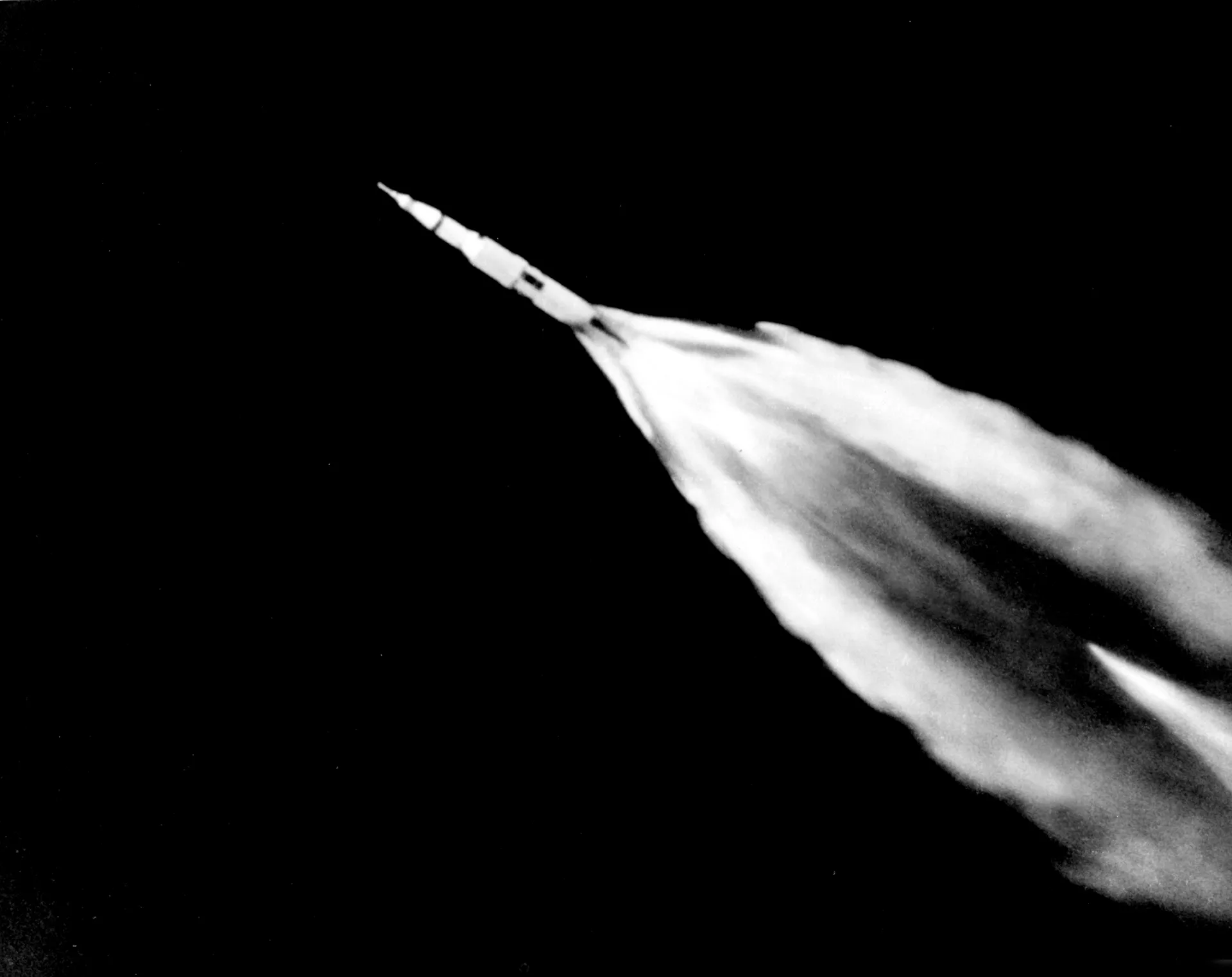
An uncrewed command module first flew on the AS-201 test on February 26, 1966. Crews flew Apollo on 11 missions between 1968 and 1972, nine of them to the Moon. The model shown here is a scan of Columbia, the Apollo 11 command module, in the collection of the Smithsonian’s National Air and Space Museum.
Read more about Apollo command module
Sources
- 1
- 2
- 3
- 4
- 5