NASA’s robotic Moon deliveries: four attempts, one lander upright
Since 2018 NASA has bought rides to the Moon for its instruments instead of building landers. Of four attempts so far, one landed upright. A $6 billion second round is meant to supply a Moon Base.
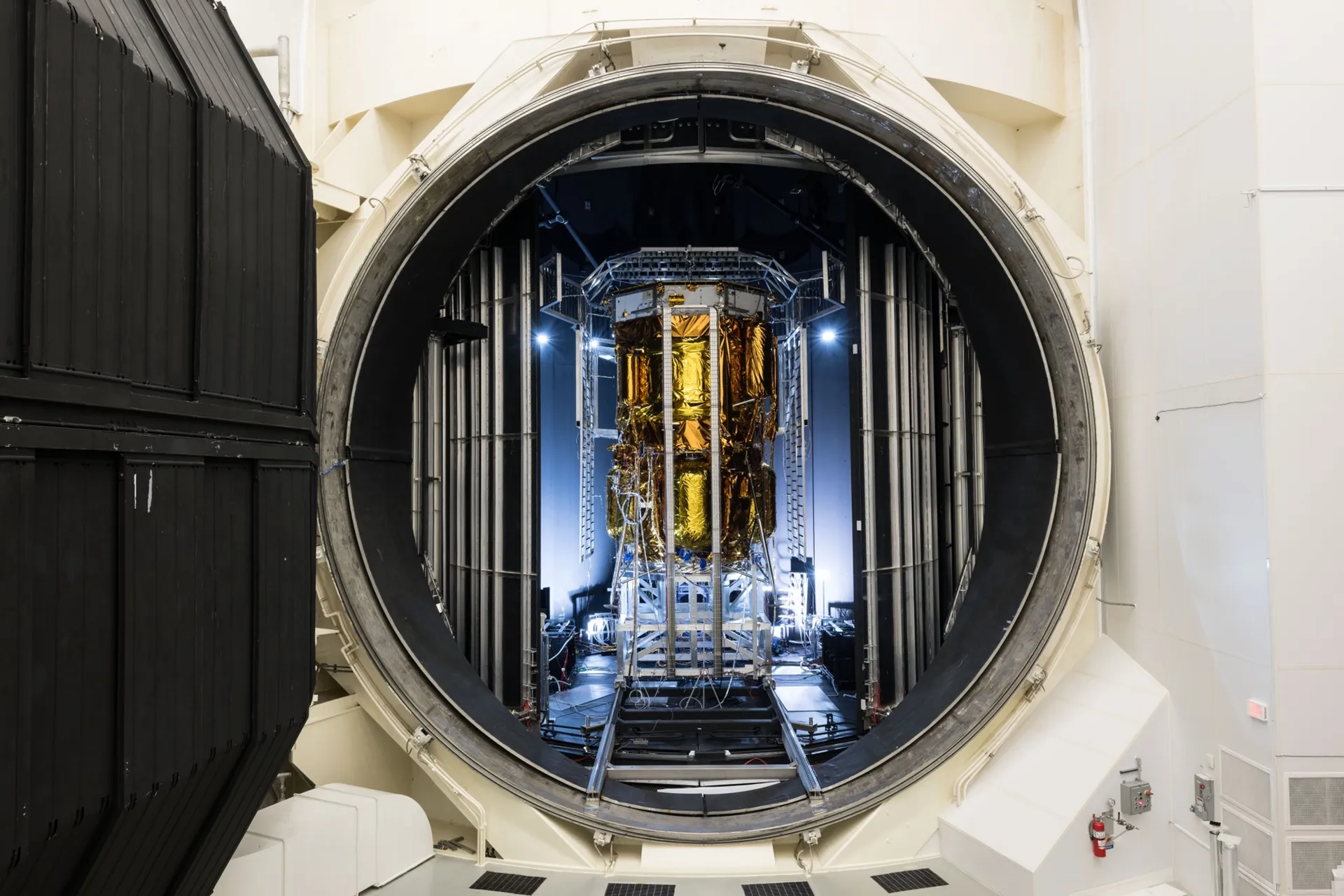
Firefly Aerospace, released by NASA
Drawn from 19 sources: NASA (14), NASA Office of Inspector General, NASA Goddard Space Flight Center, Aerospace America and 2 others. About 6 minutes. Checked October 1, 2026.
Under its Commercial Lunar Payload Services initiative, CLPS, NASA does not build Moon landers for its science instruments. It buys delivery. American companies bid to carry NASA payloads to the surface, and each award covers the whole job: integrating the payloads, operating the mission, launching from Earth and landing on the Moon. The companies may sell space on the same lander to other customers.1 NASA counts failures as part of the bargain: “With CLPS, NASA has accepted the risk that going through this innovative approach with commercial companies, that there could be some failures.”2
Four CLPS landers have now flown. One never reached the Moon, two landed and ended up leaning or on their sides, and one, Firefly Aerospace’s Blue Ghost, landed upright and worked through a full lunar day. No American lander has touched down in 2026.15
CLPS landing attempts so far
January 8, 2024
Peregrine (Astrobotic)4
Propulsion failure after launch; never reached the Moon. Five NASA payloads.
February 22, 2024
Odysseus, IM-1 (Intuitive Machines)5
First commercial landing, near Malapert A in the South Pole region; came to rest leaning. Six NASA payloads.
March 2, 2025
Blue Ghost Mission 1 (Firefly Aerospace)9
Landed upright in Mare Crisium and operated about 14 days. Ten NASA payloads, all of which returned data.
March 6, 2025
Athena, IM-2 (Intuitive Machines)10
Landed on its side in a crater near Mons Mouton; mission ended the next day.
Buying a ride instead of building a lander
NASA admitted nine U.S. companies to CLPS in November 2018 and five more a year later.1 The contracts are indefinite-delivery, indefinite-quantity agreements with a combined maximum value of $2.6 billion through November 2028. Thirteen companies are now eligible, and NASA has awarded 17 deliveries to five of them, carrying more than 60 payloads.2
The early schedule did not hold. In June 2024 NASA’s inspector general reported that CLPS missions had grown $208.2 million in cost and slipped an average of at least 14 months per task order. NASA had set aggressive delivery schedules, an average of 30 months from contract award to launch, based on overly optimistic market research that did not account for supply constraints or technical difficulty; the actual average was 44 months. Fixed prices shifted production and cost risk to small, relatively new companies, which contributed to one vendor’s bankruptcy. NASA had meant to fly low-cost, non-critical instruments first, but in 2020 it added the $433.5 million VIPER rover as the fourth task order, and the high stakes led to progressively risk-averse practices that increased costs and delayed schedules. VIPER was canceled in July 2024 and a year later added to another task order.3
- $2.6B
- Combined ceiling of NASA’s first CLPS contracts, through November 20282
- 17
- Lunar deliveries awarded to five companies, carrying more than 60 payloads2
- 44 months
- Average time from award to launch in 2024, against 30 planned3
- $208.2M
- Cost growth across CLPS missions reported in June 20243
2024: Peregrine never landed; Odysseus came down on a slope
Astrobotic’s Peregrine Mission One was the first CLPS flight. After a successful launch and separation from its rocket on January 8, 2024, the spacecraft had a propulsion problem that prevented a soft landing. Astrobotic kept it on a path back toward Earth so that it would burn up safely, and after 10 days and 13 hours in space it reentered over the South Pacific on January 18. Four of its five NASA payloads powered on and collected data in flight, measuring natural radiation and chemical compounds around the lander; the fifth, a laser retroreflector, could only work on the surface.4
A month later Intuitive Machines’ Nova-C lander, Odysseus, made the first commercial landing on the Moon. After a seven-day trip to lunar orbit it touched down near the crater Malapert A in the South Pole region on February 22, 2024, carrying six NASA instruments, the first new NASA science on the lunar surface in more than 50 years. Hours before landing, the company found a problem with a sensor in its navigation system and leaned on a NASA experiment, the Navigation Doppler Lidar, which measures speed, direction and altitude with laser pulses, to land precisely.5 Odysseus came to rest in a degraded crater about a kilometer across, on terrain sloped 12 degrees. Intuitive Machines said the lander gently leaned into the surface as it came down, which preserved its ability to send back data: more than 350 megabits by February 28.7,6
Peregrine and Odysseus, from clean room to the Moon
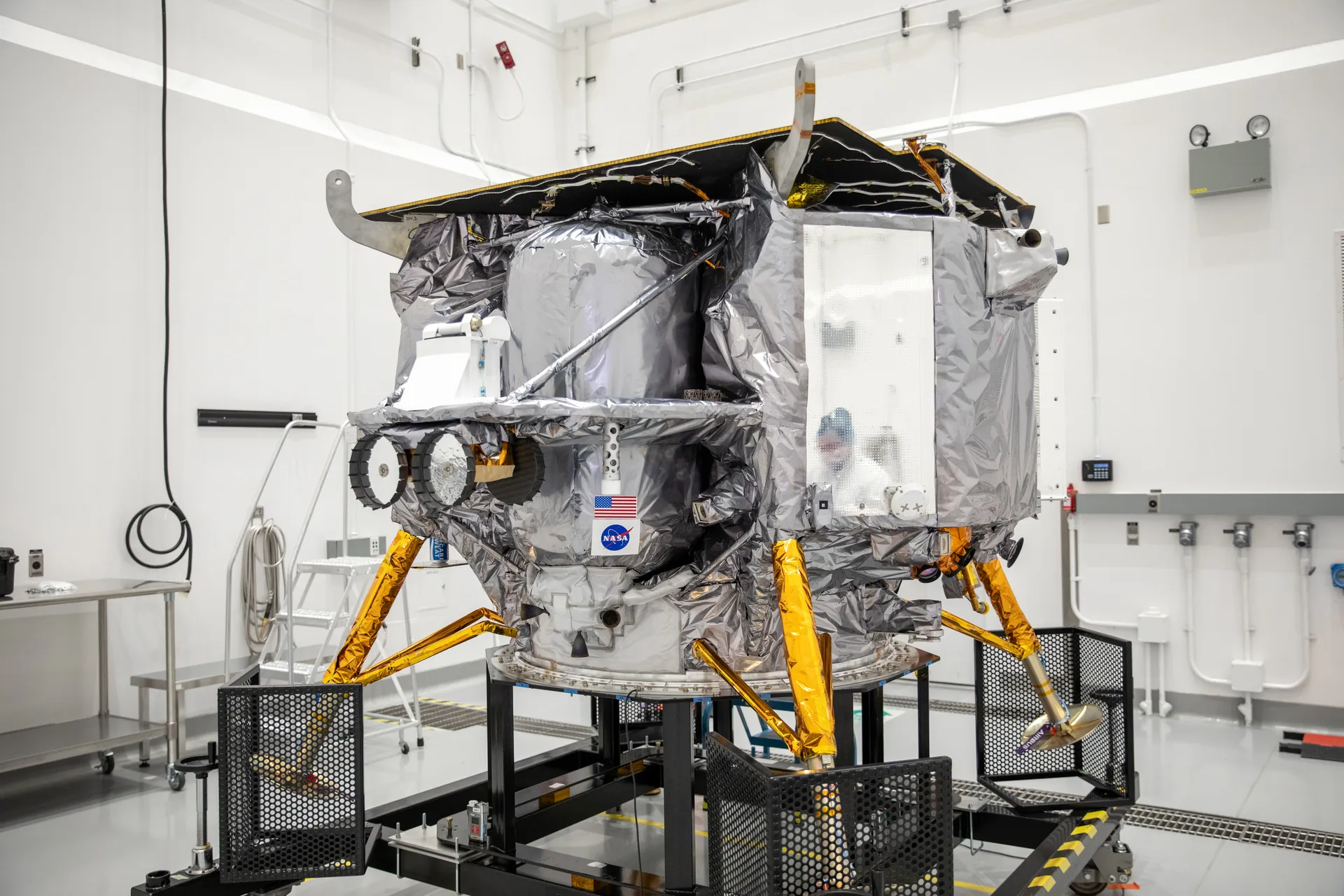
Astrobotic’s Peregrine at the Astrotech facility near Kennedy Space Center, November 14, 2023, as the NASA insignia was installed. NASA/Isaac Watson
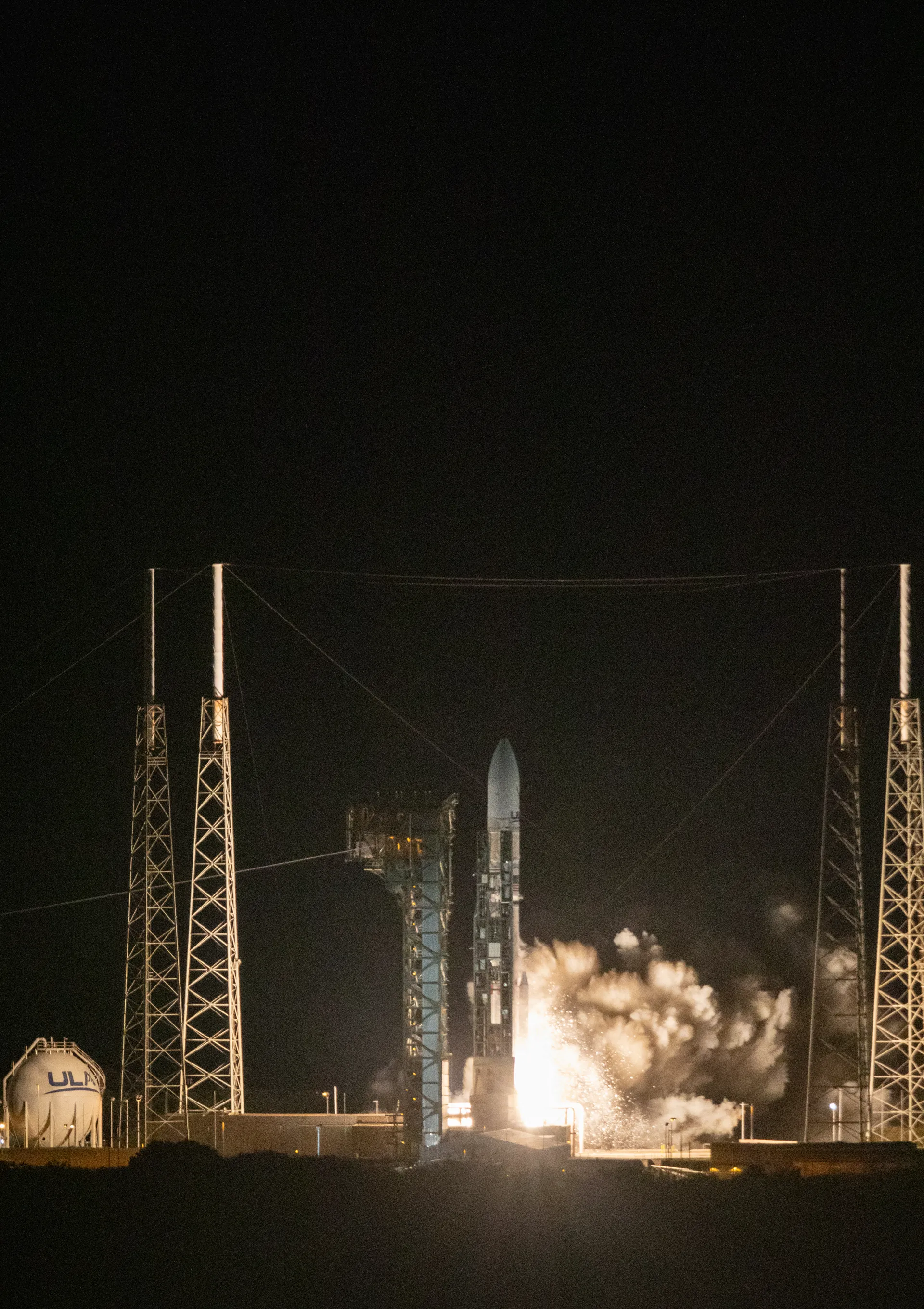
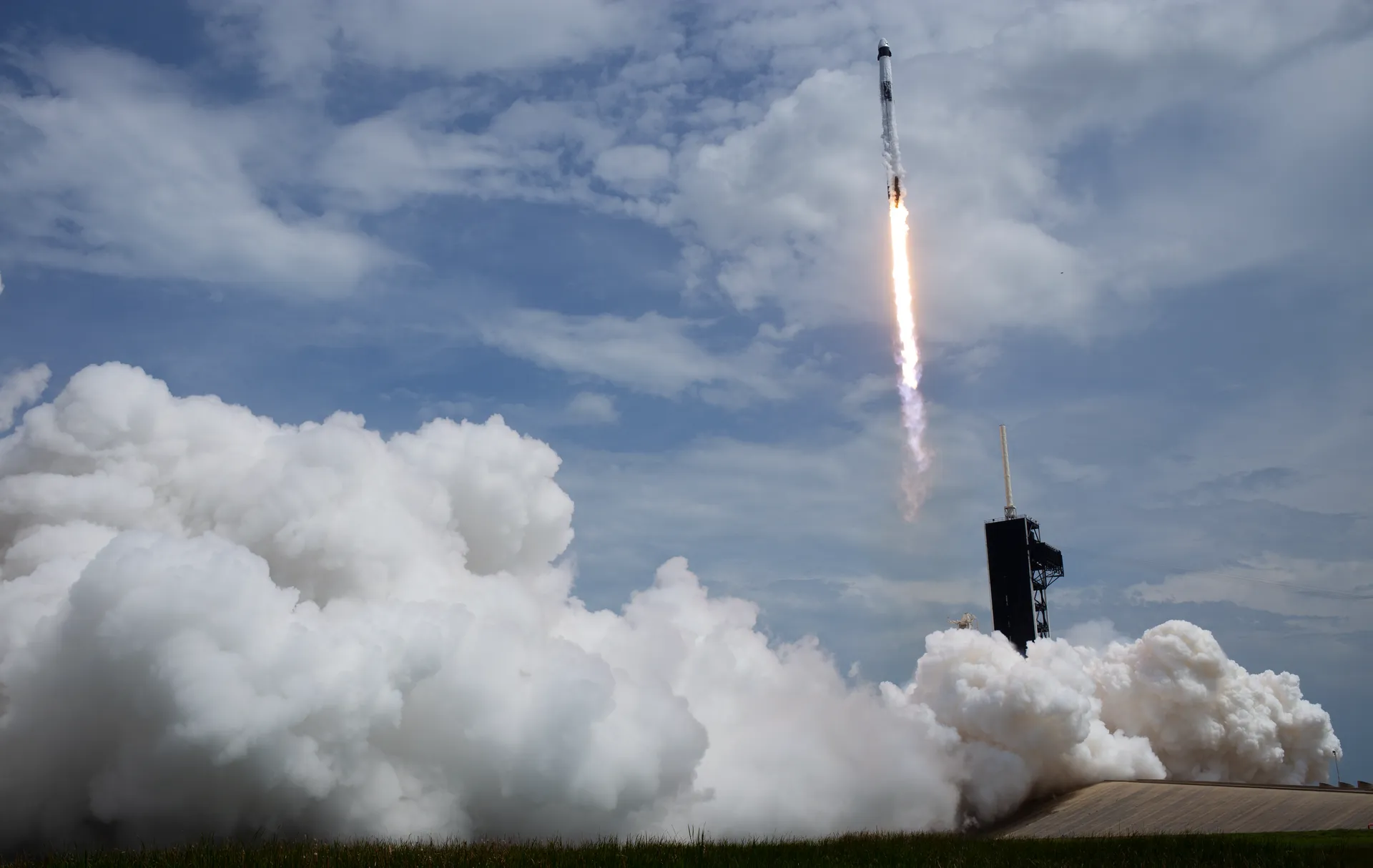
Peregrine launches from Cape Canaveral on a United Launch Alliance Vulcan rocket, January 8, 2024. A propulsion problem kept it from landing. NASA/Isaac Watson
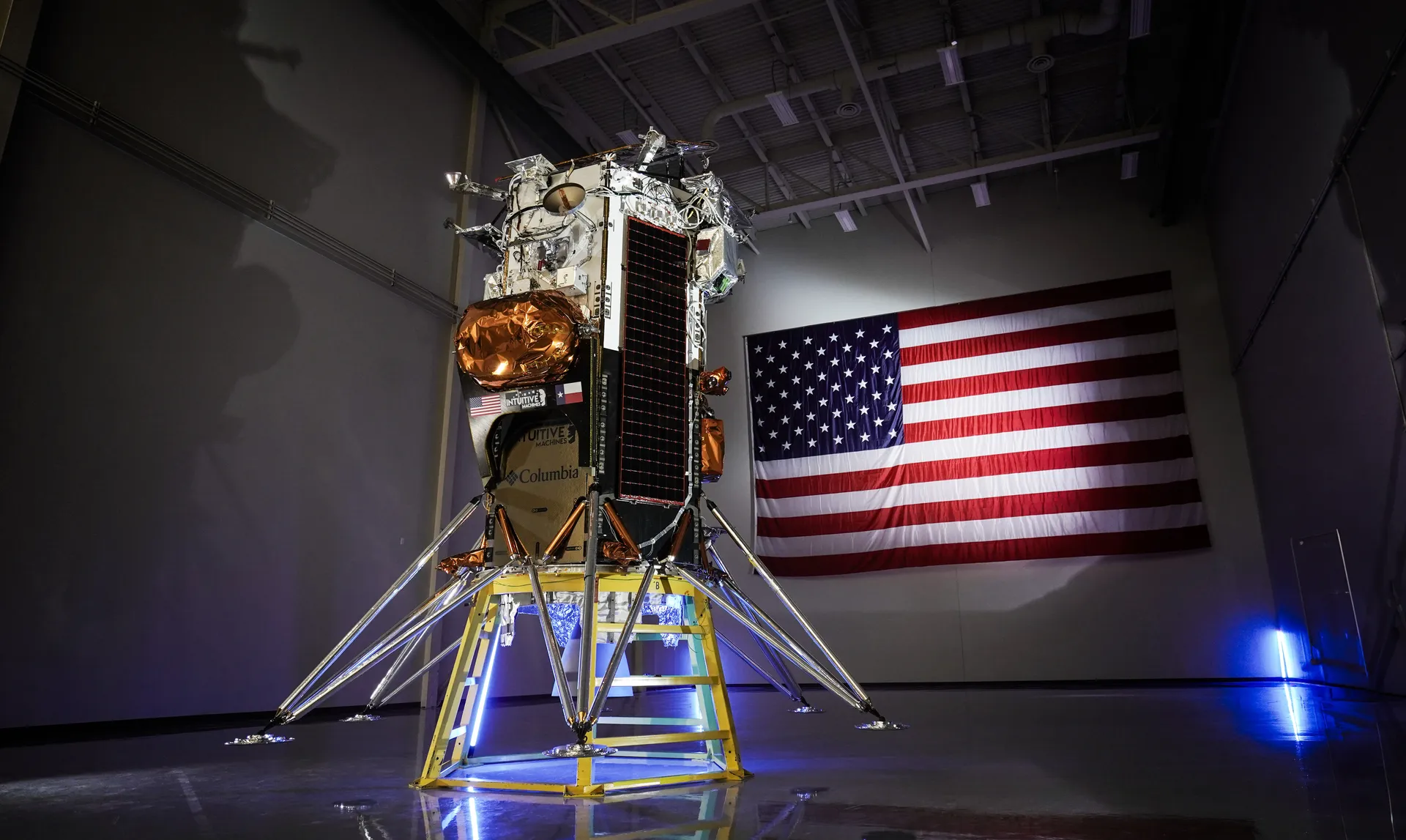
Intuitive Machines’ Nova-C lander, the vehicle that became Odysseus, before launch. Intuitive Machines, released by NASA
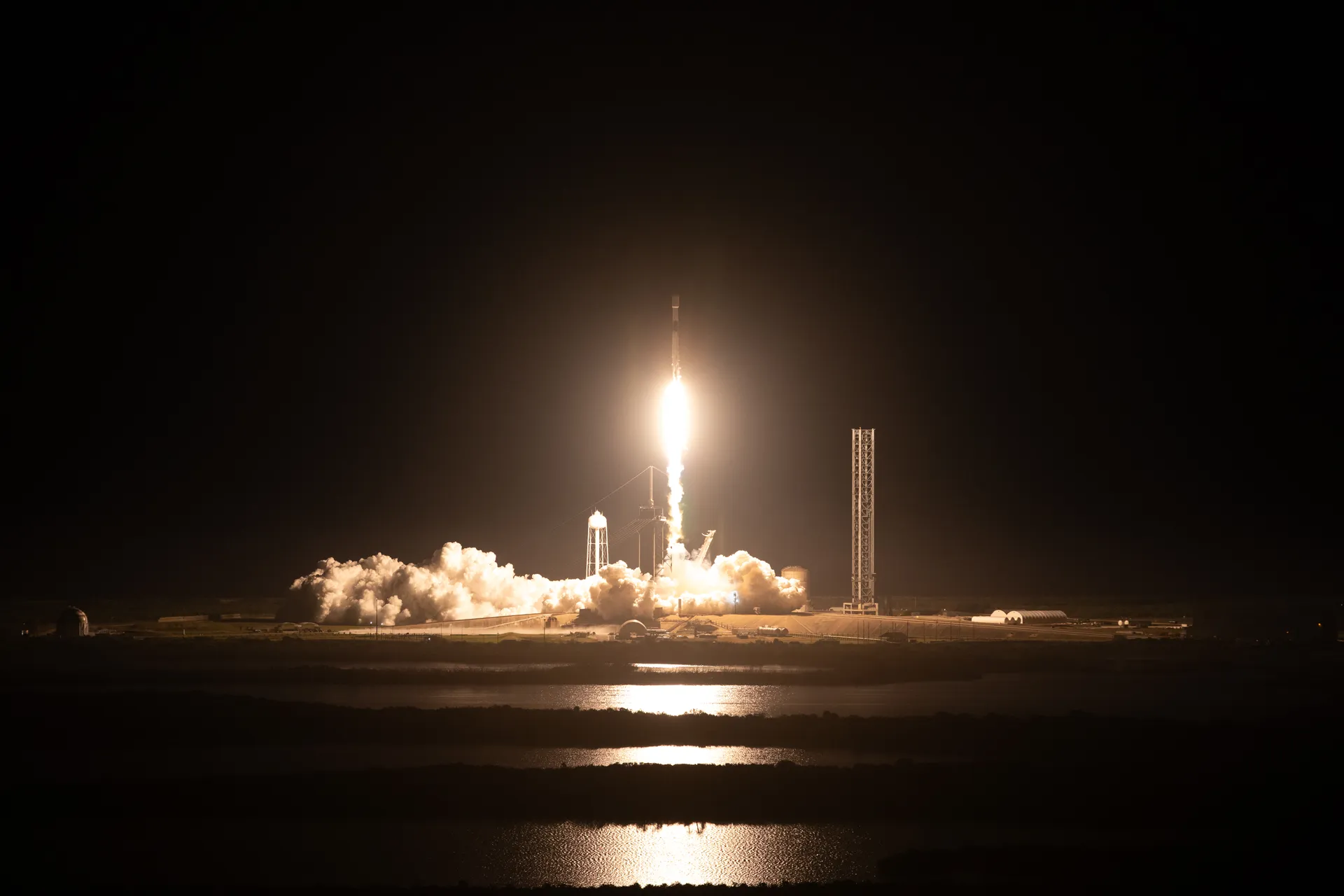
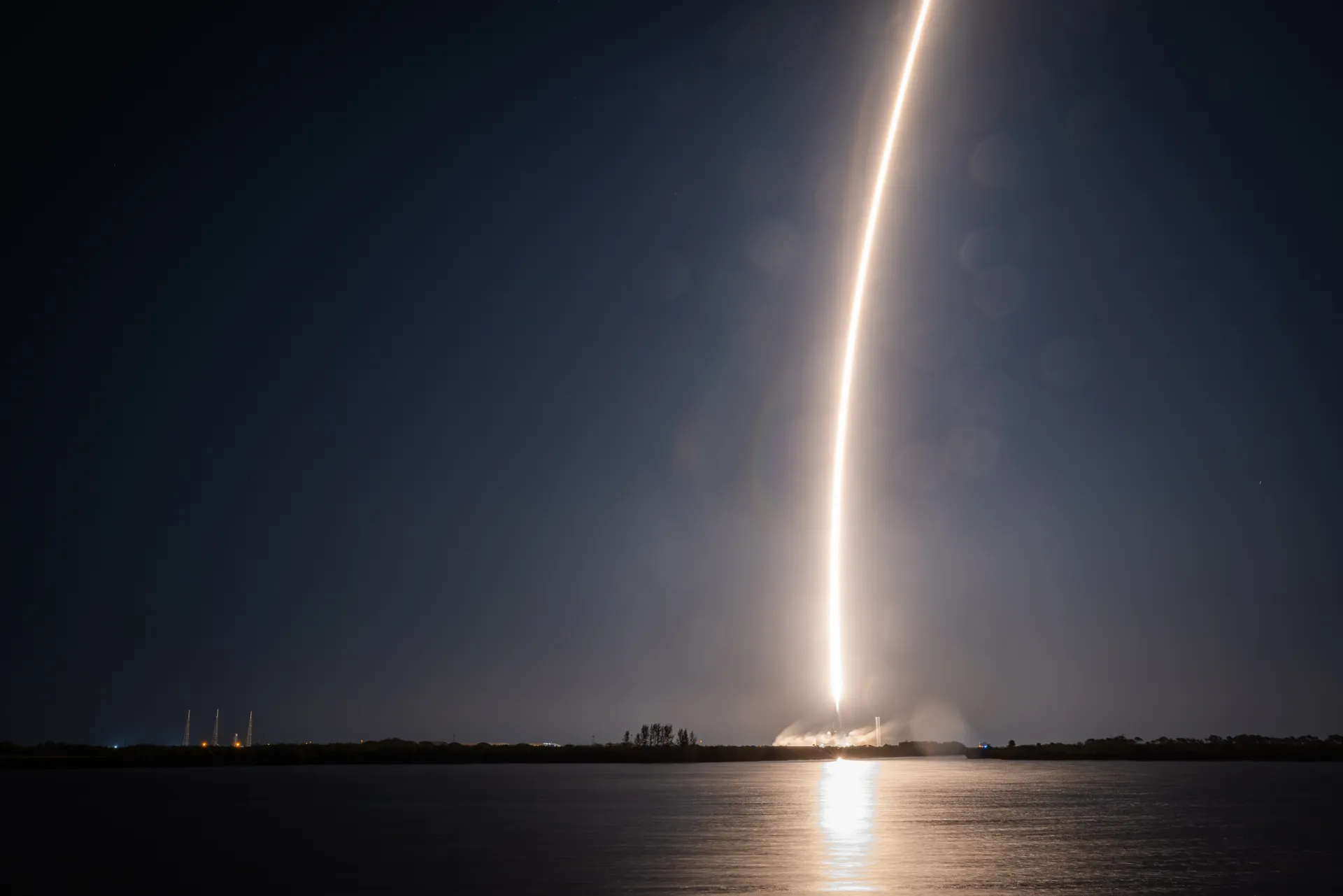
A Falcon 9 launches Odysseus from Kennedy’s Launch Complex 39A, February 15, 2024. NASA/Kim Shiflett
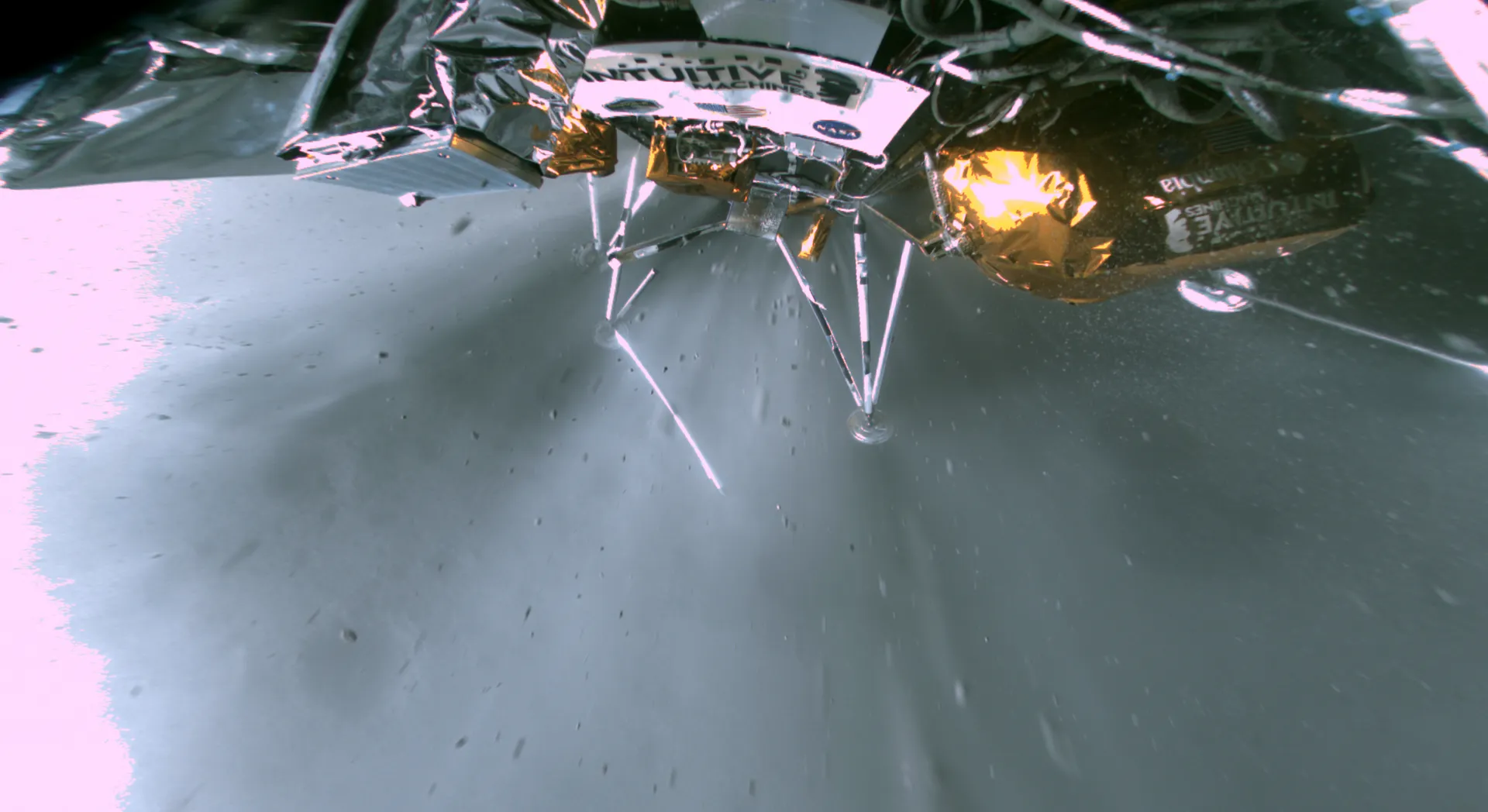
Odysseus photographed itself on February 22, 2024, as a landing leg took the first contact with the surface; its engine was still throttling. Intuitive Machines, released by NASA
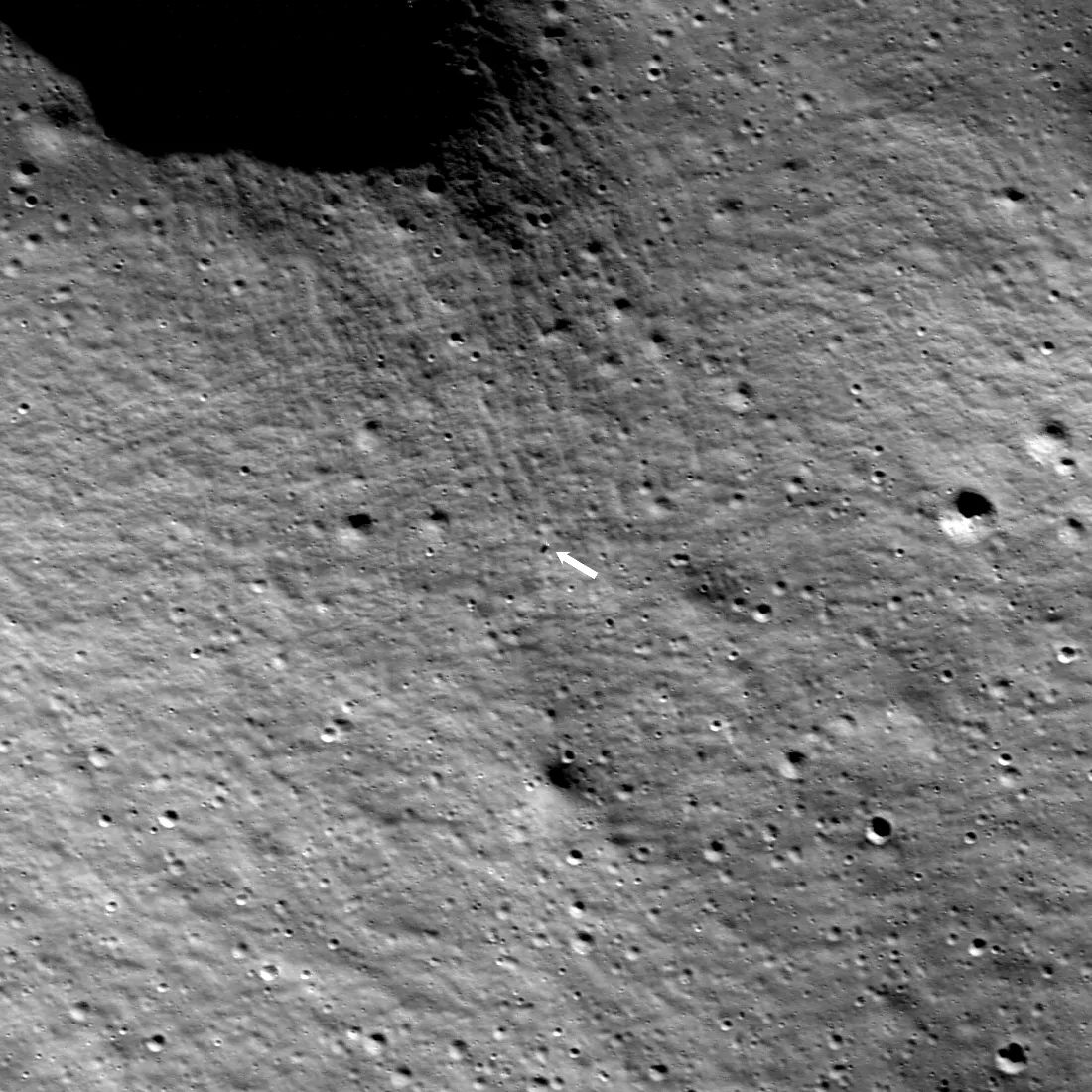
NASA’s Lunar Reconnaissance Orbiter photographed Odysseus, at the arrow, from about 56 miles up on February 24, 2024. The image is 3,192 feet wide. NASA/Goddard/Arizona State University
March 2025: Blue Ghost upright, Athena on its side
Firefly Aerospace’s Blue Ghost Mission 1 launched from Kennedy on January 15, 2025, traveled more than 2.8 million miles, and landed at 3:34 a.m. EST on March 2 near Mons Latreille, a volcanic feature in Mare Crisium, a basin more than 300 miles wide on the Moon’s near side. It came to rest upright and stable. It was Firefly’s first Moon landing.8
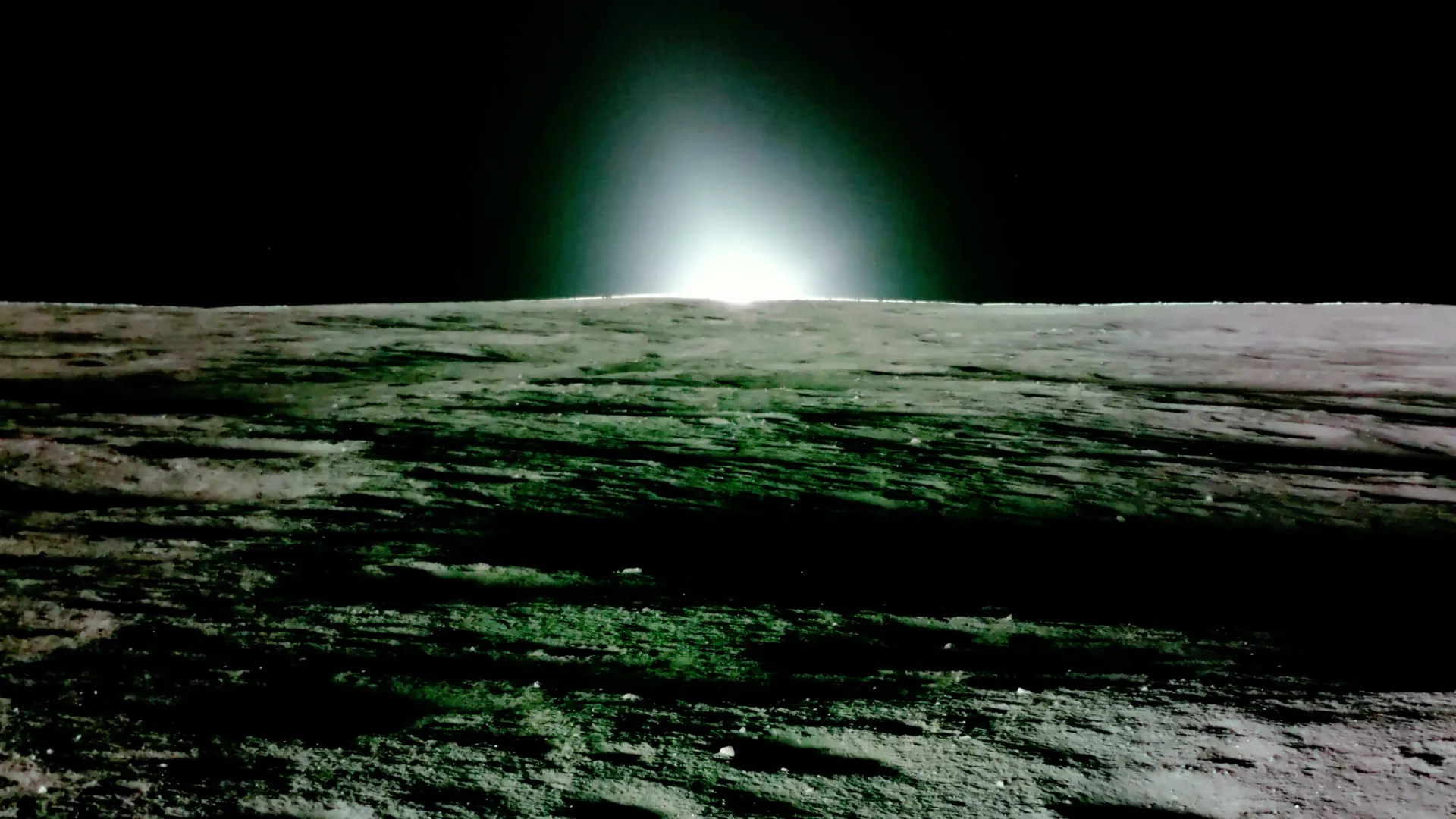
All ten NASA payloads activated, collected data and operated. Blue Ghost worked for about 14 days, one lunar day, and several hours into the lunar night, and sent back 119 gigabytes, 51 of them science and technology data. A heat-flow probe drilled about 3 feet down, the deepest robotic thermal probe on another world. A receiver tracked signals from GPS and Galileo navigation satellites on the way to the Moon and on its surface. A dust shield lifted regolith off surfaces with electric fields. Cameras built to study how engine exhaust disturbs the surface took about 9,000 images during descent and touchdown. The lander also photographed a total solar eclipse and a lunar sunset.9
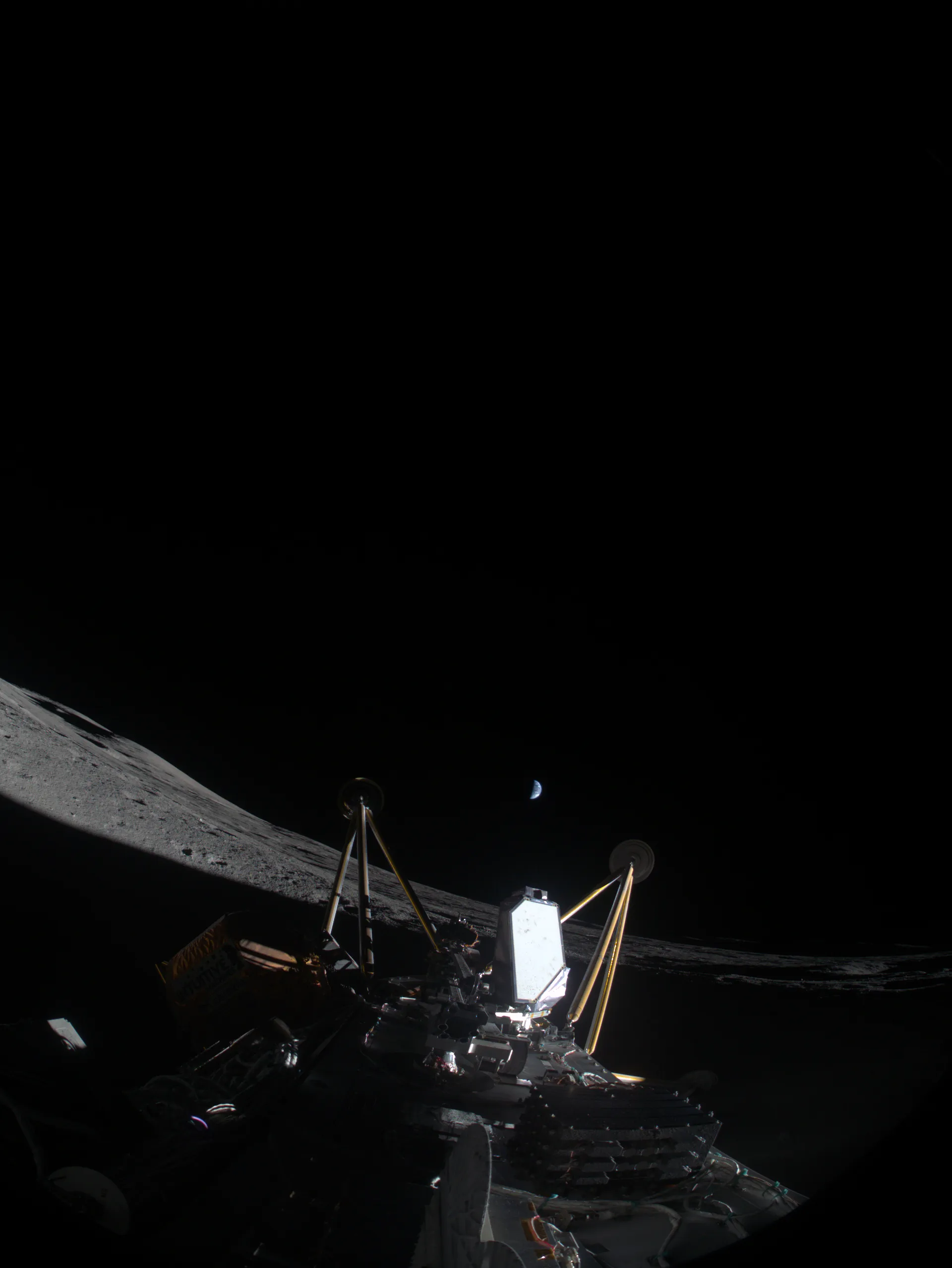
Four days later Intuitive Machines’ second lander, Athena, came down closer to the lunar South Pole than any lander before it, inside a crater more than 1,300 feet from its target at Mons Mouton. Images confirmed it was on its side, which prevented it from fully operating NASA’s drill and other instruments before its batteries ran down, and the company ended the mission early on March 7.10
NASA’s PRIME-1 drill still showed its full range of motion, and Intuitive Machines collected 250 megabytes of data for NASA. “While this mission didn’t achieve all of its objectives for NASA, the work that went into the payload development is already informing other agency and commercial efforts,” said Clayton Turner, NASA’s associate administrator for space technology.10
The site was chosen for its difficulty as much as its science. “Our targeted landing site near the lunar South Pole is one of the most scientifically interesting, and geographically challenging locations, on the Moon,” said Nicky Fox, NASA’s associate administrator for science. Intuitive Machines had two more NASA deliveries on contract, IM-3 and IM-4.10
CLPS landing attempts by year, through September 20262
Show the numbers
| year | Landed upright | Landed leaning or on its side | Did not land |
|---|---|---|---|
| 2024 | 0 | 1 | 1 |
| 2025 | 1 | 1 | 0 |
| 2026 | 0 | 0 | 0 |
2026: no landings, and a $6 billion second round for a Moon Base
The program’s purpose changed in 2026. At its Ignition event on March 24, NASA said it would establish a Moon Base near the lunar South Pole, and that CLPS, set up to provide low-cost, risk-tolerant deliveries and to incubate a U.S. industry, would now have to increase lander capacity, reliability and the number and pace of missions.12 The first phase of the plan, “now through 2028,” counted 25 launches and 21 landings delivering about 4,000 kilograms to the surface; a second phase from 2029 to 2033 counted 24 landings and about 60,000 kilograms, with CLPS landers growing to carry 5 metric tons.12 By August NASA described Phase One as running through 2029 and including more than twenty robotic landings, each designed to advance the next.14
NASA launched a follow-on procurement, CLPS 2.0, to deliver payloads to the lunar surface and to lunar orbit. It allows NASA to order turnkey delivery services or to accept delivery of CLPS hardware for integration into its own missions, with more government insight and collaboration with the companies to improve reliability. With an anticipated 10-year ordering period and a 15-year execution period, it is to be capped at $6 billion.11 The final request for proposals was released on May 15, 2026, with responses due June 30.13 NASA’s plan called for new contract awards by the end of fiscal year 2026. None had been announced by October 1; in late September NASA’s procurement page moved the planned award date to October 6.12,17,19
Under the existing contracts NASA also opened two Moon Base task orders requiring landers with proven heritage: one to deliver payloads by the end of 2028, with a bonus for a lander that deploys a radioisotope device and sends a signal after surviving a full lunar night, and one to deliver lunar terrain vehicles to the South Pole.11 In May NASA awarded the rover deliveries to Blue Origin, $188 million for two task orders with an option worth $280.4 million.13 On June 30 it awarded nearly $600 million for four science deliveries in late 2028, two by Astrobotic ($297.9 million) and one each by Firefly Aerospace ($144.2 million) and Intuitive Machines ($148.3 million), all on updated versions of lander designs that have already flown.18
- $6B
- Ceiling of CLPS 2.0, with a 10-year ordering period11
- 21
- Landings in the first Moon Base phase, in NASA’s March 2026 plan12
- 4,000 kg
- Payload to the surface in that phase12
- 5 t
- CLPS lander capacity NASA wants in the second phase, from 202912
The next landers: Griffin-1, Endurance, Trinity and Blue Ghost 2
NET November 2026
Griffin-1, Moon Base II (Voyager)15
Voyager Technologies’ Griffin lander, built by Astrobotic, to Mons Mouton near the South Pole with Astrolab’s FLIP rover and five NASA payloads; the largest commercial payload yet sent to the Moon.
Early 2027
Endurance, Moon Base I (Blue Origin)15
Blue Moon Mark 1, waiting on New Glenn’s return to flight, to the Shackleton Connecting Ridge with NASA’s plume cameras and a laser retroreflector.
First quarter 2027
Trinity, IM-3, Moon Base III (Intuitive Machines)15
A third Nova-C to Reiner Gamma, a lunar swirl, with the Altus-1 relay satellite.
Later in 2027
Blue Ghost Mission 2 (Firefly)15
The first planned American landing on the far side, stacked on Firefly’s Elytra orbiter.
The next mission ready is Griffin-1, Astrobotic’s lander, now flown by Voyager Technologies. In August it was in environmental testing at NASA’s Jet Propulsion Laboratory; it is to carry the largest commercial payload yet delivered to the lunar surface, with five NASA payloads mounted on Astrolab’s FLIP rover.14 In September NASA’s Moon Base manager, Carlos García-Galán, said it was the one lunar launch NASA expected in 2026, no earlier than November.15 Firefly’s second Blue Ghost, built for the far side, will ride on Firefly’s Elytra orbital spacecraft, the two forming a stack 22 feet tall, nearly three times the height of the first.14 Draper’s CLPS team will fly APEX 1.0, a lander from ispace-U.S., the U.S. subsidiary of the Japanese company ispace; only American companies hold CLPS contracts.16,1 García-Galán described what Phase One will look like: “a scattered set of assets across hundreds of square miles.”15
Sources
The text above is drawn from these 19 sources. Government works are adapted closely; company and press material is summarized. Numbers in the text point here. Last checked October 1, 2026.
Show all 19 sourcesShow fewer
- 1Back to the text
- 2Back to the text
- 3Back to the text
- 4Back to the text
- 5Back to the text
- 6Back to the text
- 7Back to the text
- 8Back to the text
- 9Back to the text
- 10Back to the text
- 11Back to the text
- 12Back to the text
- 13Back to the text
- 14Back to the text
- 15Back to the text
- 16Back to the text
- 17Back to the text
- 18Back to the text
- 19Back to the text
Continue
Related stories
- Blue MoonIn May 2023 NASA awarded Blue Origin a $3.4 billion contract for a second way to land astronauts. The smaller robotic Blue Moon, Mark 1, is built and tested, and is waiting for New Glenn to fly again.
- The Artemis planA rocket, a capsule, two commercial landers, new suits and propellant refilled in orbit: who builds each piece, what it costs, and how a 2024 landing became Artemis IV in 2028.
- Starship HLSIn 2021 NASA chose a version of Starship, refueled in Earth orbit by a fleet of tankers, to land its astronauts. The contract is now worth about $4.5 billion; the refueling has not yet flown.