Blue Moon
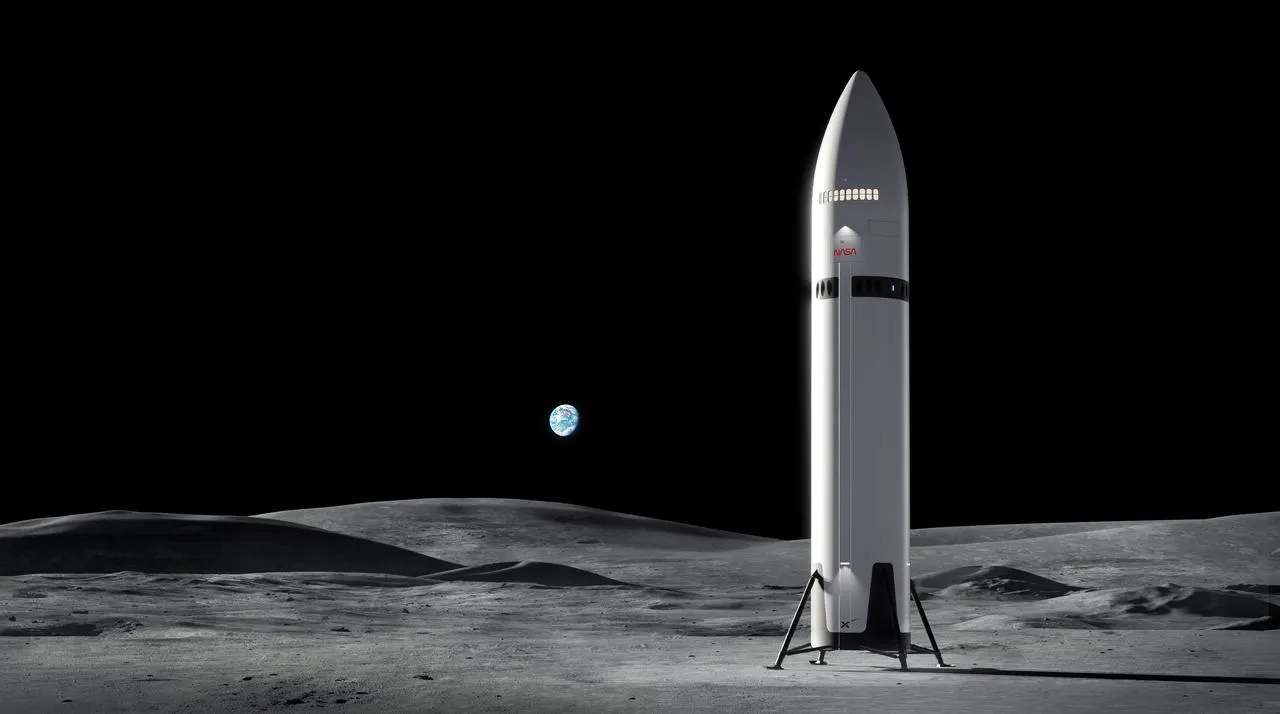
Blue Origin’s landers: the robotic Mk1 for cargo and the crewed Mk2, NASA’s second Artemis lander.
- Type
- Lunar lander
- Status
- In development
- Height
- 16 m (52 ft)
- Built by
- Blue Origin
- $3.4B
- NASA contract for Mk2, May 2023
- Early 2027
- earliest first Mk1 landing attempt, as of September 2026
- 2027
- Mk2 test article to dock with Orion in Earth orbit on Artemis III
Blue Moon: NASA’s second crew lander and the cargo lander that goes first
Drawn from 16 sources: NASA (6), Spaceflight Now (3), NASA Office of Inspector General, NASA Marshall Space Flight Center and 5 others. About 8 minutes. Checked October 1, 2026.
Blue Moon is two landers. Mark 1 is a robotic cargo lander, nearly three stories tall, built to carry up to 3 tons to the Moon; Blue Origin is paying for its first flight itself. Mark 2 is the larger crew lander that NASA has contracted for Artemis: about 52 feet tall, with a cabin at its base where two astronauts will eat, sleep and work. Both burn liquid hydrogen and liquid oxygen in Blue Origin’s BE-7 engines, and both launch on Blue Origin’s New Glenn rocket from Florida.1,4,5,7
The smaller lander exists to buy down risk for the larger one. Blue Origin follows a block-upgrade approach, adding capabilities with each lander. Before its crewed lander flies, it plans two Mark 1 missions that land on the Moon and demonstrate critical systems: propulsion, the handling of super-cold propellants and precision landing. Then a Mark 2 is to make an uncrewed demonstration landing before carrying a crew.1
$3.4 billion for a second way to the surface
NASA chose SpaceX’s Starship in 2021 as its only lander because it could afford only one. To keep competition and a backup, it issued a second solicitation in September 2022, open to all U.S. companies other than SpaceX, for a lander that would meet its requirements for recurring missions: docking with the Gateway station, carrying more crew, staying longer and landing more mass.1,2 On May 19, 2023, NASA selected Blue Origin of Kent, Washington. Blue Origin would design, develop, test and verify Blue Moon to those requirements, fly one uncrewed demonstration mission to the surface, and then carry a crew on Artemis V, then planned for 2029. The firm-fixed-price contract was worth $3.4 billion.2
On that mission, as NASA described it, SLS would launch four astronauts to lunar orbit in Orion. Once Orion docked with Gateway, two astronauts would move into the Blue Origin lander for about a week at the Moon’s South Pole region.2
Having two distinct lunar lander designs, with different approaches to how they meet NASA’s mission needs, provides more robustness and ensures a regular cadence of Moon landings.
Blue Origin leads a group of companies it calls the National Team. When the contract was awarded, its partners were Lockheed Martin, Boeing, Draper, Astrobotic and Honeybee Robotics. Blue Origin has since restructured the team to use components common to Blue Moon and New Glenn; it moved some tank development and manufacturing for the transporter in-house and reduced Lockheed Martin’s share of that work.1,3 Counted the way NASA’s inspector general counts it, excluding the separate cargo-lander work, the contract was worth about $3.1 billion and had grown by less than 1 percent, $13 million, by December 2025. In 2024 NASA allowed Blue Origin to delay its critical design review in exchange for formally adding a test of liftoff from the lunar surface to its uncrewed demonstration, along with more insight for NASA, at no added cost.1
- $3.4B
- NASA’s May 2023 award for the crew lander and an uncrewed demonstration landing2
- <1%
- Growth in the contract’s value by December 2025, about $13 million1
- $188M
- May 2026 task orders for Blue Origin to deliver the first lunar terrain vehicles, with a $280.4 million option6
- $190M
- Potential value of a 2025 order to land NASA’s VIPER rover on a second Mark 110
How the two landers work
Mark 1, a robotic cargo lander
Mark 1 is uncrewed and launches on New Glenn. Blue Origin built it to carry up to 3 tons of cargo and to demonstrate its BE-7 engine, precision landing and autonomous guidance, navigation and control. The first one, named Endurance, is a commercial demonstration Blue Origin funds itself, carrying two NASA instruments.4,5
One engine, burning liquid hydrogen
Hydrogen must be kept colder than any other common rocket propellant, and storing it in space with little or no boiloff, then transferring it, is one of Blue Origin’s most significant technical challenges. NASA deepened its technical monitoring of the BE-7’s performance and of the cryocoolers that chill the tanks to limit boiloff. A development BE-7 was fired in a vacuum chamber at the Air Force Research Laboratory’s facility at NASA Armstrong.1,3
Mark 2, a crew lander about 52 feet tall
Mark 2 will meet astronauts aboard Orion in lunar orbit and ferry two of them to the surface and back. Its crew cabin sits at the base, so the crew climbs stairs about 6 feet to the ground, as Apollo astronauts did, instead of riding an elevator. Like Starship, it must not tilt more than 8 degrees after landing, or the hatch and other equipment may not work.7,1
A transporter and a fleet of refuelers
Mark 2 is refueled on the way. Blue Origin will first launch a transporter to low Earth orbit, essentially a propellant depot; refuelers launched on New Glenn meet it and transfer propellant. The lander then launches and takes fuel from a refueler and the transporter. The transporter climbs to a higher “stairstep” orbit to collect more, then to lunar orbit, where it tops up the lander before the crew arrives.1
A cabin for two
The cabin is the living and working space where two astronauts will eat, sleep, conduct science and look out at the Moon during their stay. Its airlock must hold a station for putting on and taking off spacesuits; Blue Origin designed one for a NASA reference suit, then learned that Axiom Space’s suit uses a different connection, so the airlock or the station has to change.7,1
Endurance, the first Mark 1, tested in Johnson’s Chamber A
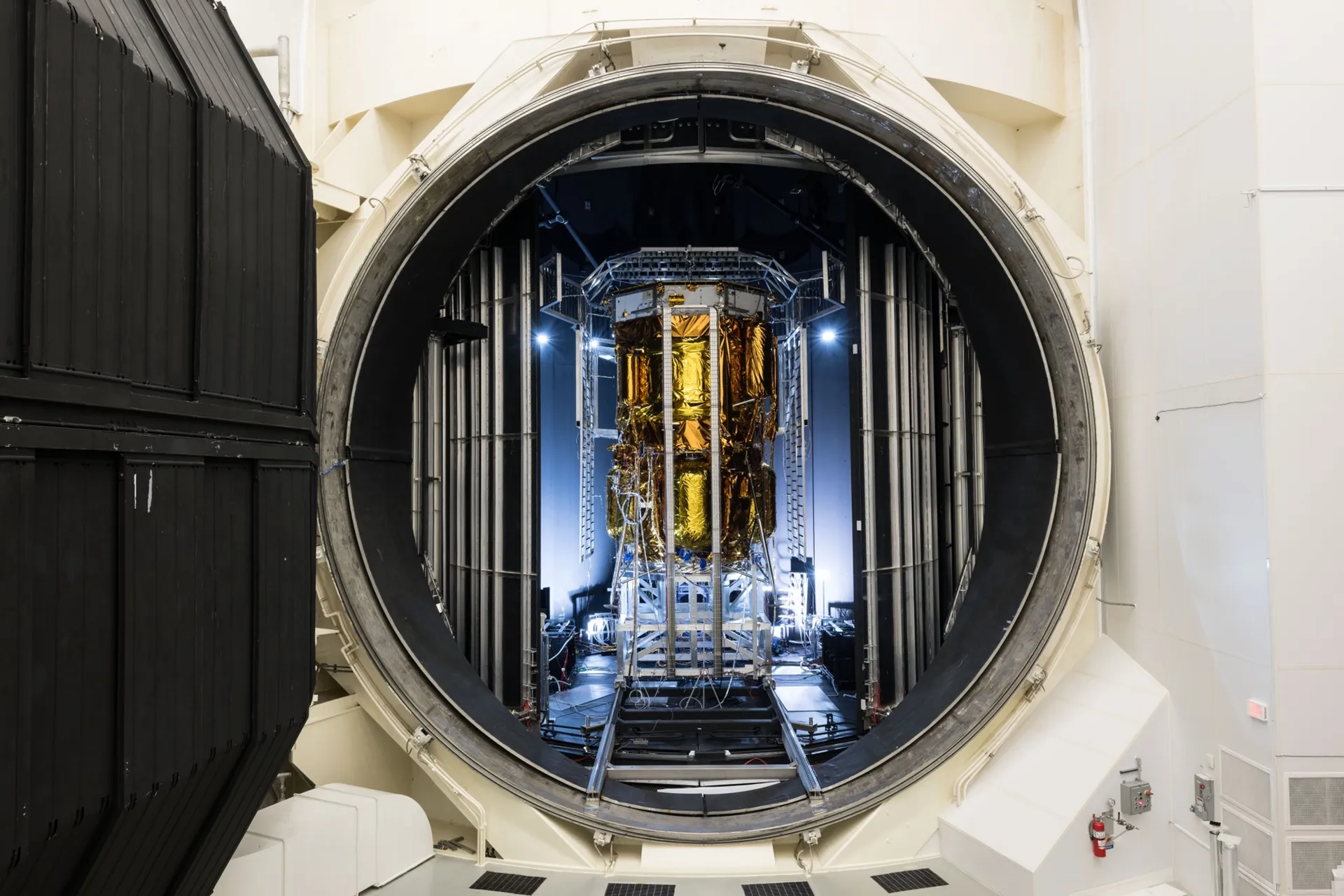
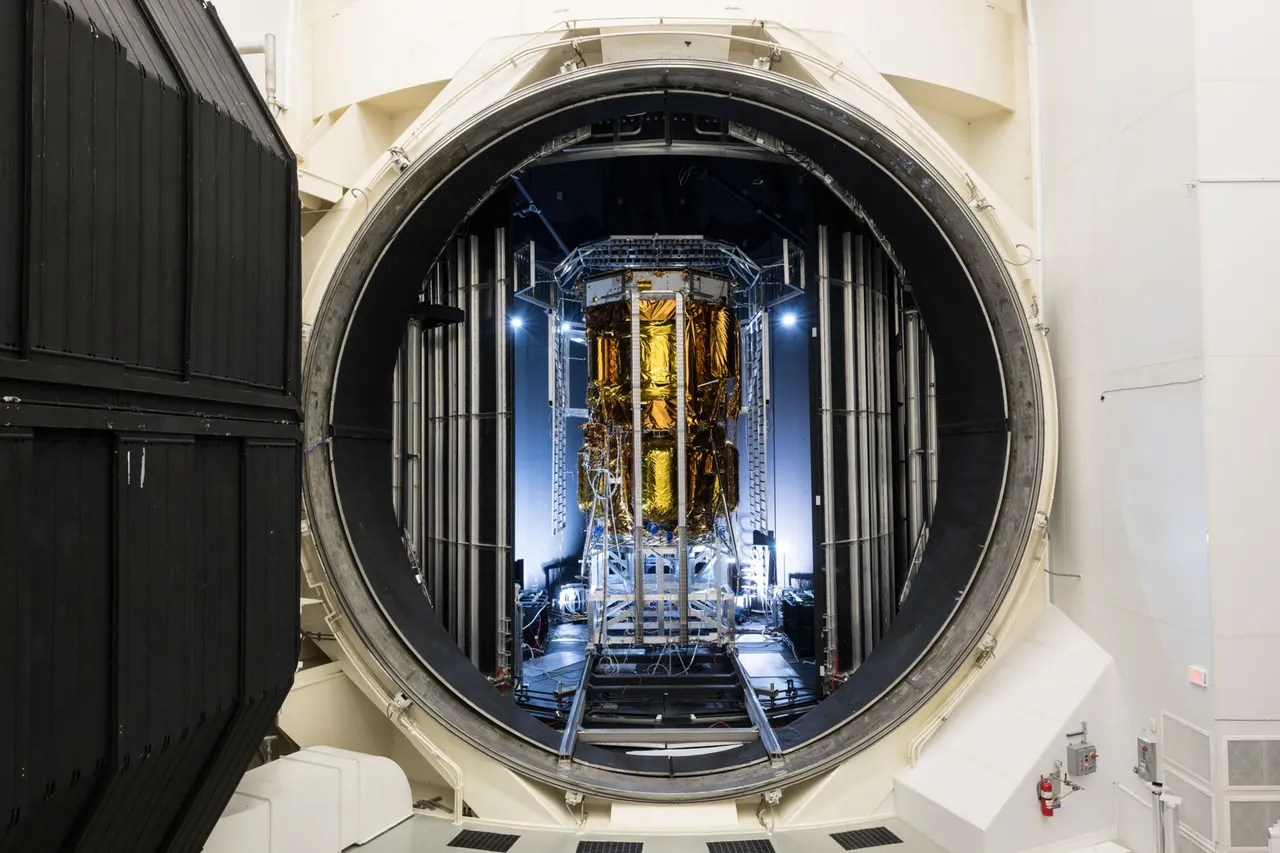
In the spring of 2026 Blue Origin finished environmental testing of Endurance inside Thermal Vacuum Chamber A at NASA’s Johnson Space Center in Houston, one of the world’s largest thermal vacuum facilities. The chamber recreated the vacuum of space and the extreme temperatures the spacecraft will meet in flight, so that engineers could evaluate how its systems performed and verify its structural and thermal integrity before launch. Blue Origin did the work under a reimbursable Space Act Agreement, paying NASA for the use of the facility.5
Endurance is to demonstrate precision landing, cryogenic propulsion and autonomous guidance, navigation and control. It carries two NASA payloads under the CLPS program: the Stereo Cameras for Lunar Plume-Surface Studies, an array of high-resolution cameras that will photograph how the engine plume disturbs the lunar surface during descent and landing, and the Laser Retroreflective Array, which helps orbiting spacecraft fix their position with reflected laser light.5 NASA has named the flight Moon Base I, the first mission of its Moon Base campaign, and plans to land it on the Shackleton Connecting Ridge near the South Pole to reduce risk for the crewed landings.6
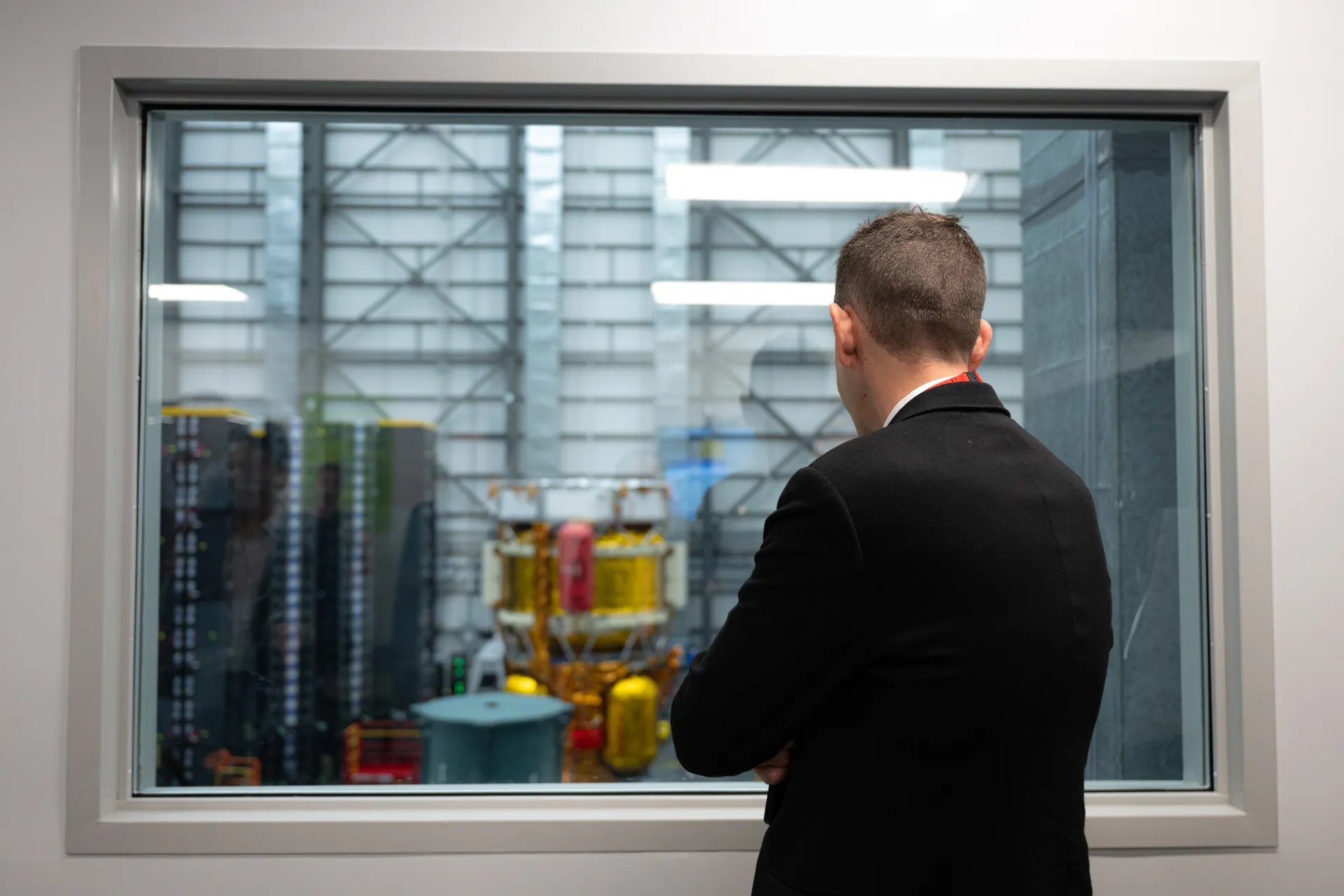
By August 2026 the lander’s structure, propulsion elements and avionics were fully assembled. It had completed communications checks with NASA’s Tracking and Data Relay Satellite System and Deep Space Network, and engineers were next to verify the wiring that connects the payloads. Loading cryogenic propellants was to be one of the last tests before it is integrated with its rocket.9
Mark 1 is also becoming NASA’s cargo truck. In September 2025 NASA ordered a second Mark 1, now in production, to deliver the VIPER rover to the South Pole region in late 2027, a task order worth up to $190 million. NASA will decide whether to exercise the delivery option after reviewing Endurance’s flight.10 In May 2026 it awarded Blue Origin $188 million, with an option worth $280.4 million, to deliver the first crewed lunar rovers, built by Astrolab and Lunar Outpost.6
Mark 2: a training cabin at Johnson and a test lander for 2027
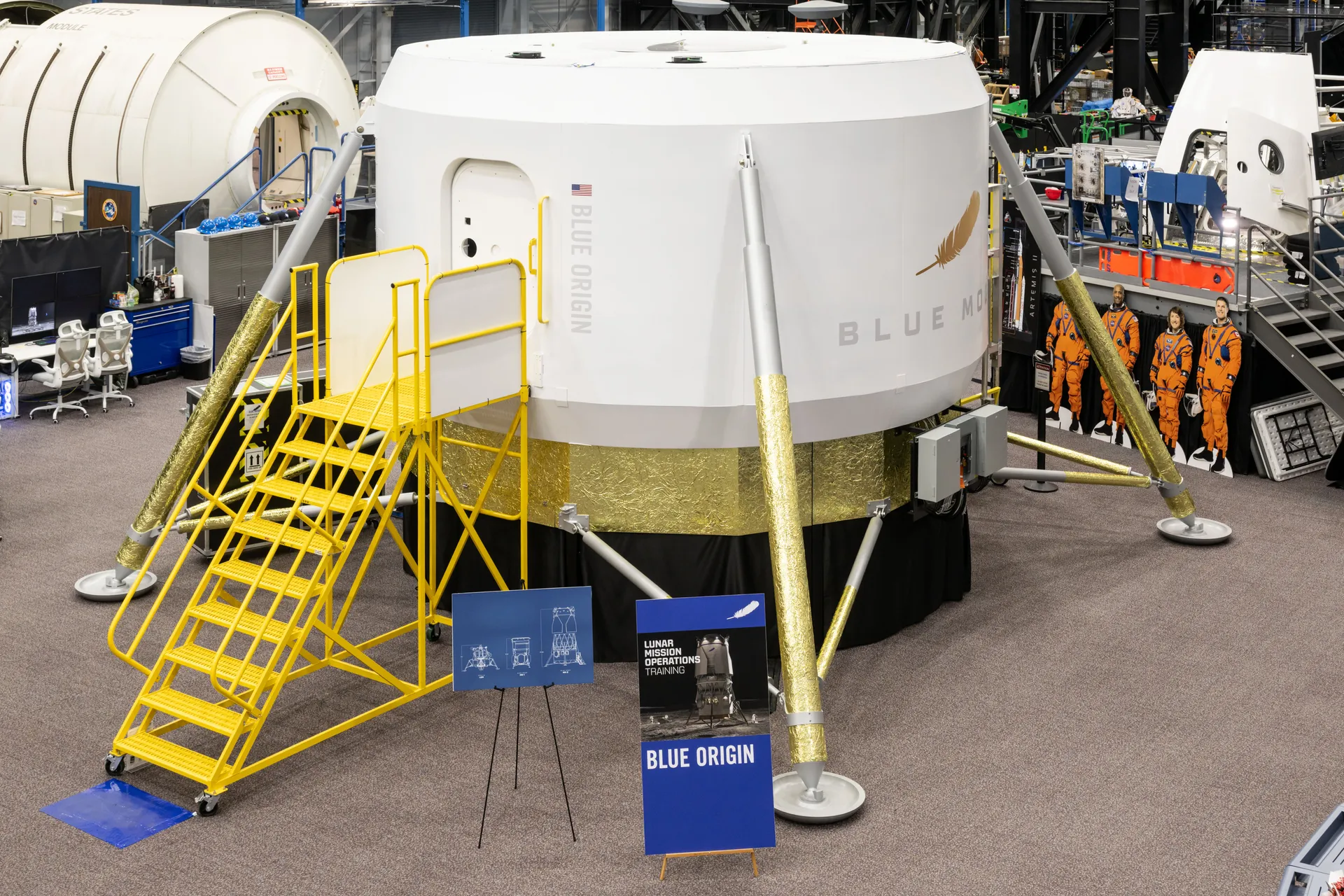
Since May 2026 a full-scale mockup of the Mark 2 crew cabin, over 15 feet tall, has been in use at Johnson’s Space Vehicle Mockup Facility. It has the exterior ladder astronauts will use on the Moon, and NASA and Blue Origin use it inside and out for tests with people in the loop: mission scenarios, communications with mission control, spacesuit checkouts and rehearsals of moonwalks. Over time it is to become an integrated simulator, and it feeds design comments back to Blue Origin.7 Earlier milestones were reviews: a certification baseline review in November 2023, agreement on engineering and safety standards in December 2023 and a preliminary design review in February 2024. In February 2026 Blue Origin finished testing the soft-capture system of the lander’s pressurized docking mechanism at Johnson.3,12
The design is not finished. At the preliminary review NASA found that Blue Origin needed to mature its propulsion system, reduce mass and improve its propellant margins, and in August 2025 nearly half of the review’s formal requests for action were still open. The critical design review, first set for December 2024, moved to August 2025 under the 2024 agreement and was expected to slip another 11 months; GAO reported in July 2026 that it was planned for December 2026. The uncrewed demonstration landing, which will also show Blue Origin’s propellant transfer, was expected in February 2029.1,8 NASA is tracking risks that the cryogenic storage and transfer technology will not mature in time and that the cryocoolers could underperform, losing more propellant than expected.8
The restructured Artemis program has given Mark 2 an earlier first flight. For Artemis III in 2027, Blue Origin will fly a test lander based on its current Mark 2 design, with the major avionics, flight software and controls, life support and a crew cabin, so that operations can carry over directly to crewed lunar flights. It launches first and can loiter up to 30 days for checkouts. Orion will dock along its side, next to the cabin, with Orion’s software controlling the joined spacecraft, and up to two astronauts in orange Orion survival suits will open the hatch and go inside. An instrumented spacesuit mass simulator will report on conditions in the cabin.11
New Glenn’s 2026, and the landers that wait on it
Every Blue Moon depends on New Glenn. In 2025 the rocket reached orbit on its first launch, in January, and in November its reusable first stage landed on a barge in the Atlantic.1 On April 19, 2026, the third New Glenn reflew and landed a used first stage, but its satellite payload ended up in the wrong orbit.13 On May 28, a New Glenn exploded during a static-fire test and heavily damaged Launch Complex 36, Blue Origin’s only orbital launch site. In August Blue Origin traced the cause to the main oxygen valve on one of the first stage’s BE-4 engines and said modified valves could be retrofitted quickly.15 It is rebuilding the pad to assemble rockets horizontally and lift them upright with a crane, and is aiming to fly again before the end of 2026.14
Endurance had been slated to fly as soon as late summer 2026. At a NASA briefing on June 30, Moon Base program executive Carlos García-Galán said the agency was looking at all its options, including whether the Mark 1, which was not involved in the accident, could fly on a different rocket. Administrator Isaacman said that New Glenn remained “Plan A.”14 Blue Origin’s John Couluris said the company would keep the first lander stored until New Glenn was ready, and expected the launch in the first quarter of 2027, followed by serial numbers two, three and four.15 NASA’s Moon Base manager listed Endurance for “the first part of 2027” in September.16
When Blue Moon would land1
Those dates are why the dependency matters. The first Mark 1 carries NASA’s plume cameras for the Artemis landings, the second carries VIPER, and later ones are to deliver the crewed rovers; Blue Origin’s Mark 2 test lander must also be launched ahead of the Artemis III crew in 2027.6,10,11 In October 2025 NASA asked Blue Origin, as it asked SpaceX, how it could speed up its lander for a 2028 landing, and GAO reported that NASA officials said the agency could attempt two crewed landings in 2028, one with each company’s lander.1,8 Endurance, the Blue Moon that flies first, has passed its tests in Chamber A and is to be kept in storage until its rocket is ready.5,15
Sources
The text above is drawn from these 16 sources. Government works are adapted closely; company and press material is summarized. Numbers in the text point here. Last checked October 1, 2026.
Show all 16 sourcesShow fewer
Continue
Related stories
- Starship HLSIn 2021 NASA chose a version of Starship, refueled in Earth orbit by a fleet of tankers, to land its astronauts. The contract is now worth about $4.5 billion; the refueling has not yet flown.
- New Glenn & VulcanBlue Origin’s BE-4 powers its own New Glenn and United Launch Alliance’s Vulcan. Both entered service in 2024–2025; by mid-2026 neither could fly, for different reasons.
- CLPSSince 2018 NASA has bought rides to the Moon for its instruments instead of building landers. Of four attempts so far, one landed upright. A $6 billion second round is meant to supply a Moon Base.