Roscosmos
Russia’s state space corporation, heir to the Soviet program: it runs the Russian segment of the Space Station and flies the Soyuz crew ships that carry NASA astronauts in exchange for seats on Crew Dragon.
- Founded
- 1992
- Headquarters
- Moscow, Russia
- Machines in the atlas
- 2
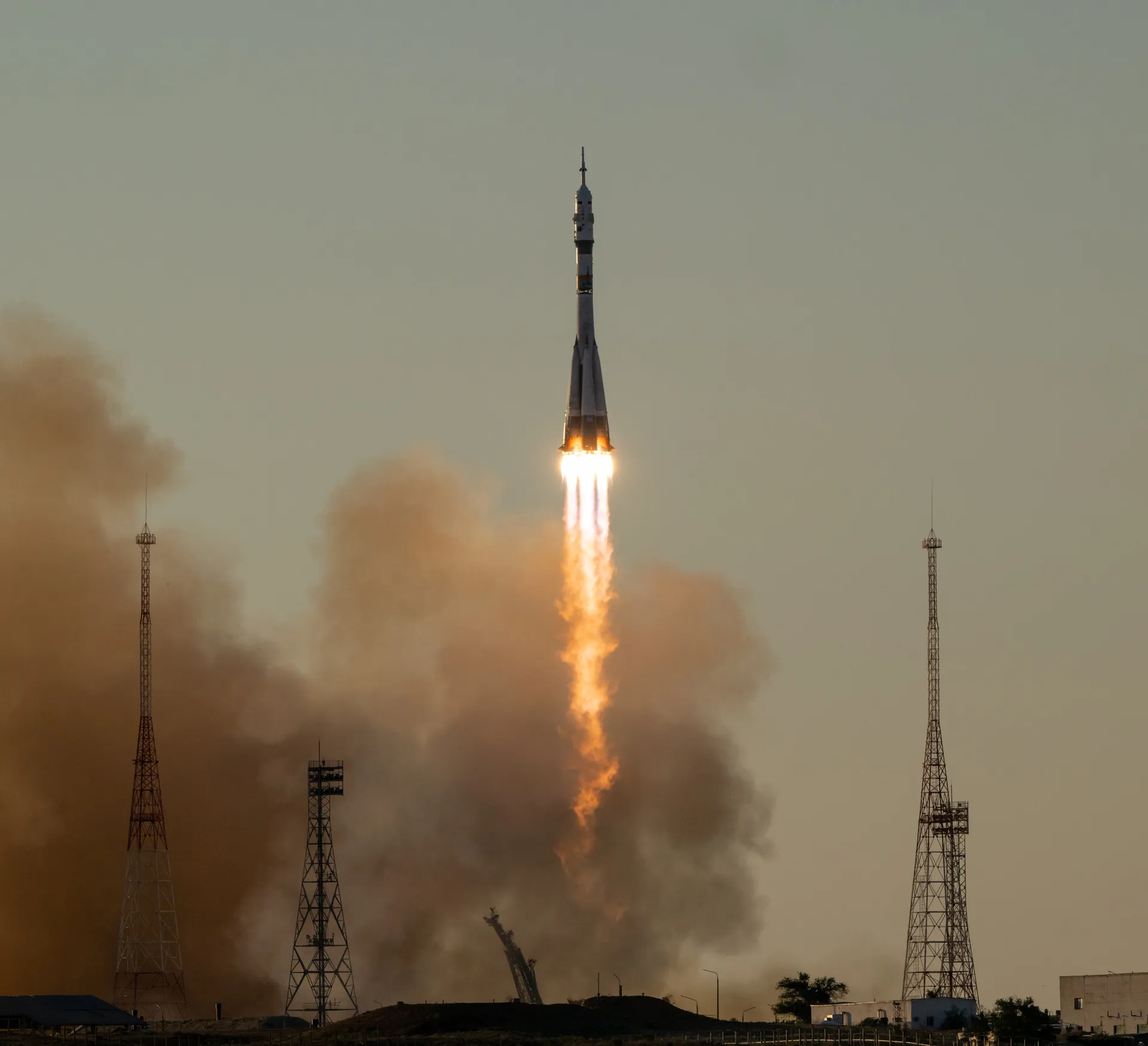
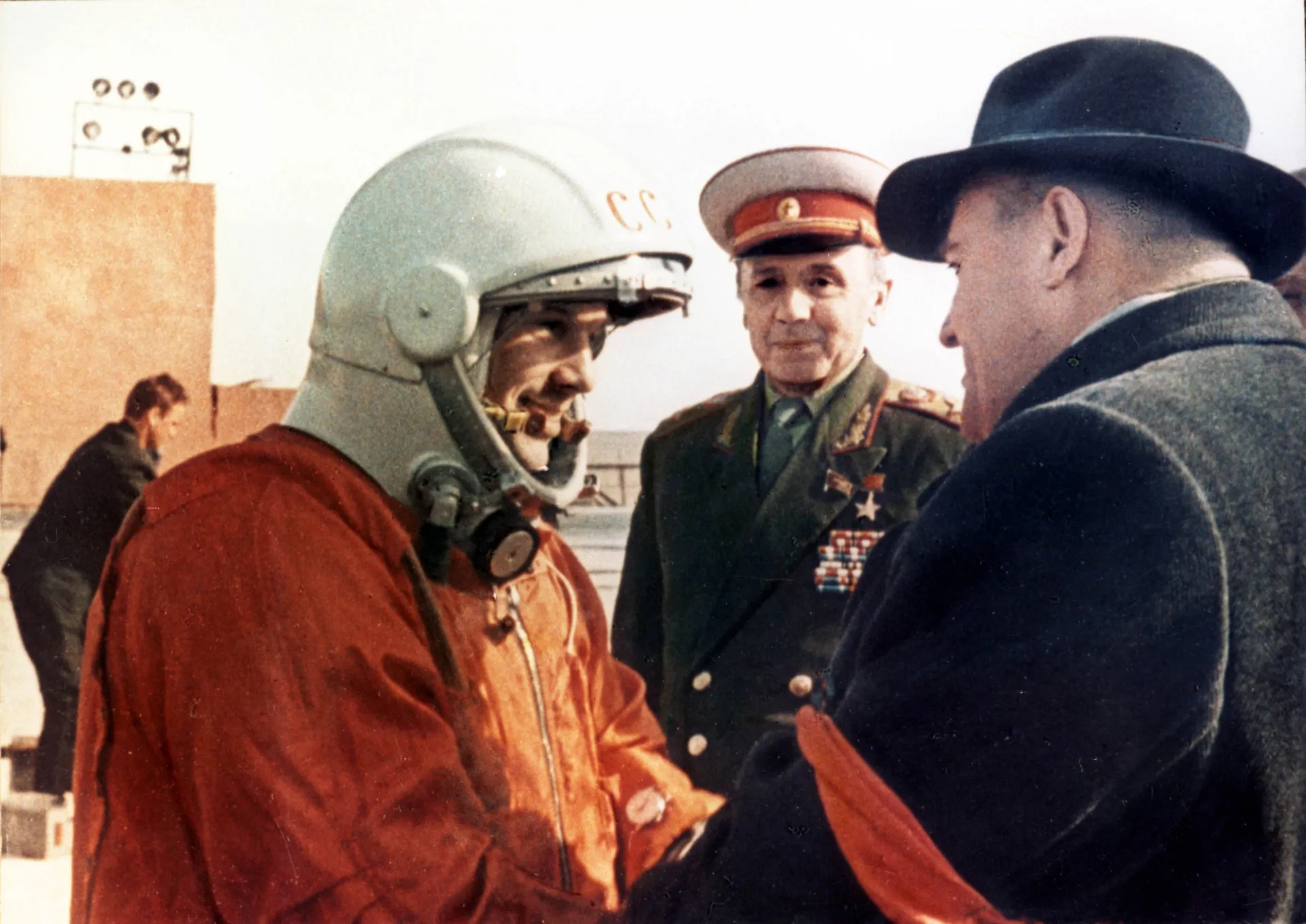
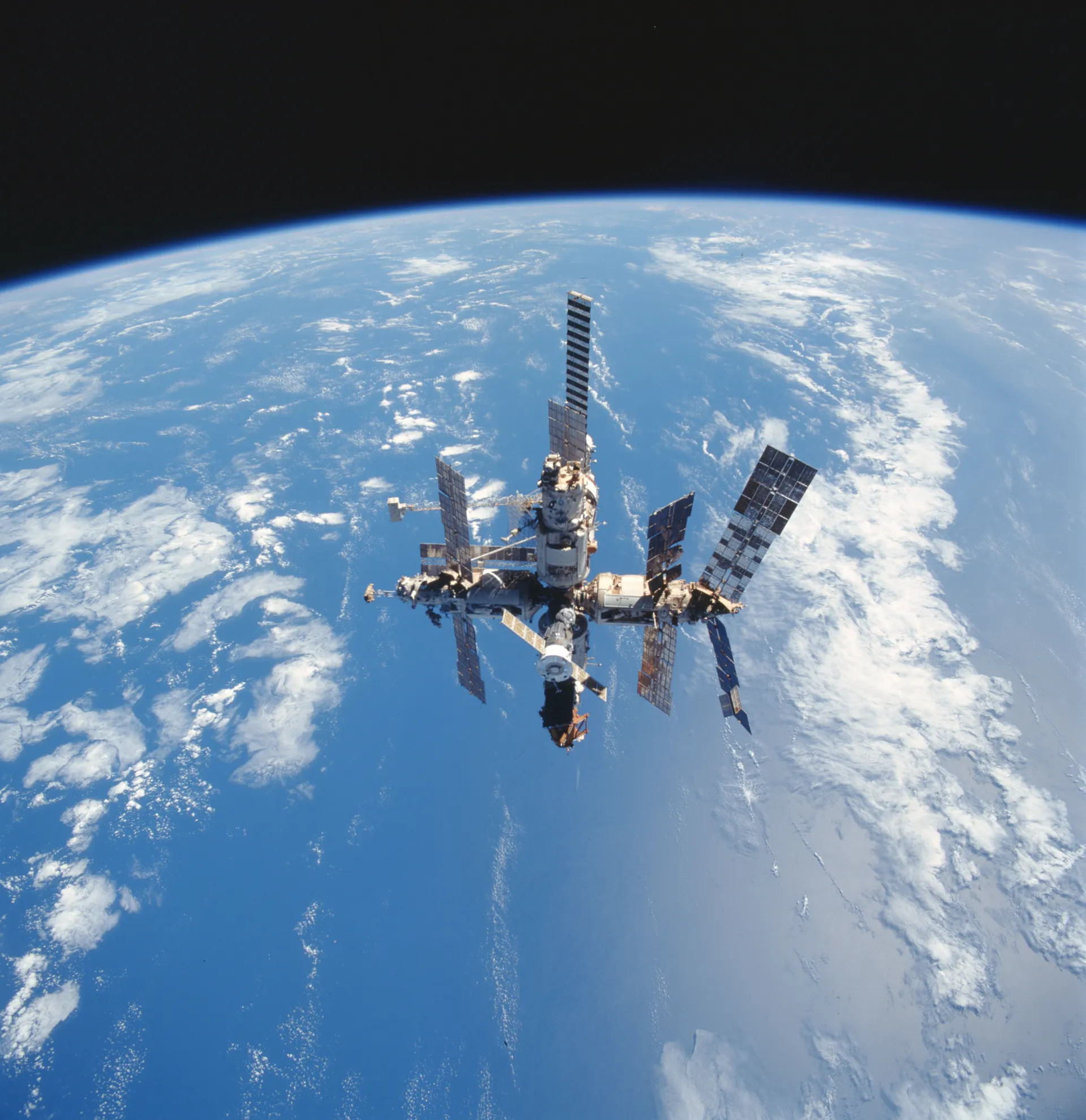
The Soviet program that launched Sputnik, Gagarin and the Salyut and Mir stations was run by competing design bureaus, with no single space agency. A Russian Space Agency was created by presidential decree in February 1992, and in December 1993 its director general, Yuri Koptev, signed the agreement that brought Russia into the space station. In 2015 the agency was dissolved and its name passed to a state corporation that also owns the rocket and spacecraft industry.
Russia is one of the five space agencies that run the International Space Station, and NASA and Russia have long agreed that at least one Russian and one American must be aboard to keep it operating safely. Since 2022 the two countries have swapped seats without exchanging money: a cosmonaut flies on each Crew Dragon and a NASA astronaut on each Soyuz. In July 2026 Roscosmos agreed to keep operating the station, and the seat swaps, through 2030. As of November 9, 2026, NASA’s Anil Menon, who launched on Soyuz MS-29 on July 14, and cosmonaut Sergey Teteryatnikov, who arrived on Crew-13 on October 1, were both aboard.
Contracts
| Contract | Value | Year |
|---|---|---|
| Soyuz seats for NASA and partner astronauts: 70 seats on flights from 2006 through 2020, an average of $55.4 million a seat (total cost, as counted by NASA’s Inspector General in 2019) | about $3.9 billion | 2006–2020 |
| Space station Phases I and II: Shuttle–Mir flights and early station work, paid to the Russian Space Agency (contract value when NASA finalized it on June 21, 1994, per the General Accounting Office) | $400 million | 1994 |
Its machines
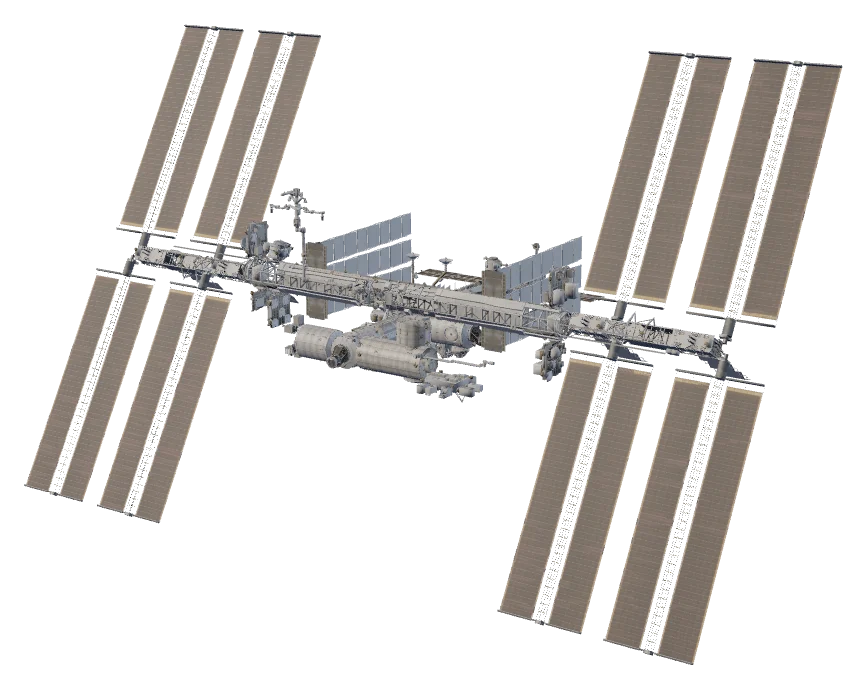 International Space StationA laboratory the size of a football field, occupied without a break since November 2000.Builds part of it
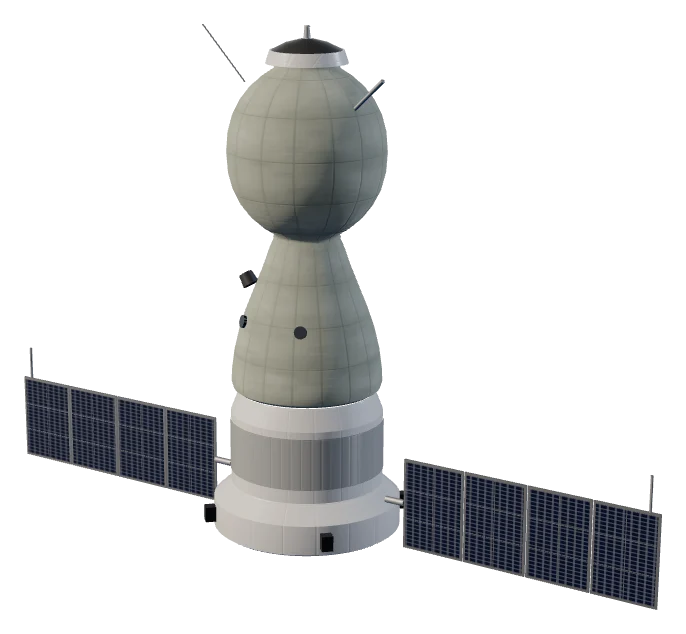 SoyuzThe Soviet, then Russian, crew ship of three modules, flying people since 1967, which has served every Soviet and Russian space station and the International Space Station.Operates it
Stories that involve Roscosmos
Sources
- Russia Agrees to ISS Operations, Seat-Swaps, Through 2030 SpacePolicyOnline, July 16, 2026
- Challenge to Apollo: The Soviet Union and the Space Race, 1945–1974 (NASA SP-2000-4408), Part 1 NASA History Office, 2000
- What is the Roscosmos State Corporation for Space Activities? The Planetary Society
- Shuttle-Mir History: Timeline NASA
- Agreement on U.S.-Russian Space Cooperation Signed American Institute of Physics, FYI, December 17, 1993
- Space Station: Update on the Impact of the Expanded Russian Role (GAO/NSIAD-94-248) U.S. General Accounting Office, July 29, 1994
- NASA’s Management of Crew Transportation to the International Space Station (IG-20-005) NASA Office of Inspector General, November 14, 2019
- Rogozin Out, Seat Swaps In SpacePolicyOnline, July 15, 2022
- Expedition 75 Launch (photo NHQ202607140002) NASA, July 14, 2026
- Dragon Docks Bringing SpaceX Crew-13 to Station NASA, October 1, 2026