Vostok
The Soviet one-seat capsule that carried Yuri Gagarin, the first person in space, in 1961, and Valentina Tereshkova, the first woman, in 1963.
- Status
- Retired
- First flight
- 1960
- May 15
- Size
- 4.3 m
- 14 ft
- Diameter
- 2.43 m
- 8 ft
- Built by
- Energia
- 6
- crewed flights, April 1961 to June 1963, all of which reached orbit
- 4,725 kg
- at launch: a 2,460 kg descent sphere and the instrument section
- 7 km
- the height at which the pilot ejected, to land under his own parachute
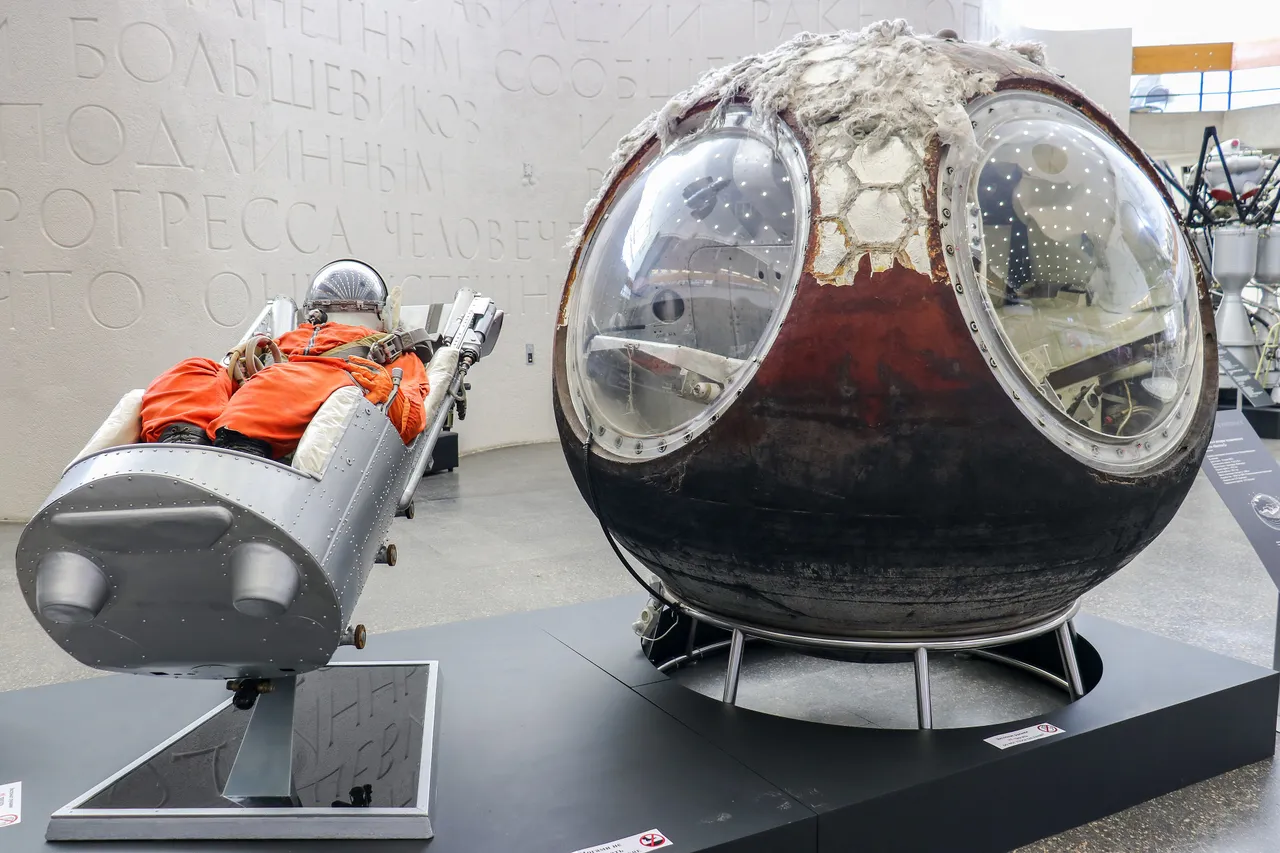
Vostok was the ship Sergei Korolev’s design bureau, OKB-1, built to put a person in orbit. The crewed version weighed 4,725 kilograms at launch. A spherical descent module 2.3 meters across held the pilot in an ejection seat; a double-cone instrument section behind it carried the retro engine, built in Aleksei Isayev’s bureau, and the bottled nitrogen for the gas jets that turned the ship. The sphere’s center of mass sat off its center, so it turned heat shield first on the way down without any steering.
The sphere hit the ground at about 10 meters per second, too hard for a person inside, so the pilot ejected at about 7 kilometers and came down on his own parachute while the capsule landed separately. Boris Chertok writes that this was long kept secret, out of fear that the international aviation federation would not certify a record for a pilot who had not landed in his craft. Vostok also could not change its orbit, so it could not meet another spacecraft.
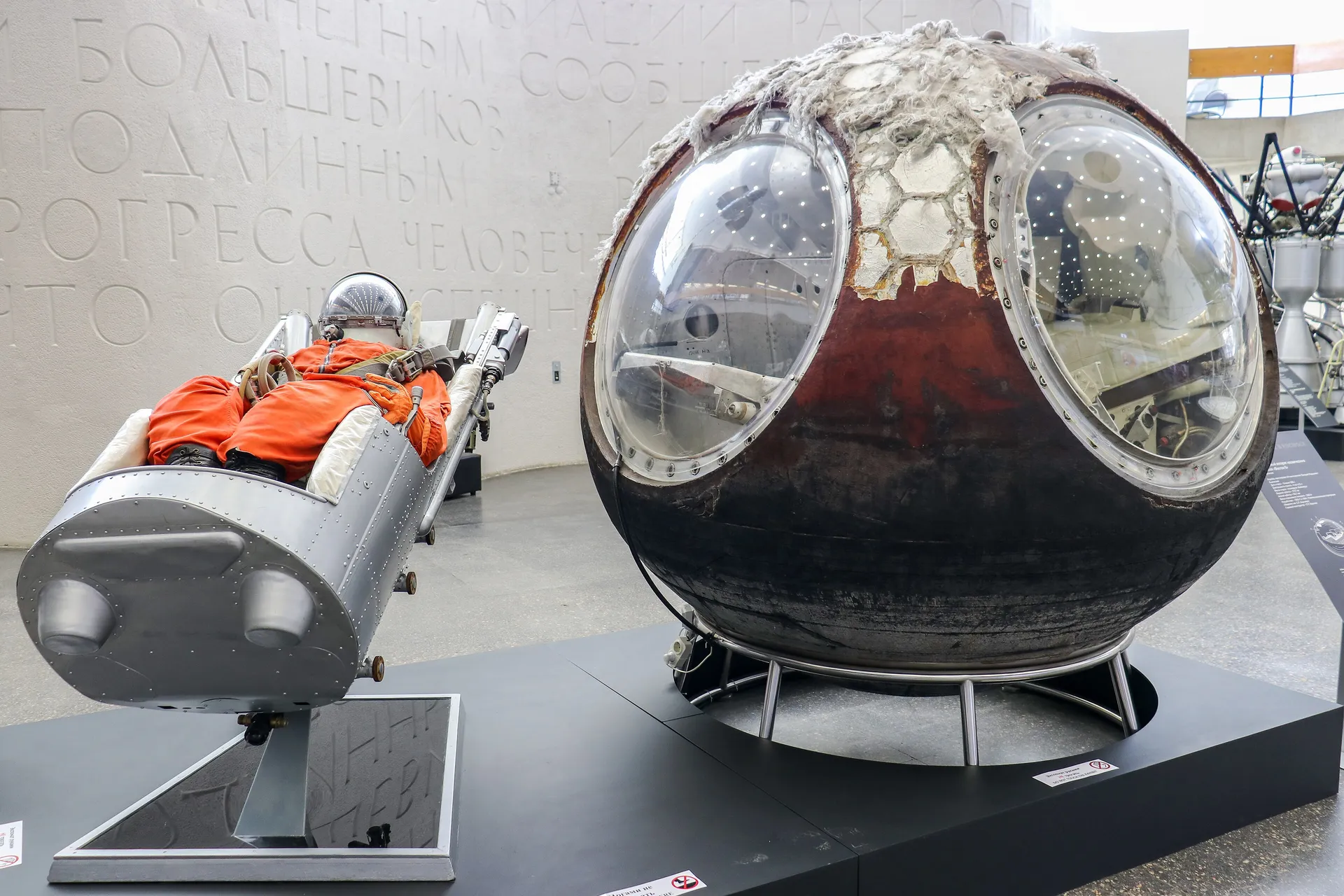
Six crewed Vostoks flew between April 1961 and June 1963, beginning with Yuri Gagarin’s single orbit on April 12, 1961, and ending with Vostok 6, on which Valentina Tereshkova became the first woman in space. Gagarin’s return was rougher than the public story: the retro engine shut down about a second early, and the instrument section stayed attached for about ten minutes before the sphere broke free. The three-seat Voskhod of 1964 kept the sphere but dropped the ejection seats.
Where Vostok appears in the atlas
Sources
- 1
- 2
- 3
- 4
- 5