Sputnik 1
The first artificial satellite: a Soviet radio sphere 58 centimeters across, launched on October 4, 1957, whose signal began the space race.
- Status
- Completed
- Launched
- 1957
- October 4
- Size
- 0.58 m
- 2 ft
- Built by
- Energia
- 83.6 kg
- the whole satellite, 51 kg of it batteries
- 22 days
- of radio signals, to October 26, 1957
- 1958
- burned up on reentry, January 4
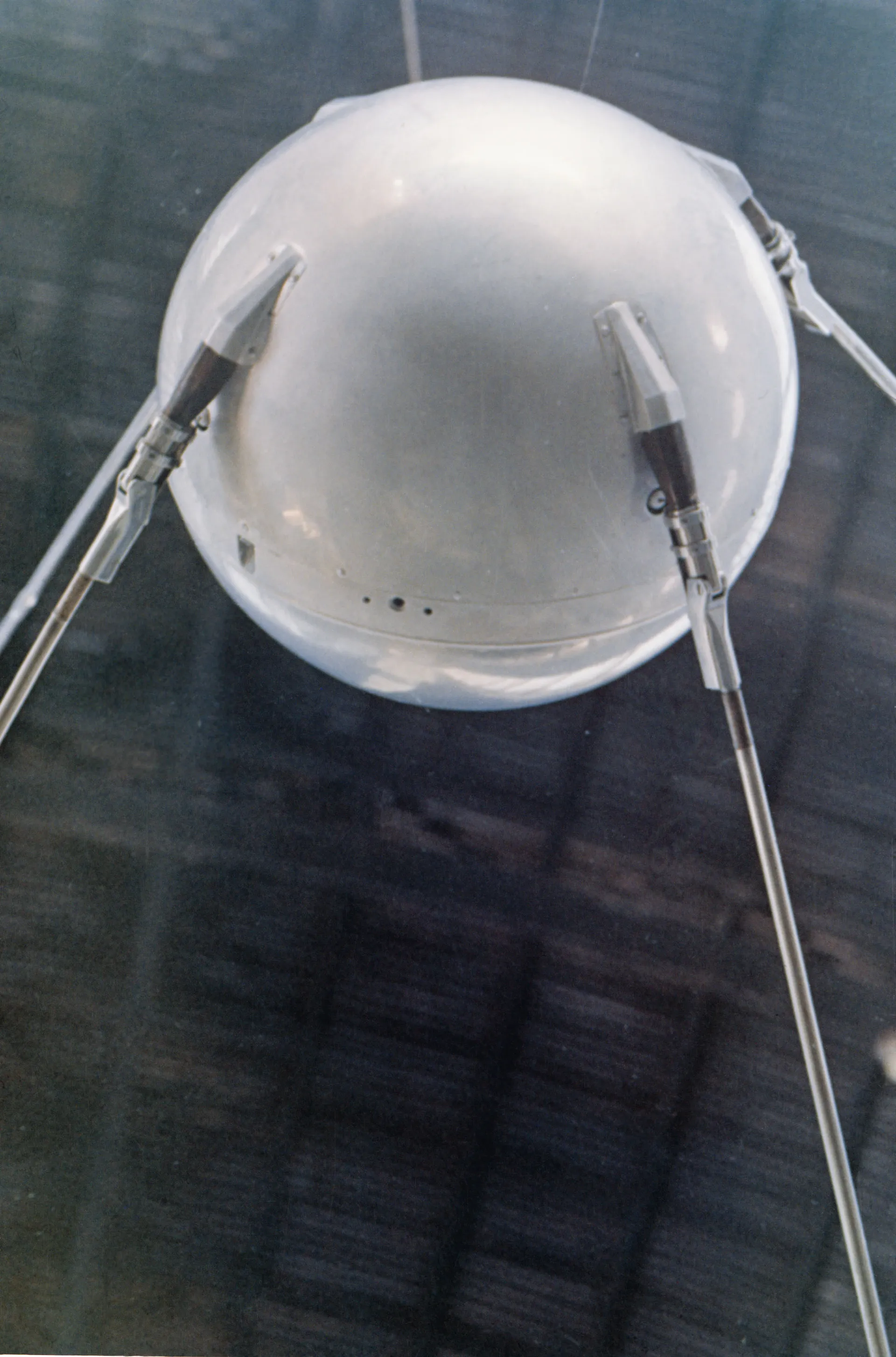
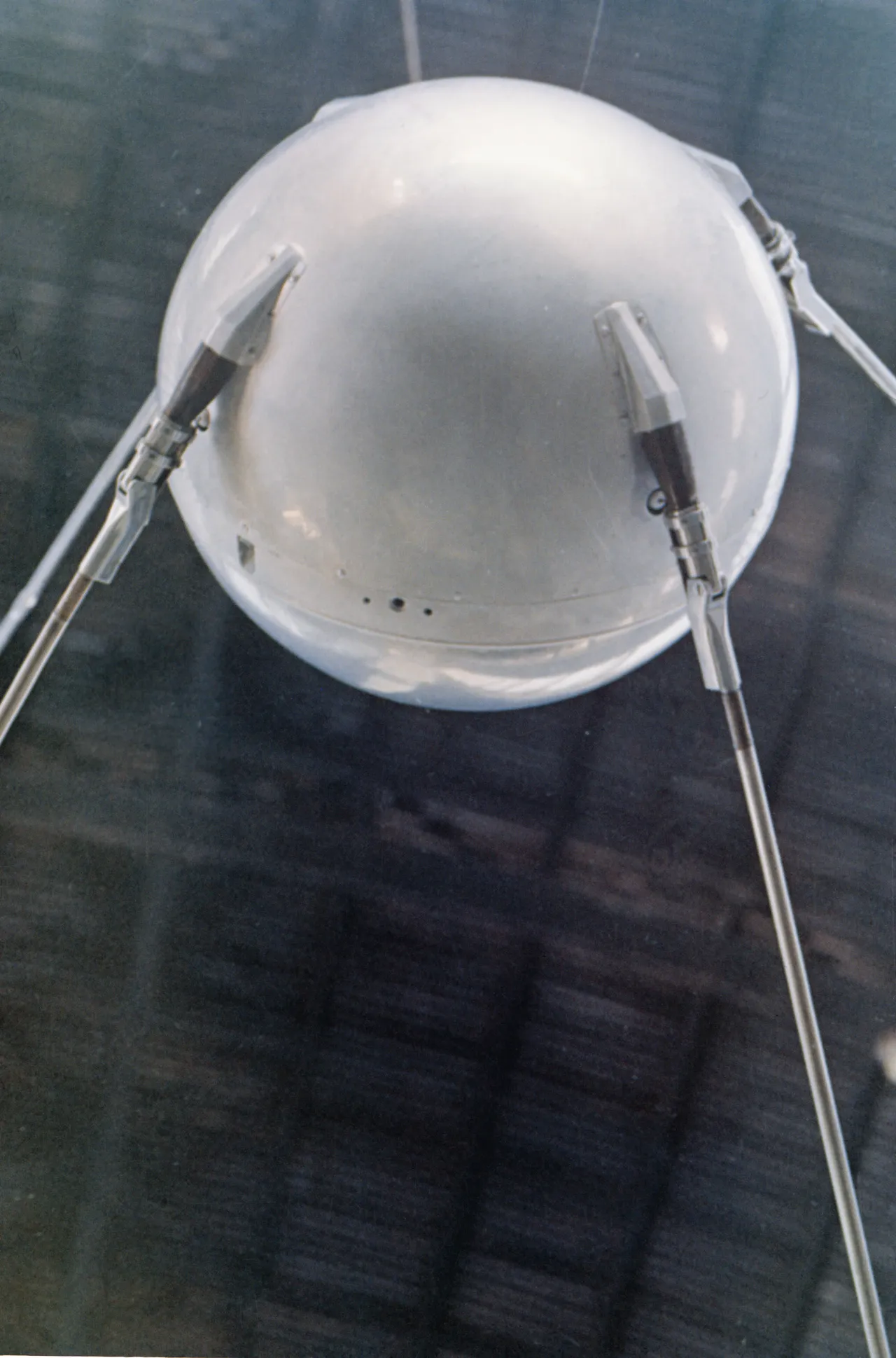
Sputnik 1 was the simplest satellite Sergei Korolev’s design bureau could build in time. A scientific satellite of more than a tonne, ordered in 1956, was running late, and in January 1957 Korolev proposed two small satellites instead. The first was a polished sphere 58 centimeters across, two aluminum-alloy hemispheres filled with nitrogen, with two radio transmitters and three silver-zinc batteries inside and four whip antennas, 2.4 and 2.9 meters long, trailing behind.
An R-7 missile, lightened for the job, launched it from Tyuratam, now the Baikonur Cosmodrome, on October 4, 1957. It circled Earth every 96 minutes, and radio listeners around the world could pick up its beeps on 20 and 40 megahertz until the batteries ran down on October 26. It fell back and burned up on January 4, 1958. In the United States the launch set off the alarm that led, within a year, to the founding of NASA.