Parker Solar Probe and the Sun’s weather: flying through a star’s atmosphere
A probe conceived in 1958 now passes 3.8 million miles from the Sun every three months: what it is learning about the solar wind, how solar storms reach power grids and satellites, and what a proposed 52 percent cut would mean.
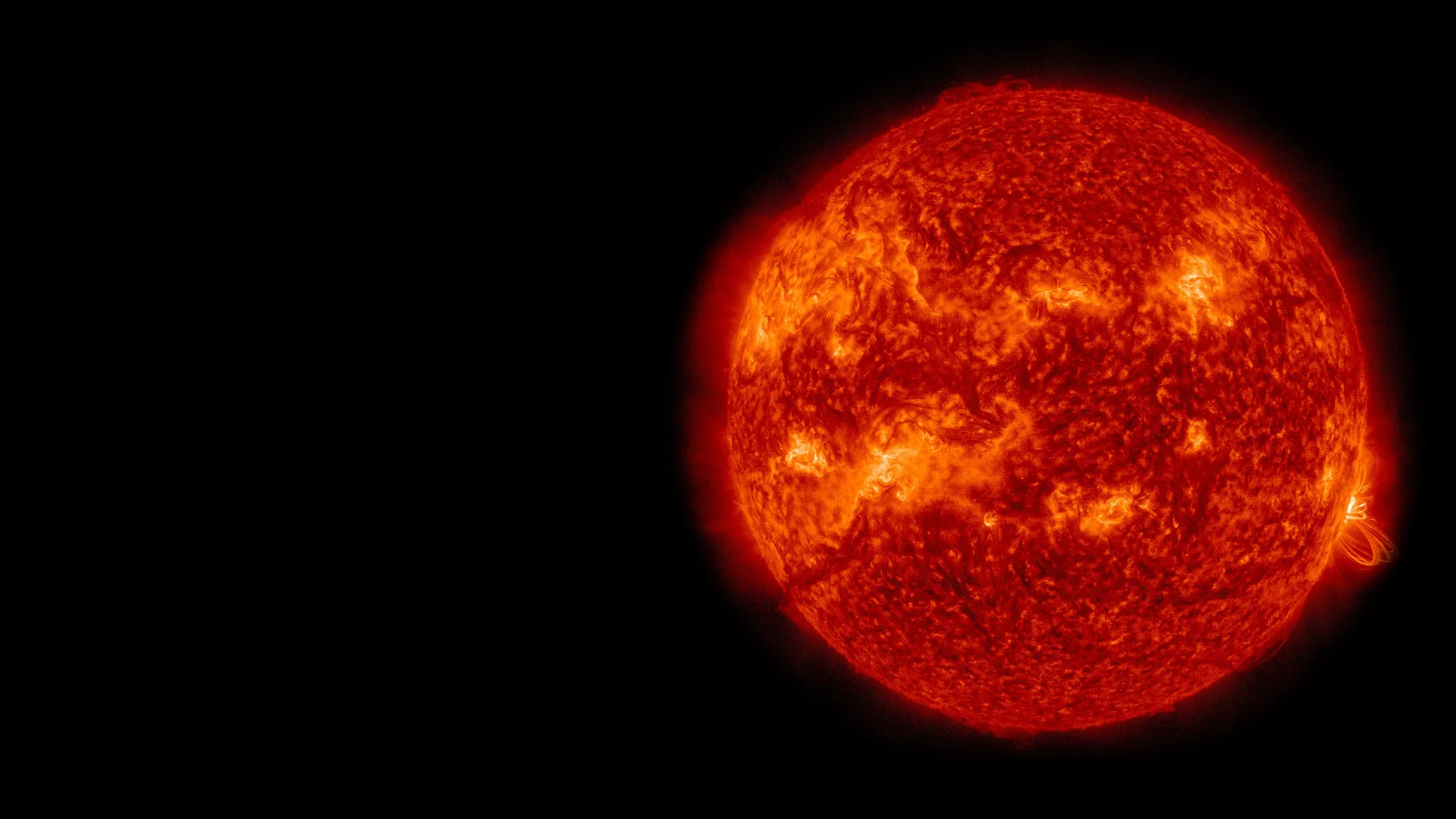
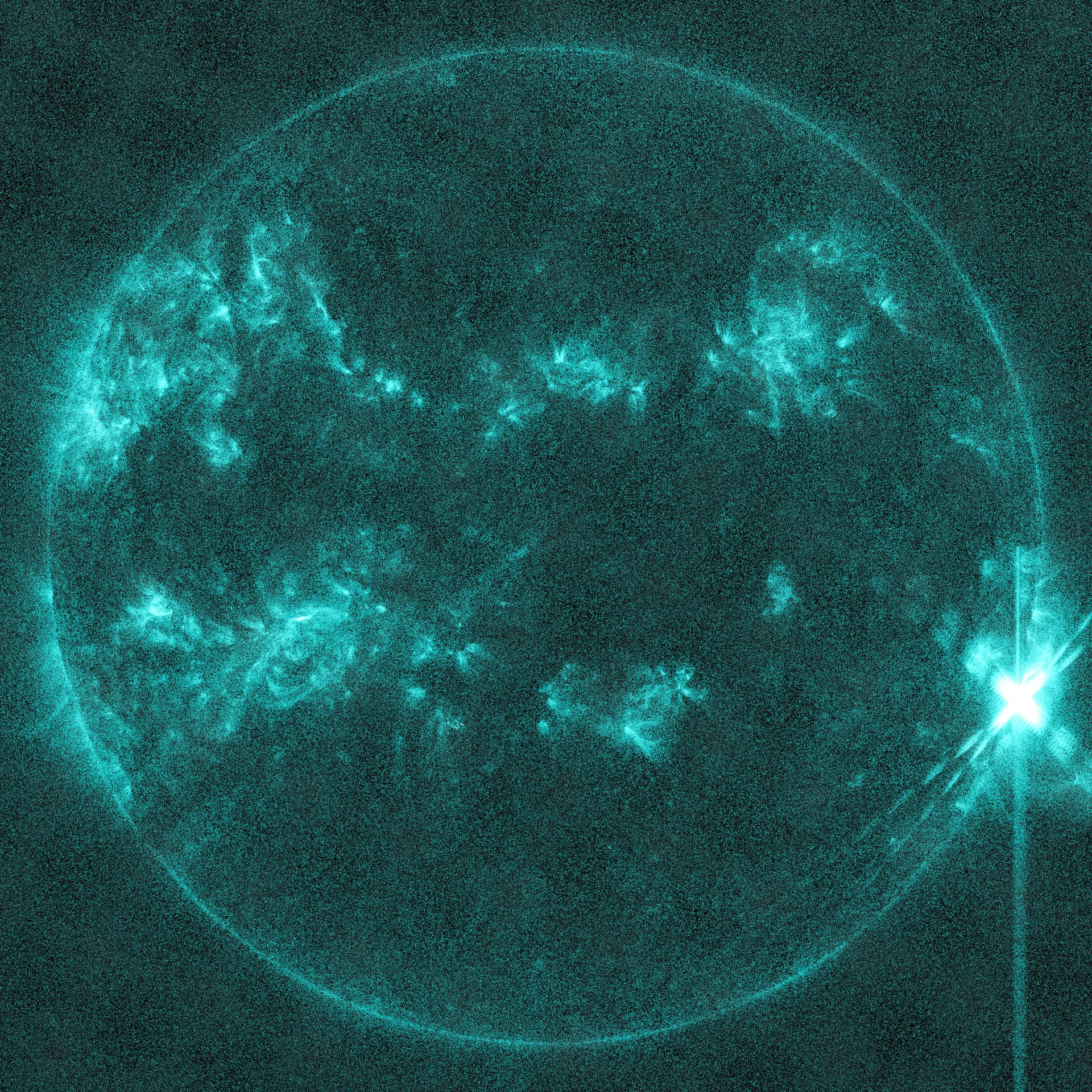
NASA/SDO/AIA · The Sun on May 14, 2024, minutes before an X8.7 flare, then the strongest of the solar cycle
Drawn from 21 sources: NASA (13), NOAA Space Weather Prediction Center (3), The Planetary Society (2), NOAA NESDIS and 2 others. About 7 minutes. Checked October 1, 2026.
We live in the Sun’s atmosphere. A constant flow of material escapes the Sun as the solar wind and fills the entire solar system, and when gusts of it reach Earth they can set off auroras—but also expose astronauts to radiation, interfere with satellite electronics, and disrupt signals like GPS and radio.1,3 NASA studies the Sun with a fleet of spacecraft at different distances. One of them, Parker Solar Probe, flies through the Sun’s outer atmosphere, the corona, closer to a star than anything built before it. On September 4, 2026, it made its 29th close pass.8
A mission conceived in 1958
In 1958, the University of Chicago physicist Eugene Parker developed a theory showing that the Sun’s corona—by then known to be millions of degrees—is so hot that it overcomes the Sun’s gravity, so that its material expands outward in all directions as a solar wind. A year later the Soviet spacecraft Luna 1 detected solar wind particles in space, and in 1962 NASA’s Mariner 2 confirmed it, finding a slow stream at about 215 miles per second and a fast one at twice that speed. In 1973, X-ray images from Skylab traced the fast wind to coronal holes, dark and comparatively cool regions on the Sun. When Parker Solar Probe launched, the origin of the slow wind was still a matter of decades-long, fierce debate.3
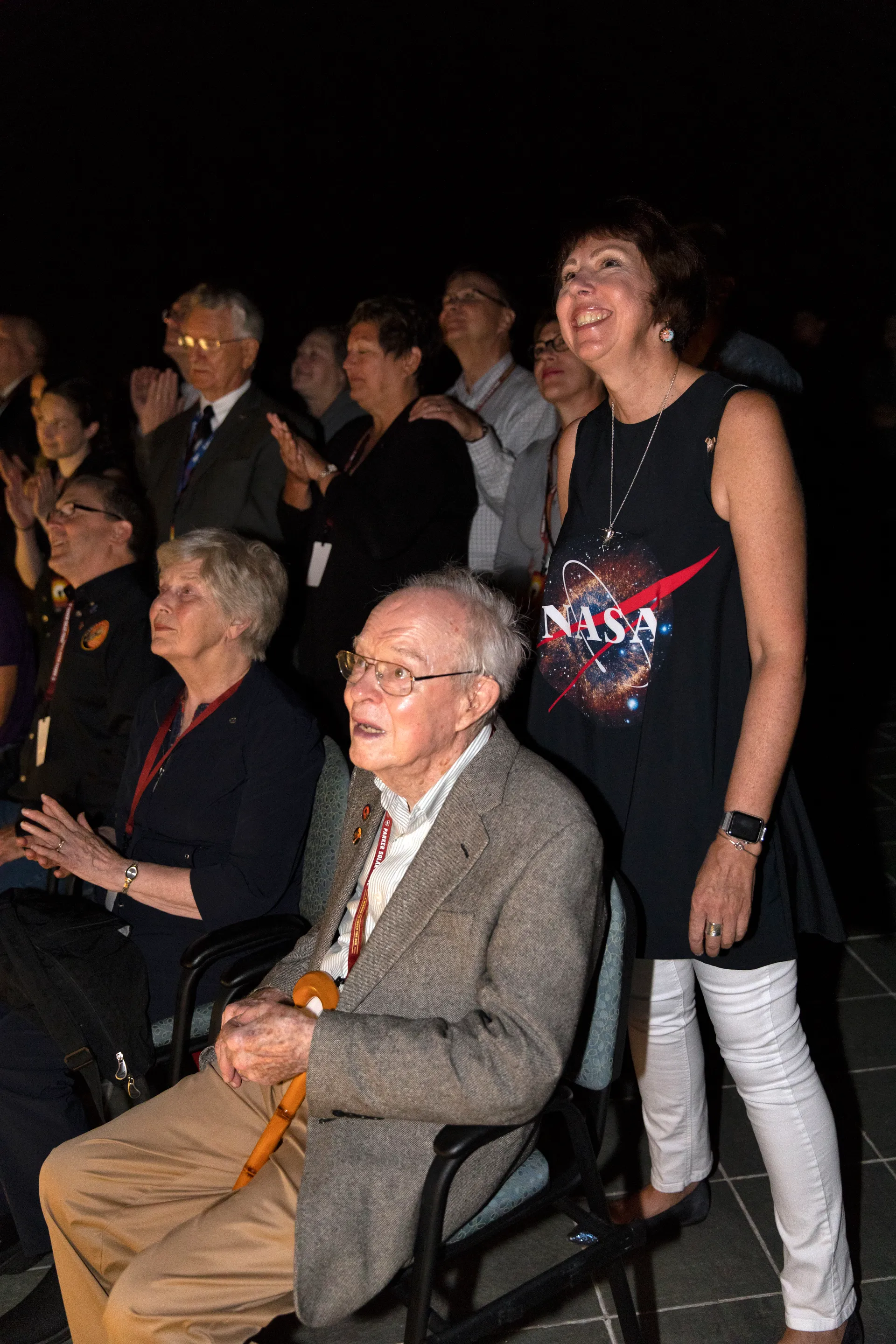
The idea of sending a probe into the corona dates from the same year: the mission was conceived in 1958, but it took 60 years to develop the technology to make it happen.2,4 In May 2017 NASA renamed it from Solar Probe Plus to Parker Solar Probe, the first NASA mission named for a living researcher; Parker watched it launch, saw its first discoveries, and died on March 15, 2022, at 94.2
The mission has three goals: to trace the flow of energy that heats the corona, to find the sources of the solar wind, and to learn how solar energetic particles—which can cross the 93 million miles to Earth in under an hour—are accelerated and transported. Those are questions scientists have puzzled over for more than 60 years: why the corona is so much hotter than the visible surface below it, and how the solar wind speeds up to as much as 1.8 million miles per hour.1,2,3
Seven Venus flybys to reach 3.8 million miles
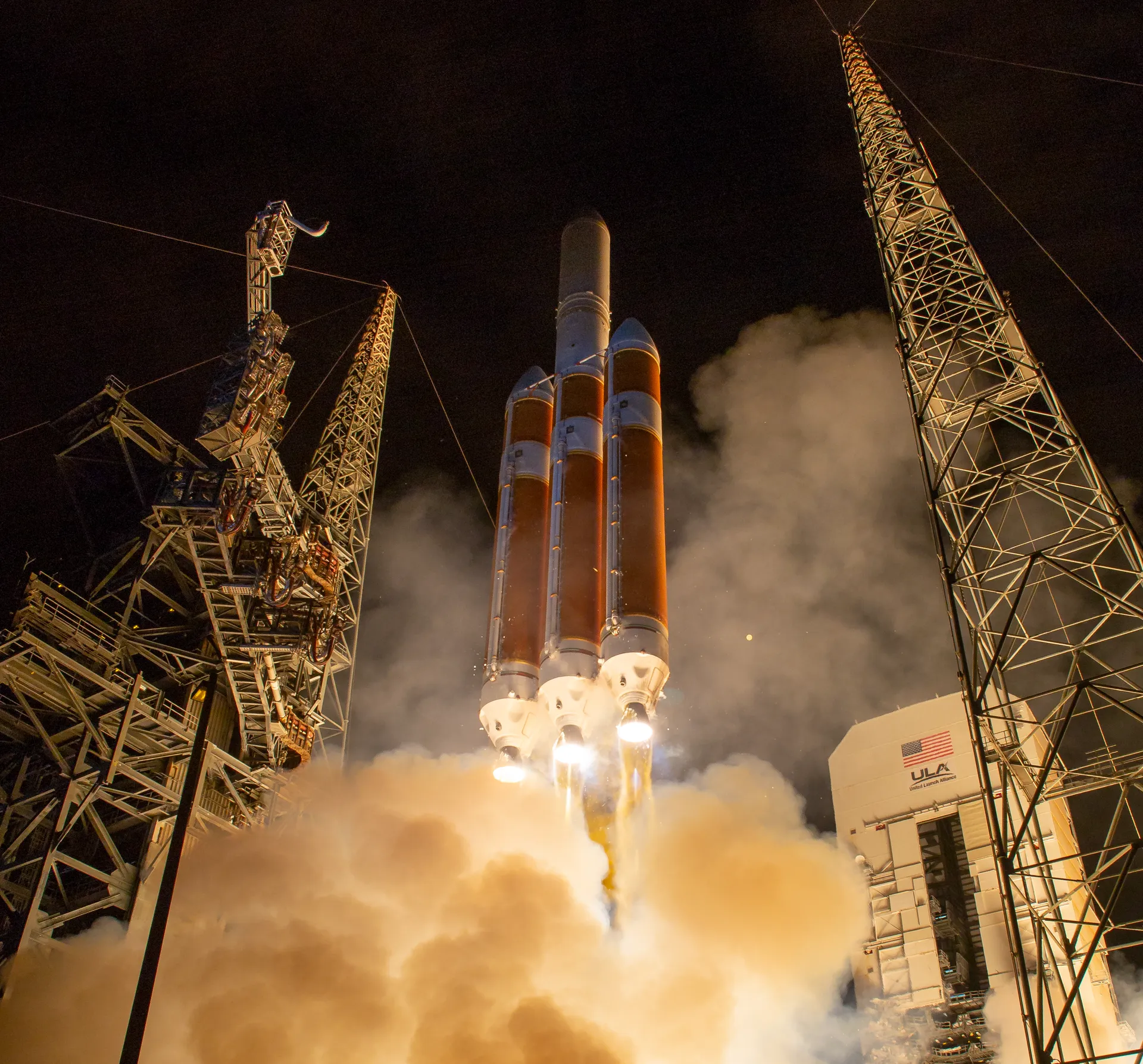
A Delta IV Heavy launches Parker Solar Probe from Cape Canaveral, August 12, 2018.
Parker Solar Probe was designed and built at the Johns Hopkins Applied Physics Laboratory, which operates it, and launched on August 12, 2018, on a Delta IV Heavy.1 Getting close to the Sun means shedding the speed Earth gives everything launched from it, so the spacecraft used seven flybys of Venus to draw its orbit in. A few months after launch it was already the closest human-made object to the Sun and the fastest; on December 14, 2021, NASA announced that it had flown through the corona and sampled particles and magnetic fields there, the first spacecraft to touch the Sun.1,2
The last Venus flyby, on November 6, 2024, put it in its final orbit: an oval that brings it close to the Sun every three months. On December 24, 2024, it passed 3.8 million miles above the surface at about 430,000 miles per hour, faster than any human-made object has ever moved. If the distance from the Sun to Earth were a football field, it would be four yards from the end zone. Out of contact during the pass, it sent a beacon tone on December 26 to say it was safe.4
Aug. 12, 2018
Launch1
On a Delta IV Heavy from Cape Canaveral, with Eugene Parker watching.
Dec. 14, 2021
First spacecraft to fly through the corona1
NASA announces Parker has sampled particles and magnetic fields inside the Sun’s upper atmosphere.
Nov. 6, 2024
Seventh and last Venus flyby4
Sets up the final orbit, which brings the spacecraft close to the Sun every three months.
Dec. 24, 2024
Record pass: 3.8 million miles, 430,000 mph4
The closest and fastest any spacecraft has flown; matched on every pass since.
Sept. 4, 2026
29th close approach8
Parker samples almost 40 percent of the Sun’s circumference in one day. Its mission is extended into 2029.
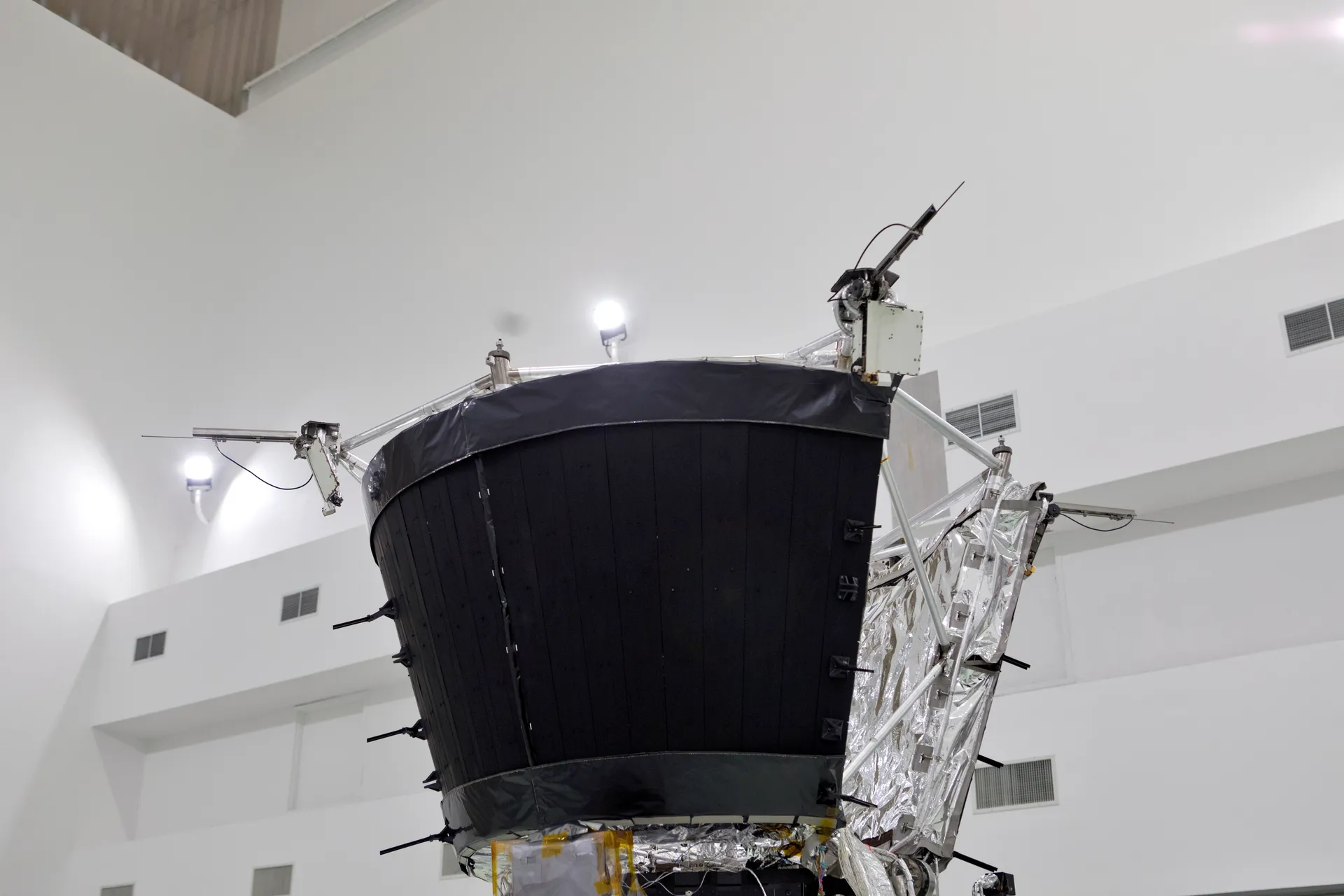
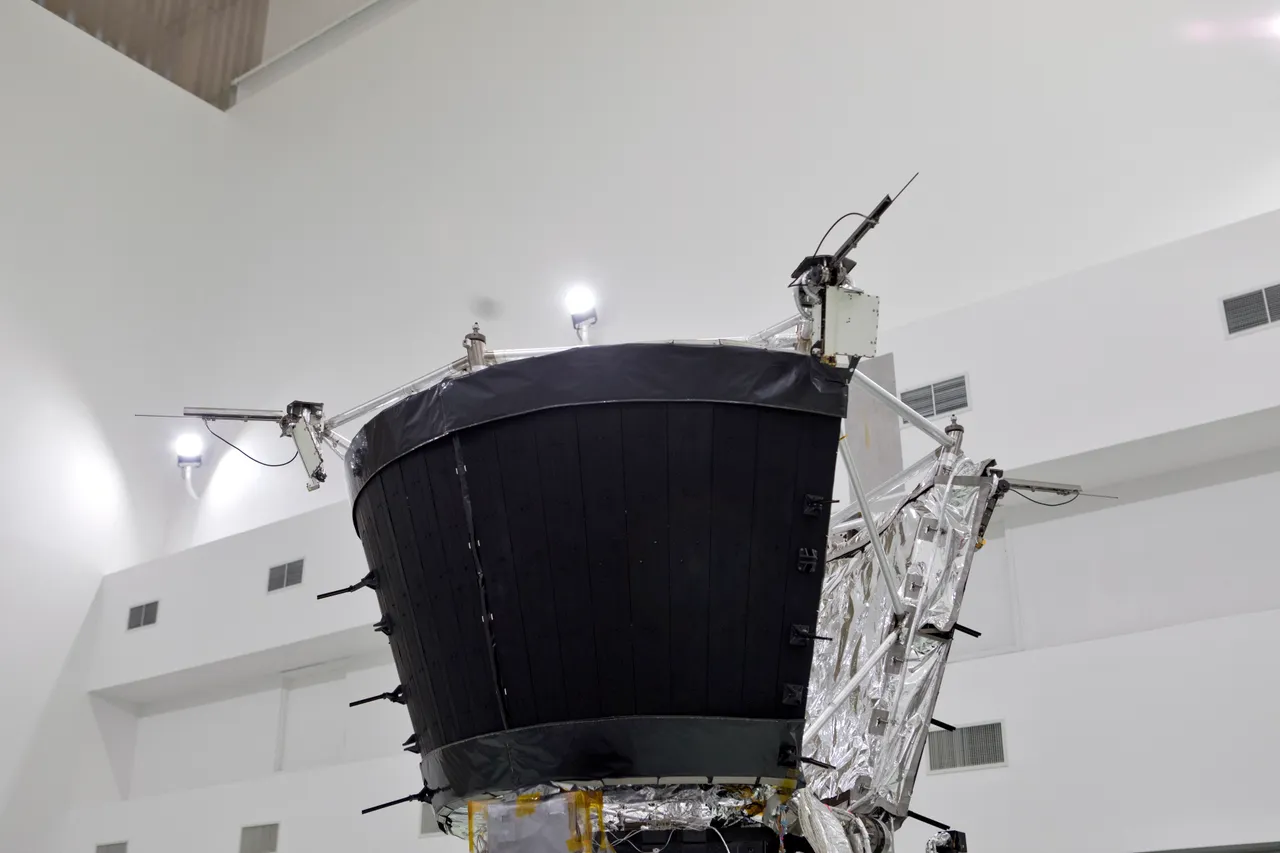
The spacecraft survives behind a carbon-composite shield 4.5 inches thick. It was designed to reach 2,600 degrees Fahrenheit—hot enough to melt steel—while keeping the instruments behind it at about room temperature; on the closest passes it reaches about 1,700 degrees. Autonomous software keeps the shield pointed at the Sun.1,2,4,7 After nearly eight years and 28 passes, engineers reported in June 2026 that the shield was in excellent condition: the temperature behind it had not drifted upward, which is what they would see if it were cracking.7
What Parker sees inside the corona
Parker carries four instrument suites. FIELDS measures electric and magnetic fields with antennas that stick out past the heat shield into temperatures of 2,500 degrees Fahrenheit. SWEAP counts the most abundant particles in the solar wind—electrons, protons and helium ions—with a cup that peeks over the shield and glows red at 3,000 degrees. ISʘIS measures energetic particles across a wide range of energies. WISPR, the only camera, uses the heat shield to block the Sun’s glare and photographs the corona and solar wind before the spacecraft flies through them.5
When Parker first entered the solar atmosphere in 2021, it found the outer boundary of the corona wrinkled with spikes and valleys, contrary to what was expected. It traced zig-zag structures in the solar wind, called switchbacks, to the visible surface of the Sun, and it watched coronal mass ejections vacuum up dust as they swept across the solar system.4 Images from the December 2024 pass, released in July 2025, show the boundary where the Sun’s magnetic field direction switches from north to south, called the heliospheric current sheet, and capture for the first time in high resolution the collision of several coronal mass ejections. When those outbursts merge, their paths can change, which makes them harder to forecast at Earth.6
How the Sun’s storms reach Earth
Roughly every 11 years, at the height of its cycle, the Sun’s magnetic poles flip and it turns from calm to stormy. Sunspots, the visible parts of active regions with intense, tangled magnetic fields, are where solar eruptions start, so scientists count them to track the cycle. On October 15, 2024, NASA, NOAA and the international Solar Cycle Prediction Panel announced that the Sun had reached its solar maximum period.9
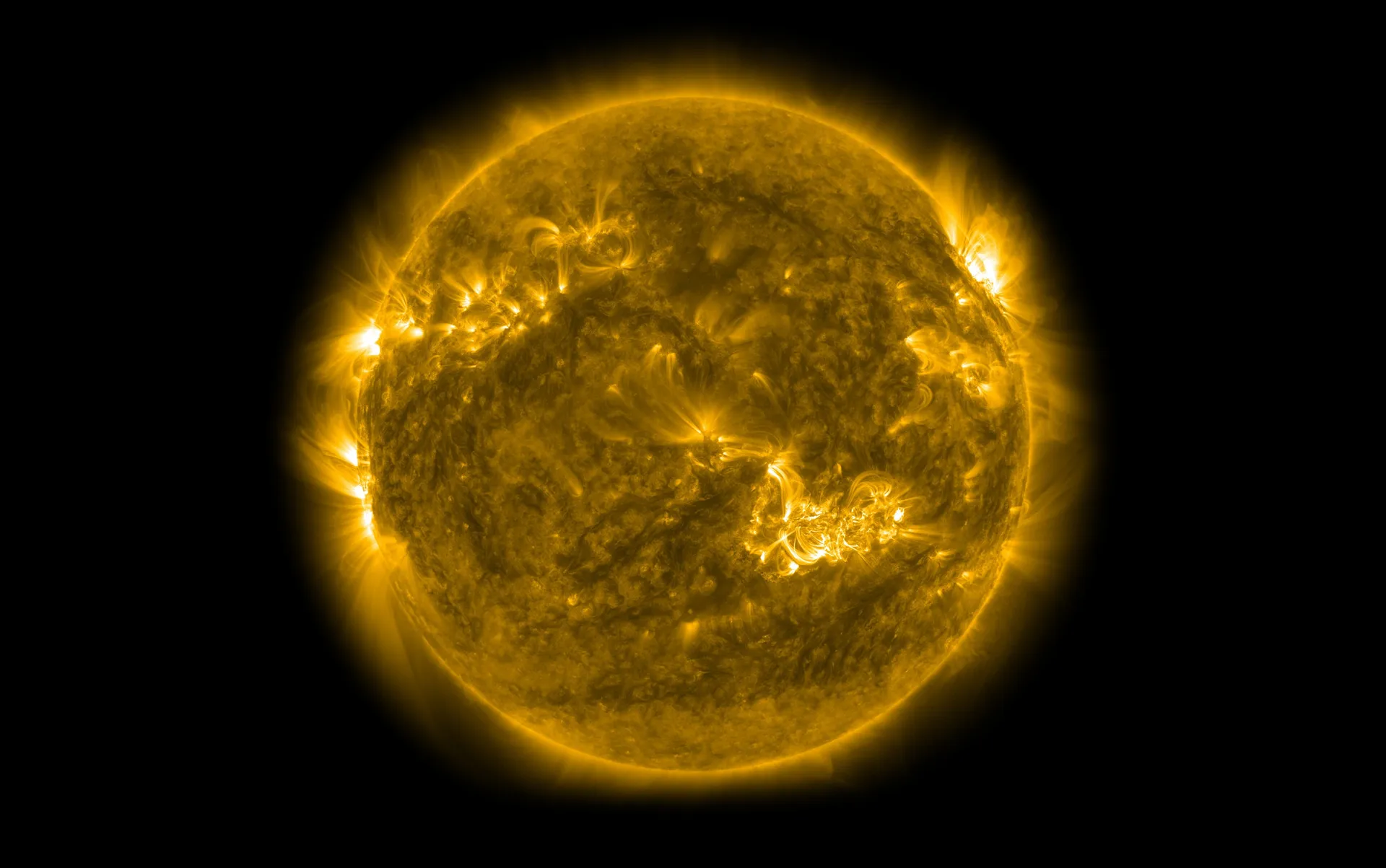
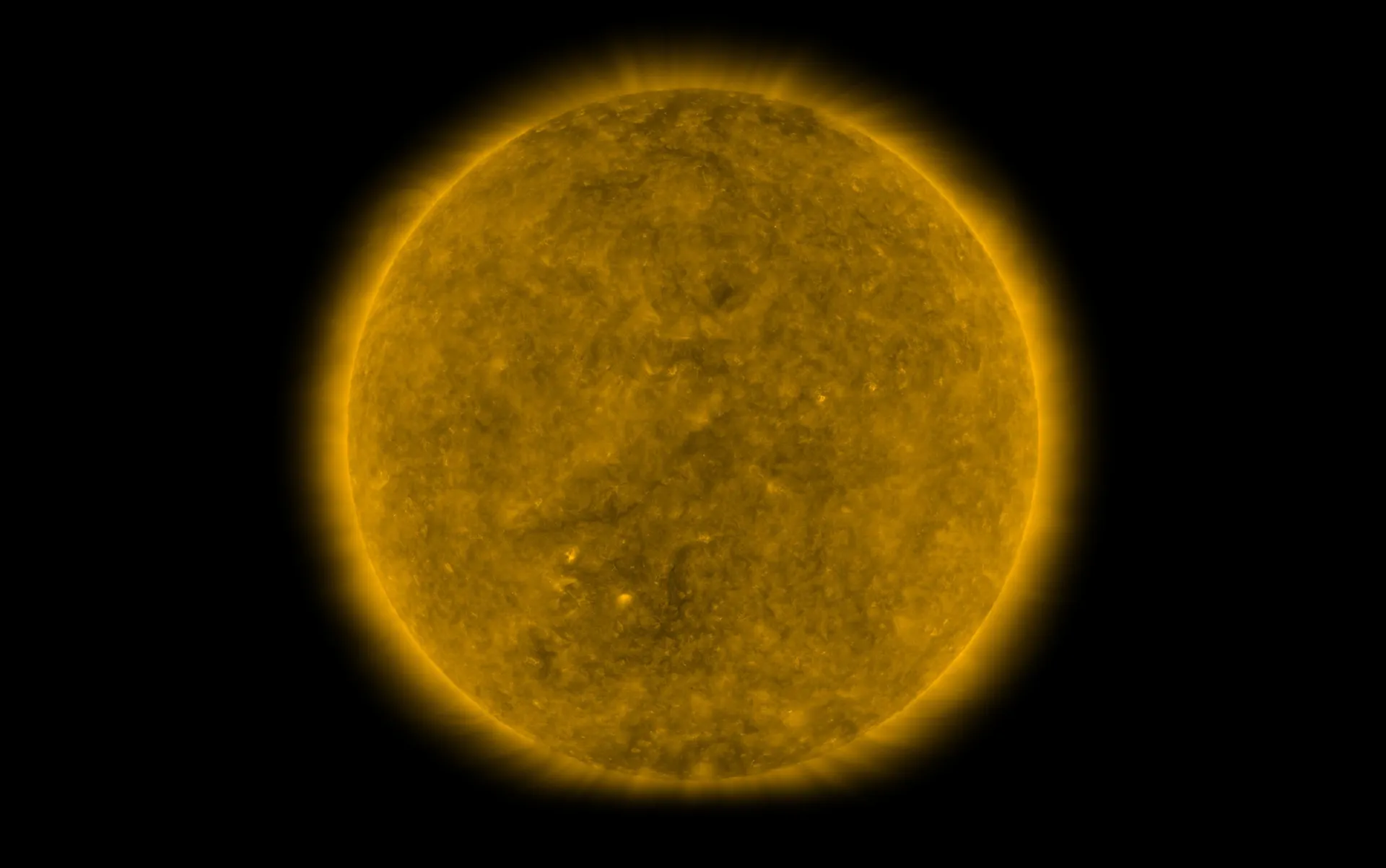
The largest geomagnetic storms come from coronal mass ejections, in which a billion tons or so of plasma, with its magnetic field, arrives at Earth. They usually take several days to cross, but the most intense have arrived in as little as 18 hours. When the solar wind’s magnetic field points south, opposite Earth’s, energy pours into the magnetosphere, driving intense electric currents high above the ground. Those currents heat the upper atmosphere, increasing drag on low satellites; they bend radio signals and introduce errors in GPS positions; and they induce currents in power lines and pipelines.11
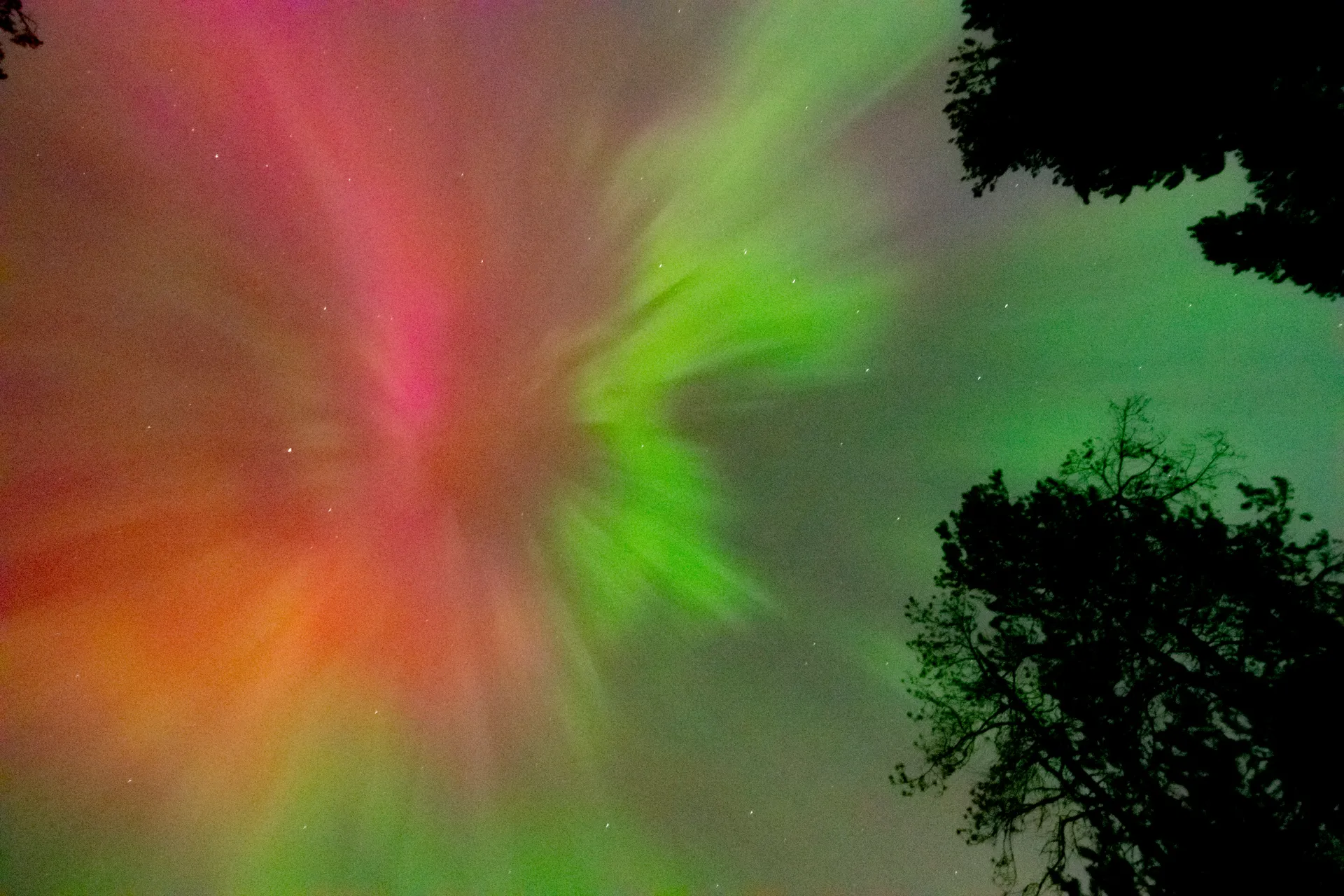
In May 2024 a barrage of flares and at least seven coronal mass ejections, traveling up to 3 million miles per hour, reached Earth starting May 10 and built a storm rated G5, the highest level on NOAA’s scale and the first since 2003. Auroras were seen as far south as the southern United States and northern India, possibly among the lowest-latitude displays in five centuries.10
NOAA’s Space Weather Prediction Center warned power-grid and satellite operators in advance, and some NASA spacecraft powered down instruments as a precaution. NASA’s ICESat-2 still went into safe mode, likely because the storm increased the drag on it. Four days later, on May 14, the same region of the Sun produced an X8.7 flare.10
Currents induced in the grid can push power transformers out of their designed range and saturate their cores, heating them and tripping protective equipment elsewhere on the network. NOAA lists a nine-hour blackout in Canada and a transformer loss on March 13, 1989, and a blackout in Sweden during the October 2003 storm.12 In orbit, the March 1989 storm thickened the upper atmosphere so suddenly that NASA’s Solar Maximum Mission satellite was reported to have “dropped as if it hit a brick wall,” and after big storms the North American Aerospace Defense Command has to re-identify hundreds of objects whose orbits have changed.13
Warnings from a million miles out
Forecasters get their warning from a point about a million miles toward the Sun, the first Lagrange point, L1, where spacecraft see solar storms coming before they arrive. NASA’s IMAP, which launched on September 24, 2025, and traveled to L1 together with the Carruthers Geocorona Observatory and NOAA’s Space Weather Follow On-Lagrange 1, entered its final orbit there on January 10, 2026, joining NASA’s Wind and ACE and the ESA–NASA SOHO. Its primary job is to map the boundary of the heliosphere, but since February 1, 2026, part of its data has also streamed to forecasters in near real time, giving astronauts and spacecraft near Earth about half an hour’s warning of harmful radiation.15,16
- 30 min
- for SOLAR-1’s images of a coronal mass ejection to reach forecasters, against up to 8 hours from SOHO14
- 5 min
- for SOLAR-1’s solar wind measurements to arrive14
- ~30 min
- of warning IMAP’s real-time data give spacecraft near Earth15
NOAA’s satellite, renamed SOLAR-1 when it reached L1, is the first NOAA satellite designed specifically for continuous, operational space weather observation. Its compact coronagraph puts images of coronal mass ejections in forecasters’ hands within 30 minutes, compared with up to eight hours from research instruments such as SOHO’s coronagraph, and its solar wind measurements arrive within five minutes.14
A 52 percent cut proposed for heliophysics
For 2026 the administration proposed cutting NASA’s Heliophysics Division roughly in half. Congress instead gave it $874.8 million, including $25 million to operate Parker against a request of $15 million, and kept the Geospace Dynamics Constellation and HelioSwarm missions the administration had proposed to cancel.17
NASA heliophysics funding19
Show the numbers
| year | Heliophysics |
|---|---|
| 2025 enacted | $792M |
| 2026 enacted | $875M |
| 2027 request | $420M |
The 2027 request returns to the same idea: $419.6 million for heliophysics, a 52 percent cut from 2026. It keeps $101 million to operate IMAP and Parker and $73 million for space weather research, but The Planetary Society counted 17 heliophysics missions with a combined lifetime cost of about $2.8 billion that would end.18,19,20 Congress had not passed a 2027 bill when the fiscal year began; a continuing resolution holds NASA at its 2026 level through December 11.21
Parker, meanwhile, will stay in its current orbit. A 2026 senior review of heliophysics missions extended it into 2029, long enough to follow the Sun from the quiet minimum at its launch, through the maximum, into the declining phase—when, scientists note, fairly significant storms still occur.8,9
Sources
The text above is drawn from these 21 sources. Government works are adapted closely; company and press material is summarized. Numbers in the text point here. Last checked October 1, 2026.
Show all 21 sourcesShow fewer
- 1Back to the text
- 2Back to the text
- 3Back to the text
- 4Back to the text
- 5Back to the text
- 6Back to the text
- 7Back to the text
- 8Back to the text
- 9Back to the text
- 10Back to the text
- 11Back to the text
- 12Back to the text
- 13Back to the text
- 14Back to the text
- 15Back to the text
- 16Back to the text
- 17Back to the text
- 18Back to the text
- 19Back to the text
- 20Back to the text
- 21Back to the text
Continue
Related stories
- Weather satellitesTwo GOES satellites stare at the Americas from 22,236 miles up while polar orbiters circle the globe. NASA builds them, NOAA flies them, and Congress is deciding how much of the next generation to pay for.
- Hubble, Webb and RomanA 1990 telescope that astronauts rebuilt five times, a $9.7 billion infrared observatory a million miles out, and a survey telescope launched in August 2026: what each one sees, what each cost, and why NASA flies them together.
- OrbitsHeight sets a satellite’s speed; tilt and shape set what it sees. Five neighborhoods, from the station about 400 km up to Webb 1.5 million km away, and the work each one makes possible.